

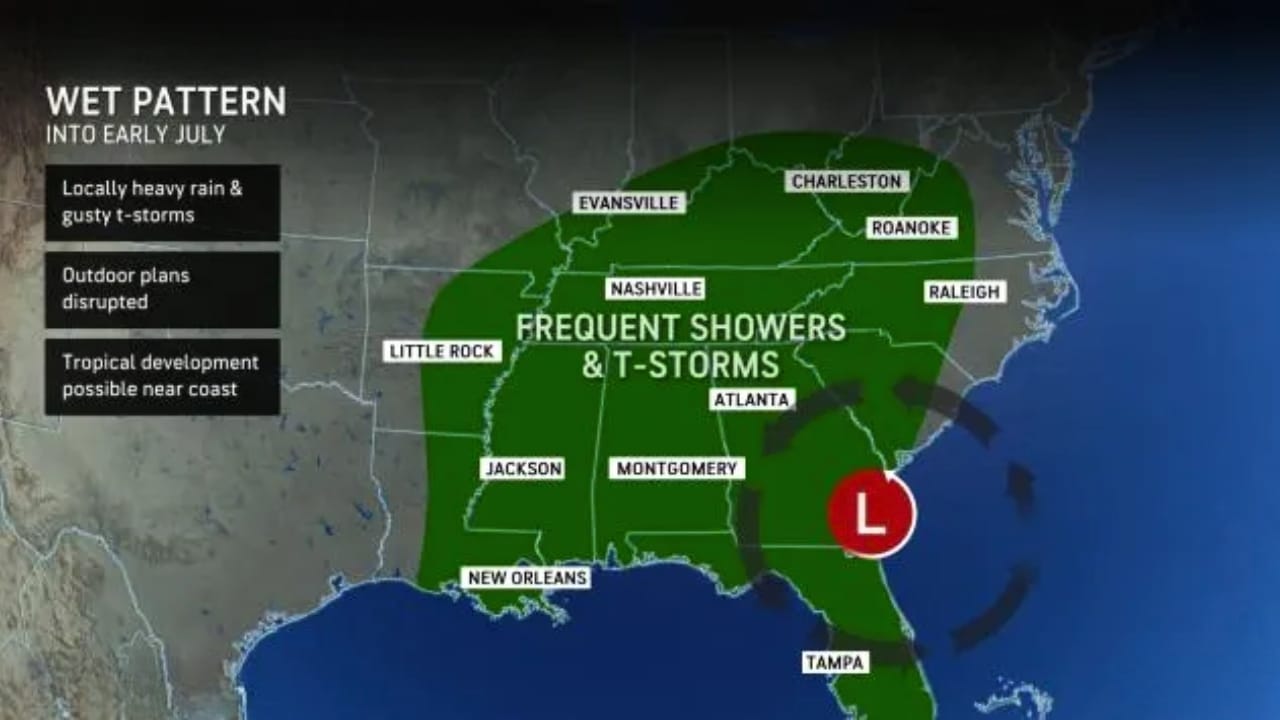
The prediction for the Southeast tropical system continues to show potential for tropical development as a broad area of low pressure travels over warm waters near the Gulf Coast and the southeastern Atlantic. Forecasters predict the environment may grow more conducive to progressive strengthening, but confidence is low in the eventual track of the storm. Even if the system does not reach tropical storm strength, widespread rain, localized flooding, and high waves could still damage coastal and interior communities over one of the busiest travel weekends of the year.
 FL1 FORECAST: Dangerous heat builds this week as Finger Lakes enters summer's hottest stretch
 Tropical Development Still Being Closely Watched
Forecasters are examining many atmospheric parameters that will determine if this disturbance becomes a named tropical cyclone. Some growth is possible over the warm ocean waters, but upper-level winds and dry air could hinder or stall development. In light of these competing considerations, forecast confidence is moderate, and homeowners should anticipate changes to the outlook as additional weather data becomes available.
The next few days will be key in determining whether the system organizes before it approaches the Southeast coastline.
Heaviest Rain May Be Biggest Threat
Regardless of whether a tropical storm forms, heavy rain will be the main concern in parts of the Southeast. Slow-moving tropical moisture could generate several inches of rain in some places, raising the potential for flash flooding in locations that have had wet conditions in recent weeks.
Flooding is possible on urban streets, in low-lying neighborhoods, and near rivers and streams if rounds of rain develop. Motorists should be ready for limited visibility and roadways covered with water during heavy downpours.

Keep an Eye on Weather Updates for Holiday Travelers
The timing of the evolving system might cause problems for millions of travelers planning road trips, flights, or beach vacations ahead of the July 4 weekend. As the system intensifies or approaches land, travelers along portions of the Gulf Coast and the southeastern Atlantic coastline may experience flight delays, hazardous driving conditions, and choppy waves.
Beachgoers should also be aware of dangerous rip currents and heavy waves that often develop when tropical systems are still offshore.
Forecast Track and Intensity Uncertain
Weather experts say it’s still too early to tell for sure where the system will track or how strong it could get. Small variations in air steering patterns can radically alter where the heaviest rain falls or the strongest winds occur.
Residents across the Southeast are encouraged to evaluate their emergency plans, periodically monitor official forecasts, and avoid focusing on one single forecast model. “Right now, it is important to stay up to date over the next few days as meteorologists will continue to update the projected path and impacts of the storm.”
Final Thought
Considerable uncertainty still exists, but the developing tropical disturbance could impact regions of the Southeast shortly before the busy July 4 holiday weekend. Even if the system doesn’t become a recognized tropical storm, the main worries will still be heavy rain, flash flooding, strong gusts, and dangerous conditions along the beaches. People in the area, or those planning to visit, should keep an eye on official weather updates and be prepared to alter plans if the situation deteriorates. Forecasts will likely change as more information comes to light.

Akash Negi focuses on weather coverage that helps readers stay prepared, from daily forecasts and seasonal changes to storm alerts, temperature shifts, and weather-related updates. His reporting provides clear and timely information for people planning their day, travel, and local activities.