Ronald McDonald House Rochester is marking the first year of House to Home, a mobile unit designed to bring telehealth, supplies and support directly to families caring for medically complex children.
The program launched May 27, 2025, with the goal of reducing transportation barriers for families whose children need frequent medical care.

House to Home serves children described by the organization as among the region’s most medically complex patients, representing the top 1% of pediatric patients who use more than 30% of health care resources.

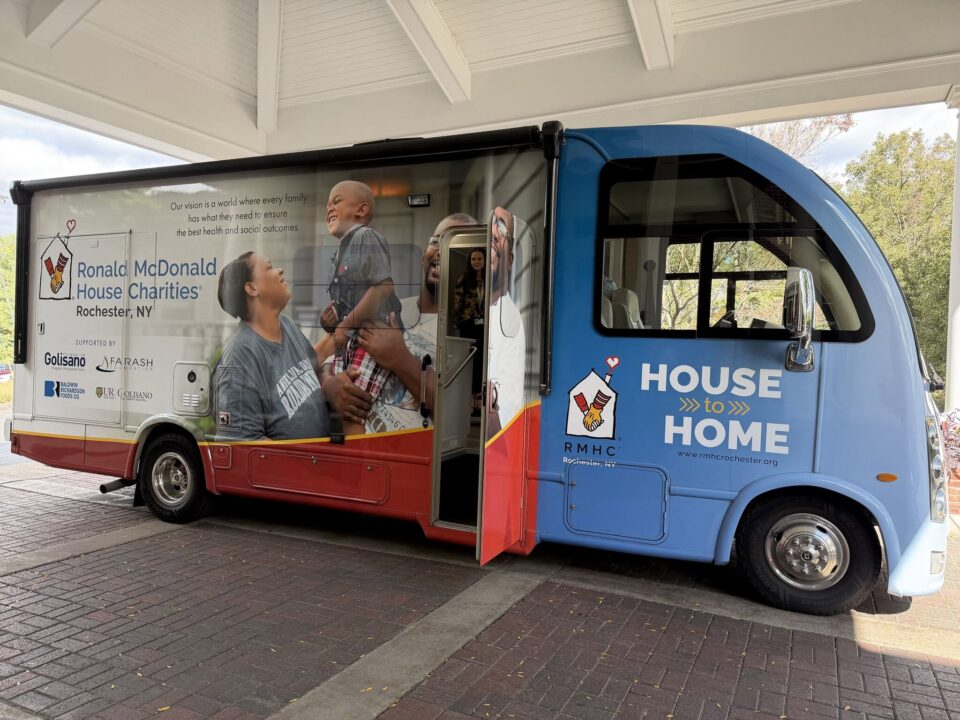

The program uses a 24-foot renovated ADA-accessible RV designed to travel on rural roads and narrow city streets, allowing staff to pull into family driveways. The unit is equipped with TytoCare telehealth technology, which allows real-time medical assessments to be uploaded into a child’s medical record while maintaining contact with the child’s primary care team and specialists.
In addition to telehealth, the unit provides families with hot meals, fresh produce, household supplies, durable medical equipment, clothing, toys and coordinated mental health and wellness visits.
Ronald McDonald House Rochester said House to Home served 117 patients in its first year and reduced the no-show rate from 20% to 1.45%, a 93% decrease. The organization also said 98% of follow-up subspecialty visits were completed during the first 10 months of service delivery.
The organization reported decreases in health care utilization as well, with inpatient utilization falling from 36% to a 21% monthly average and emergency department utilization dropping from 18% to a 13% monthly average.
“House to Home was created to extend the comfort, care, and support families experience at Ronald McDonald House directly into the communities where they live,” said JoAnne Ryan, president and CEO of Ronald McDonald House Rochester. She said the program combines technology with wraparound services to address transportation as a barrier to care.
Ronald McDonald House Rochester said support for the initiative funded the capital build, first-year operations and more than half of the first three years of operational funding. The organization said it plans to continue the program into its second year as part of its work with medically complex children and their families.

FingerLakes1.com is the region’s leading all-digital news publication. The company was founded in 1998 and has been keeping residents informed for more than two decades. Have a lead? Send it to news@fingerlakes1.com.