

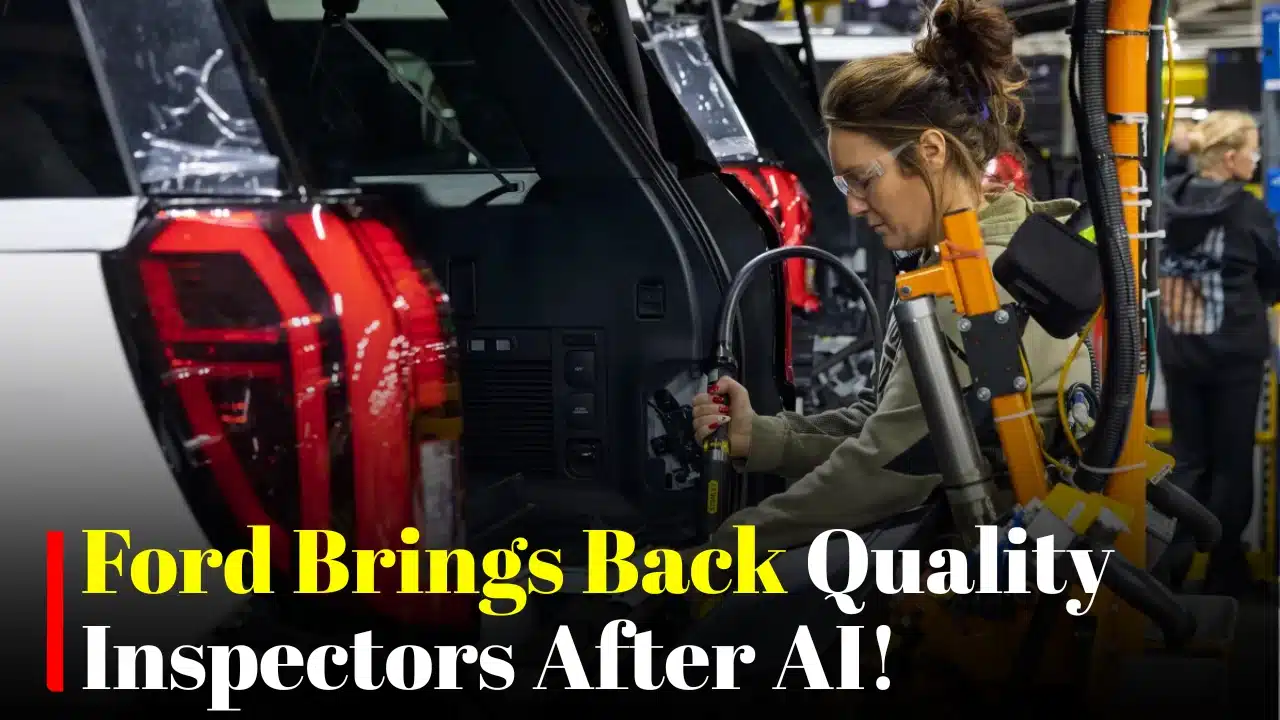
Many automakers today use AI-enabled cameras and automated inspection systems to find defects before cars leave the assembly line. While these technologies have made things more efficient, recent developments show that there are limits to automation. Ford has gone back to employing more human quality inspectors in the production process after realizing AI systems couldn’t notice every single mistake with the level of accuracy required. The decision is indicative of a growing confidence in the industry that human expertise is still vital to the upkeep of strong manufacturing standards.
Ford Rehiring Quality Inspectors
Ford is bringing back quality inspectors after the inability of AI to detect vehicle flaws has become a hot topic in the global automotive sector. The company has increased the number of human inspectors in some factories to enhance quality control. AI remains a big element of Ford’s production system, but experienced workers are again playing a bigger role in identifying aesthetic flaws, fit-and-finish problems, and other issues that automated systems can sometimes miss. The verdict emphasizes the necessity to combine modern technology with the human factor of sound judgment to enhance the quality of a vehicle.
AI Can’t Entirely Replace Human Judgment
Ford has started using AI-powered inspection tools to improve productivity and quickly detect issues. Cameras and machine learning scan the entire assembly process and inspect the components of the automobiles.
But corporate authorities found other issues that still proved hard for AI to reliably uncover. Minor paint flaws, concerns with panel fit, and minor finish issues need the human eye and human competence to see. So, Ford concluded that quality at every point in the process could not be automated.
Human Inspectors Back on the Production Line
Ford has added more expert inspectors to some of its plants to help improve the quality of its automobiles. Now, people do extra visual checks to make sure the cars are ready to move on to the next level of manufacturing or leave the factory.
Automated approaches may miss the tiny details that human inspectors see, which are important to clients. Human inspectors can examine cars from many angles and utilize their hands-on experience to help keep cars with flaws from hitting dealer lots.
Ford Continues Investment in AI Tech
Ford is using AI more as a tool to help rather than replace labor. Automated approaches may process large amounts of inspection data quickly, but the highest level of quality assurance, where judgment and attention to detail are necessary, comes from human inspectors.
An Increasing Trend in the Automotive Industry
Ford’s move is a wider lesson for automakers everywhere. Many firms that are transitioning to more sophisticated automation are finding that the technology works best in partnership with qualified individuals, rather than removing them altogether.
Automakers are still betting on artificial intelligence since it makes things more consistent and productive. Even in this modern age, experienced inspectors are still useful in finding complex or subtle issues that machines may not catch.
