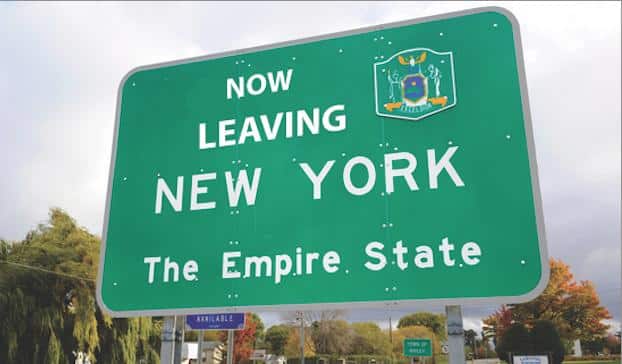
As budget deficits widen across several states, lawmakers are increasingly turning to a familiar political target: high-income earners. From New York and California to Minnesota and Rhode Island, proposals aimed at raising taxes on top earners and wealthy households are gaining traction as officials search for ways to close structural budget gaps without imposing broader tax increases on the general public.
A new report from the Tax Foundation argues that strategy could backfire, warning that higher taxes on a small number of wealthy residents may worsen long-term fiscal challenges by driving away taxpayers, investment, and economic activity. The report contends that many states are relying on narrow tax bases at a time when budget pressures are growing and economic uncertainty remains elevated.

States facing mounting fiscal pressure
The report highlights several states grappling with significant budget challenges. New York’s latest financial plan increased its projected structural budget deficit by $7 billion, resulting in a cumulative three-year gap of $34.3 billion. The state’s current budget totals $254 billion, with roughly one-third of spending supported by federal funding, leaving it vulnerable to potential cuts from Washington.
California faces a similar situation. While state officials project balanced budgets over the next two fiscal years, those projections rely heavily on reserves, borrowing, and one-time financial measures. Independent analysts project ongoing operating deficits averaging $10 billion annually over the next three years.
Minnesota is forecast to continue spending more than it collects through at least 2029, when it expects a deficit of approximately $6 billion. Rhode Island is dealing with a projected funding gap of roughly $300 million, equivalent to more than 5% of current state spending.
According to the report, these budget challenges are occurring in states where lawmakers have little appetite for raising taxes on middle- and lower-income residents, many of whom already face significant burdens from sales, property, fuel, and other taxes.
The push for higher taxes on top earners
Rather than cutting spending, many states have pursued proposals focused on higher-income households.
In Hawaii, lawmakers approved legislation creating a new 13% tax bracket for top earners, affecting roughly 3,000 taxpayers. Maine recently adopted a 2% surtax on income above $1 million, increasing its top tax rate to 9.15%. Illinois lawmakers are advancing a constitutional amendment that would raise tax rates on income above $1 million, while Rhode Island is considering a 3% surtax on taxable income above roughly $640,000.
Virginia legislators debated several proposals that would dramatically increase taxes on higher-income residents, including plans that could nearly double the state’s top marginal tax rate. Washington state approved a new tax on household income exceeding $1 million, marking what the report describes as the state’s first broad income tax in more than 90 years.
Supporters of such measures generally argue they can generate revenue while limiting impacts on most taxpayers. The Tax Foundation, however, argues that concentrating tax burdens on a small number of residents makes state finances more volatile and less predictable.
Wealth taxes gain attention
Beyond income taxes, several states are also exploring wealth taxes aimed at individuals with substantial assets.
California voters are expected to consider a ballot initiative this fall that would impose a one-time 5% tax on net worth above $1 billion. Minnesota has proposed a 1% annual tax on wealth exceeding $10 million, while Rhode Island lawmakers are considering a similar tax on financial assets above $25 million. Hawaii has also debated a wealth tax targeting individuals with net worth exceeding $20 million.
The report argues that wealth taxes present additional complications because they require governments to assign values to assets that may be difficult to price accurately, including privately held businesses, intellectual property, artwork, and investment holdings. It also warns that wealthy taxpayers may face liquidity challenges if taxes are assessed on paper wealth rather than cash income.
Critics of wealth taxes have long argued that such policies discourage investment and can encourage wealthy residents to relocate. Advocates, meanwhile, often contend that the wealthiest households should contribute more toward public services and government programs. The report takes the former view, concluding that wealth taxes create economic distortions while generating less revenue than supporters expect.
Why New York could be particularly vulnerable
While the report examines multiple states, New York receives special attention because of its existing reliance on high-income taxpayers.
According to the report, migration data show continued movement of higher-income households from high-tax states to lower-tax states, particularly places such as Florida and North Carolina. The report notes that concerns about outmigration have become significant enough in New York that state leaders have publicly encouraged former residents to return.
The broader concern raised by the report is that states increasingly dependent on a relatively small group of wealthy taxpayers may find themselves trapped in a cycle where tax increases lead to departures, shrinking the tax base and creating pressure for additional tax hikes.

FingerLakes1.com is the region’s leading all-digital news publication. The company was founded in 1998 and has been keeping residents informed for more than two decades. Have a lead? Send it to news@fingerlakes1.com.