

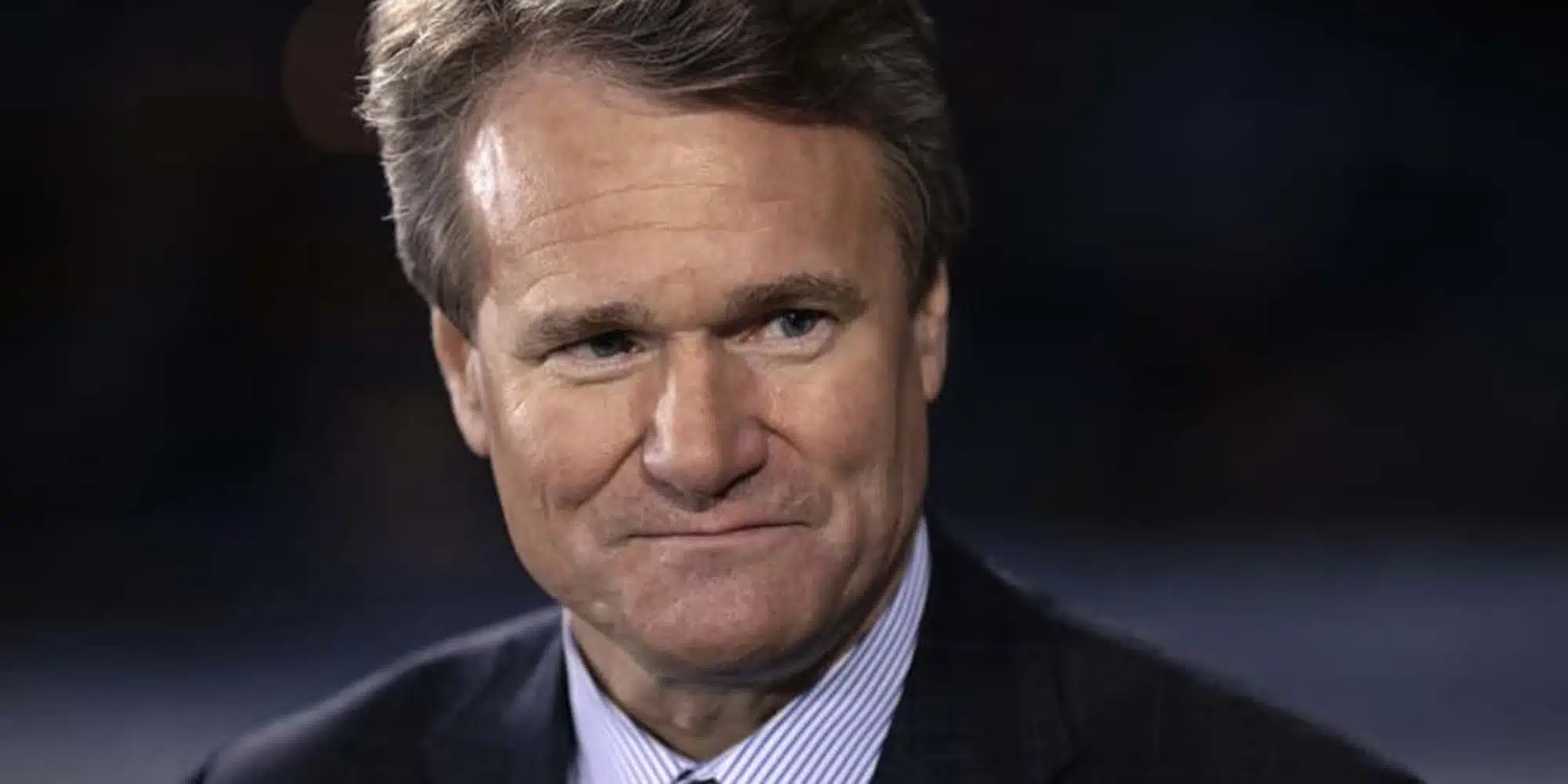
Bank of America CEO Brian Moynihan told a Hobart and William Smith Colleges audience that consumer spending remains strong even as higher interest rates, borrowing costs and government debt complicate the economic outlook. Speaking at the school's Anderton Economic Policy Symposium in Geneva on Tuesday, he also urged students to use artificial intelligence without letting it replace their judgment.
Moynihan said spending by the bank's consumer customers in September was about 5% higher than a year earlier. Cruise bookings rose about 13%, while restaurant spending increased roughly 3% to 4%, according to figures he cited during the discussion.

He described the economy as solid and said growth of about 2% would be consistent with a mature U.S. economy. Those figures reflect Bank of America's view of activity among its customers, not an official national economic report. Moynihan said inflation, interest rates and borrowing costs remain concerns, particularly for small and midsized businesses.
AI and the value of curiosity
Moynihan called AI a powerful technology that could change how professionals work, not merely make existing tasks faster. In medicine, he said, it can help researchers sort large amounts of information and identify promising discoveries.
For students entering the workforce, familiarity with AI could narrow some of the advantage that comes with years of professional experience, he said. But he warned that the tools can be wrong and that relying on them without checking their output could undermine learning and decision-making.
“My advice to people is harness (AI), learn from it. Make it your tool to make yourself successful,” Moynihan said. “The danger is, don't lose your curiosity.” He described reading widely as a habit he developed delivering newspapers while studying history at Brown University.
Moynihan said a liberal arts education is valuable when graduates continue to seek out unfamiliar ideas. “You have to open your aperture and keep it open,” he told the students.
Management and workers
Asked about leadership, Moynihan said new managers often make the mistake of continuing to do the tasks they held before a promotion. Their responsibility, he said, shifts toward helping employees succeed and explaining the purpose of their work.
He drew on his experience in Manhattan during the Sept. 11, 2001, attacks, when he helped coordinate a business response as employees dealt with the deaths of colleagues and friends. Leaders in a crisis must listen, absorb anxiety and remain steady, he said.
Moynihan also described Bank of America's approach to pay and retention. The bank raised its U.S. minimum hourly wage to $25 last year, he said, after years of comparing pay with cost-of-living benchmarks. In roles that once had turnover of about 30%, he said, turnover fell to roughly 12%. He did not provide a timeframe or a controlled comparison establishing how much of that change resulted from pay.
The company also cut management layers from 13 to seven and awarded stock to nonexecutive employees, Moynihan said. He argued that businesses can support employees and communities through their ongoing operations, not just charitable giving.
The symposium was established in 2022 by former HWS trustee James Anderton to bring economic and public-policy leaders to campus. HWS President Mark Gearan joined Moynihan for the conversation; the college said Moynihan also met with students during his visit.

FingerLakes1.com is the region’s leading all-digital news publication. The company was founded in 1998 and has been keeping residents informed for more than two decades. Have a lead? Send it to news@fingerlakes1.com.