


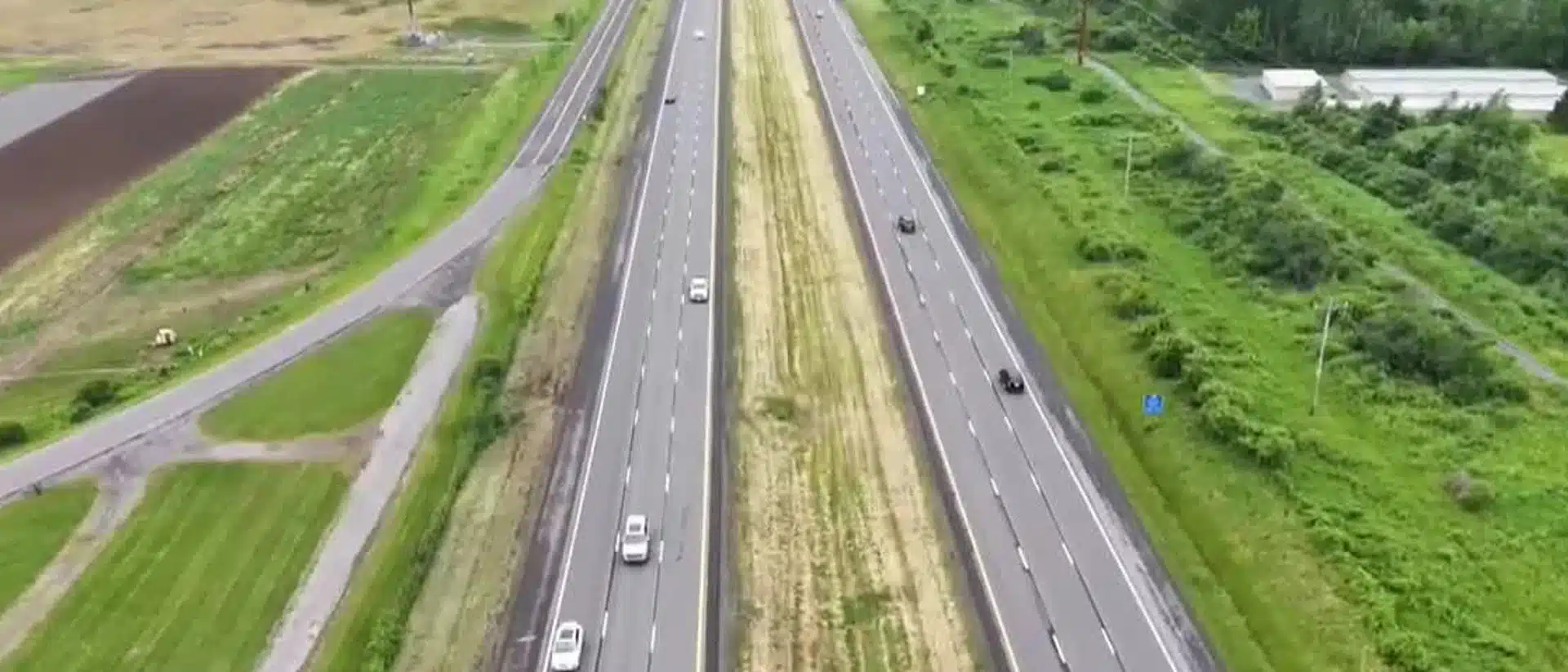
New York has launched the Central New York Forward project to study transportation needs in northern Onondaga County as major economic growth is expected around Micron's planned semiconductor investment.

The state Department of Transportation and Federal Highway Administration have published a notice of intent to begin an environmental impact statement for proposed safety and traffic-flow improvements in Cicero and Clay.

The review will focus on several major roadways, including State Route 31, Route 11, Interstate 81 and State Route 481. The proposed limits include State Route 31 between South Bay Road in Cicero and Oswego Road in Clay, Route 11 between Factory Street and Mud Mill Road in Cicero, Interstate 81 between the I-481 and Bartell Road interchanges, and State Route 481 between Route 11 and State Route 31.
State officials said the effort is tied to ongoing and planned development in northern Onondaga County, including Micron's $100 billion investment in Central New York. The state said the project is meant to improve traffic operations and safety, reduce the use of local residential streets by commercial trucks, improve truck accommodations on the state highway system, expand options for pedestrians, bicyclists and public transit users, and address aging bridge infrastructure.

The public can submit comments through CNYForward.com, at a community outreach office at 4483 State Route 31 in Clay, during public scoping meetings, or by mail to the state Department of Transportation's Region 3 CNY Forward Project Team in Syracuse.
The Clay outreach office opens to the public Tuesday, July 14. Office hours are scheduled for Tuesdays from 9 a.m. to 1 p.m. and Thursdays from 3 p.m. to 7 p.m.
Public scoping meetings will be held at Clay Town Hall, 4401 State Route 31, on July 30 and August 6. Sessions are scheduled from 1 to 3 p.m. and 4 to 7 p.m. both days, with the same content planned at each meeting.

Comments must be received by Friday, August 14. After reviewing comments, the state Department of Transportation will identify reasonable alternatives for further study in a draft environmental impact statement, with more public review and a public hearing planned before a final decision is issued.

FingerLakes1.com is the region’s leading all-digital news publication. The company was founded in 1998 and has been keeping residents informed for more than two decades. Have a lead? Send it to news@fingerlakes1.com.