

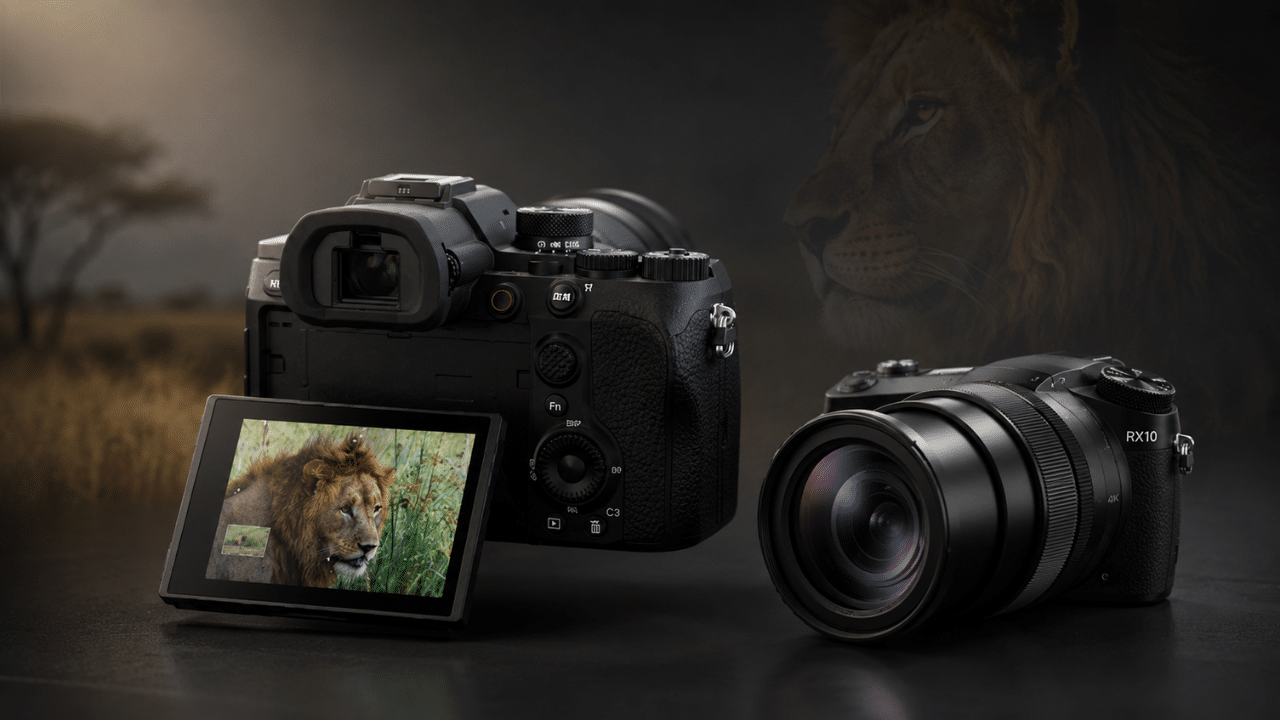
Sony has announced a new premium all-in-one superzoom camera series, the RX10 V, after an absence of nearly nine years. The new model is aimed at photographers who want to shoot travel, wildlife, birds, sports and everyday shots with one camera, without carrying around multiple interchangeable lenses. The RX10 V will go on sale in the U.S. in August of 2026 for $2,299.99.

Buyers Receive a 24-600mm Superzoom Lens
The main attraction is still the built-in ZEISS Vario-Sonnar T* lens, which offers a 24-600mm equivalent focal length and a maximum aperture of f/2.4-4. Sony combines that 25x optical zoom with a 20.1-megapixel, 1-inch-type stacked sensor. The camera can now take blackout-free bursts of up to 30 frames per second, giving action and wildlife photographers a better chance to capture fast, unpredictable moments.
Autofocus gets a big modern overhaul
In the meantime the RX10 V gets an all-new autofocus system that brings the bridge camera more in line with Sony’s more recent Alpha models. The new system has better subject recognition and faster tracking and is better for tracking moving subjects. Sony has also tweaked the body design and control layout to make the camera feel more modern than the RX10 IV, while retaining the all-in-one approach that made the series so popular.

Video Features Are Far More Powerful
One of the biggest upgrades is to video recording. The RX10 V can record 4K in the full width of the sensor at up to 60 frames per second, and also has faster recording modes for slow-motion work. It has a stacked sensor with AI-assisted autofocus and active stabilization, making it more useful for creators who need to move quickly between still photography and video without changing gear.
Much Better Battery Life
Sony has moved the RX10 V to the larger NP-FZ100 battery that is used by many Alpha cameras. The camera is rated at approximately 630 still images per charge when using the rear screen, a greater than 50 percent improvement in endurance over the RX10 IV. The body is also dust and moisture resistant, which is particularly handy for travel and outdoor photography.

Some Limitations Still Exist With The Small Sensor
The RX10 V is incredibly versatile, but its 1-inch-type sensor is still smaller than the APS-C and full-frame sensors in many interchangeable-lens cameras at similar prices. Initial testing showed image quality starts to degrade at higher ISOs, with low-light shooting still a weakness. The long zoom and speed may be more useful to buyers who mostly shoot in daylight, but photographers who shoot in the dark often should consider this tradeoff carefully.

Priyanshu Naithani writes about the fast-moving world of technology, including gadgets, apps, software, cybersecurity, digital trends, artificial intelligence, and innovation. His coverage is designed to make complex tech topics easier to understand and more useful for everyday readers.