

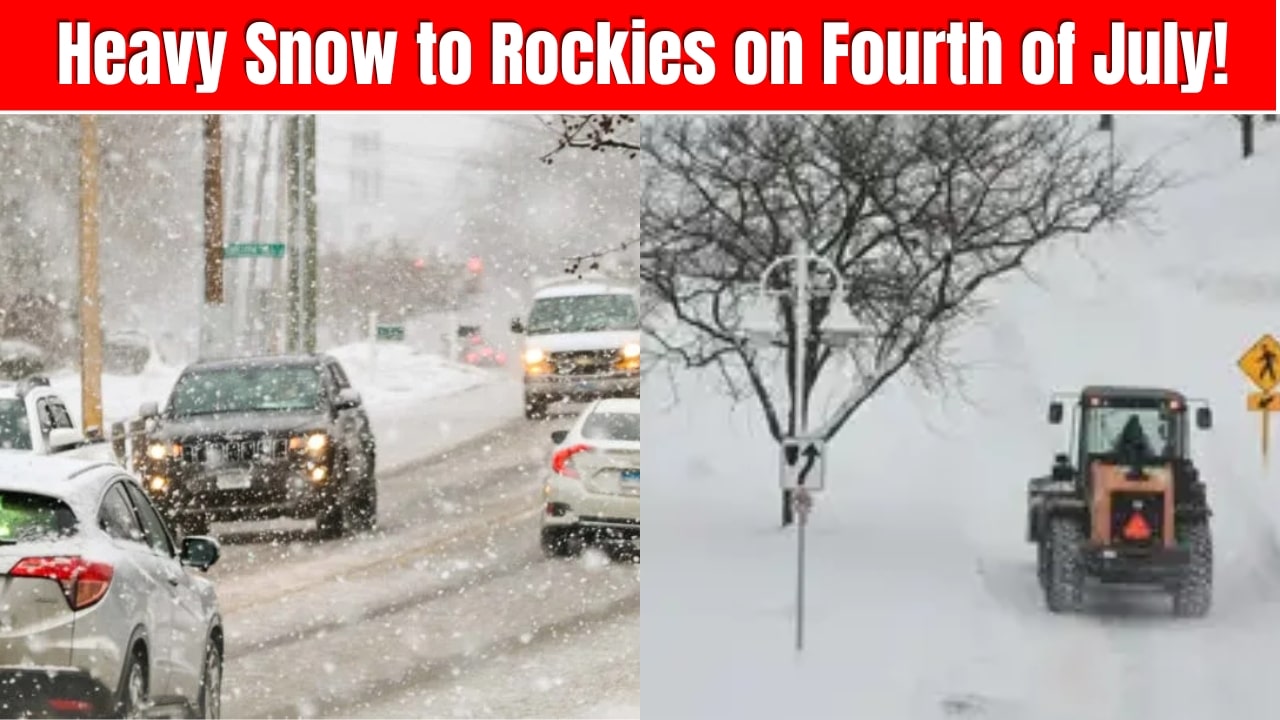
Summer is a season of warm temperatures and vacation travel, but regions of the western United States could experience an uncommon weather event only days before the Fourth of July. A severe storm system is predicted to surge into the Rockies with colder air, heavy snow at higher elevations, and widespread rain. The system could make travel across mountain passes problematic, while providing a rare reminder that winter weather can still return to the highest summits, even in early July, forecasters say.
Heavy Snow Likely for the Rockies
The unusual timing of the forecast for heavy snow in the Rockies before the Fourth of July has garnered the attention of meteorologists. Most of the snow will be above 9,000 to 10,000 feet, with several inches possible before the holiday weekend begins. It will be mostly rain at lower elevations, but gusty winds, chilly temperatures, and mountain snow could impact your outdoor plans, hiking trips, and holiday travel in areas of Colorado, Wyoming, Montana, Idaho, and Utah.
Where is the storm most likely to hit?
The hardest hits will likely be in the middle and northern Rockies. The best opportunity for snowfall will be found in the mountain ranges of Colorado, Wyoming, Montana, and Idaho. Some of the higher peaks could see a few inches, while nearby lowlands might suffer cool rain.
The weather system will also push moisture across neighboring states. Travelers along high mountain roads should anticipate quickly shifting weather conditions, particularly during the midnight and early morning hours when temperatures will be chilly enough to support snow.
Why is it snowing in the middle of summer?
July is one of the hottest months of the year, yet snow is not out of the question in the Rockies. Higher elevations remain cold enough for snow to fall whenever a strong upper-level cyclone pulls extremely cold air into the area.
 Louisiana Meteor Fireball Lights Up the Early Morning Sky Across the Southern United States
 The storm that is on the way should bring more moisture over the mountains and push the cooler Canadian air down to the south. The higher the elevation, the colder it will get; the rain will turn to snow and circumstances will be more like late spring than mid-summer.
The Storm’s Impact on Holiday Travel
The timing of the storm might make for messy traffic ahead of the Independence Day holiday. Drivers on mountain roadways may expect damp roads, poor visibility, and snow-packed areas on higher passes.
Campers and hikers will also find significantly colder-than-expected temperatures. Strong winds, rain, and fresh snowfall can raise hypothermia risk for anyone without suitable clothes and equipment. Travelers are advised to verify latest forecasts before traveling in the mountains.
What Should Visitors and Residents Bring?
If you are driving over the mountains, you are advised to take warm clothing, waterproof gear, and emergency supplies. Travelers should also check local weather advisories and traffic conditions before departing. Those camping at high elevations should be prepared for frigid nighttime conditions, even during summer.
Final Thought
The coming winter storm is a rare reminder that the Rockies may have winter-like conditions at any time of the year. Snow may be heavy at higher elevations, and lower temperatures and showers may impede holiday travel and outdoor enjoyment prior to the Fourth of July. If you are intending to visit the Rockies, keep informed, be prepared for shifting weather conditions, and give yourself some extra driving time. With appropriate planning, this odd early summer weather occurrence can be safely navigated by residents and visitors.

Akash Negi focuses on weather coverage that helps readers stay prepared, from daily forecasts and seasonal changes to storm alerts, temperature shifts, and weather-related updates. His reporting provides clear and timely information for people planning their day, travel, and local activities.