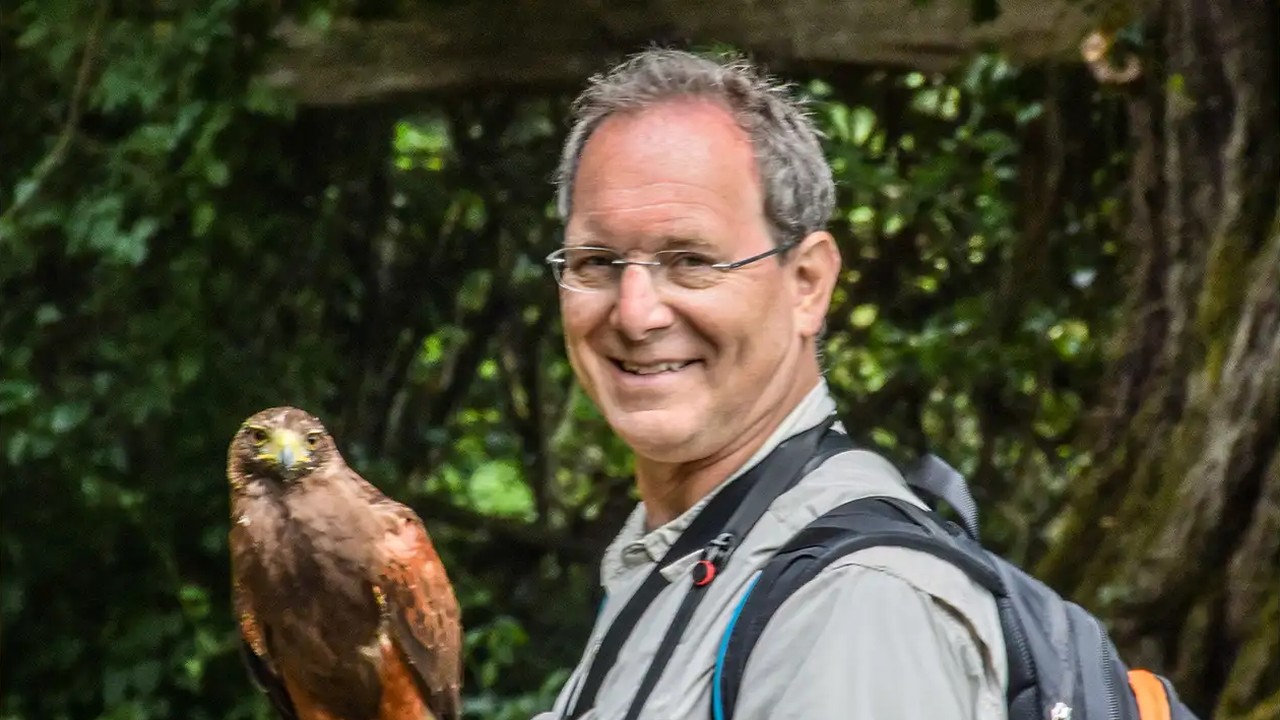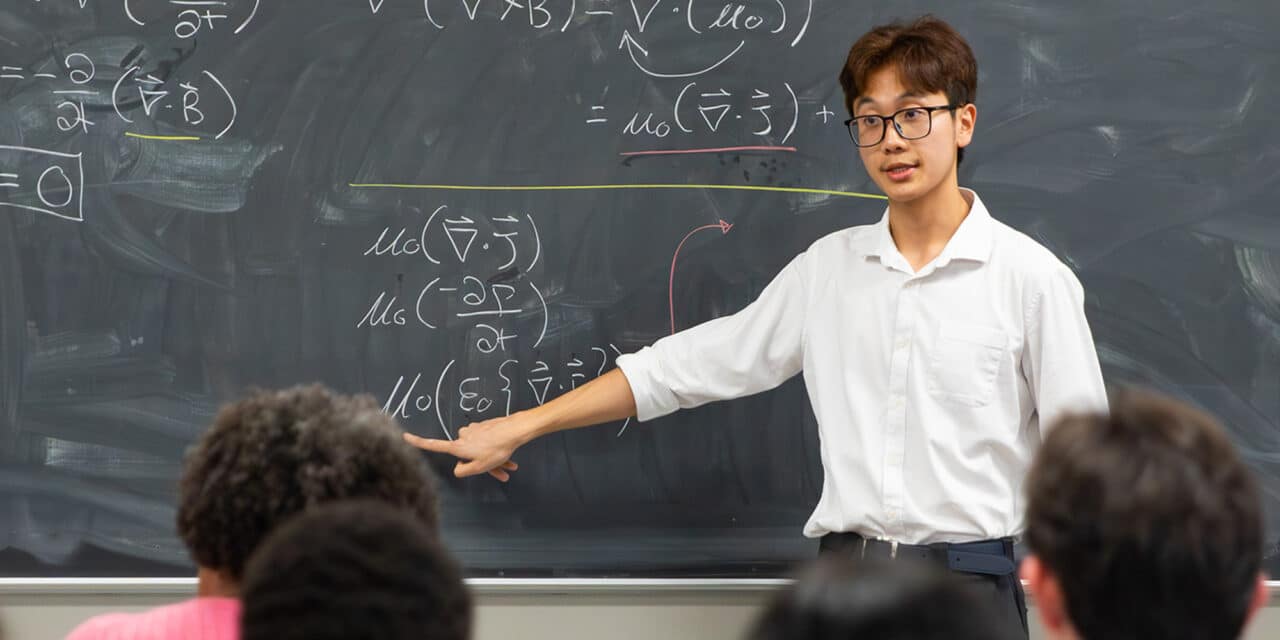
When Randy Hong arrived at Hobart and William Smith Colleges, he wasn’t convinced science was for him. Four years later, he has graduated with two interdisciplinary majors, developed a mind-controlled prosthetic arm and secured a prestigious National Institutes of Health grant to support doctoral studies in neuroscience.
Hong, a member of the Class of 2026, will begin a Ph.D. program at the University of California, Davis this fall after completing honors research in computational neuroscience and engineering-inspired prosthetics at HWS.

Hong’s path began in a biopsychology course taught by Assistant Professor Elizabeth Belcher. Originally interested in philosophy, psychology and public health, he became fascinated by neuroscience after learning how the brain controls movement and how technology can help people recover function after traumatic injuries.
The subject also connected to his personal experiences. Hong, whose family emigrated from Vietnam, said he grew up around people affected by war-related amputations and physical injuries, inspiring an interest in assistive technologies.
Working with faculty mentors across multiple disciplines, Hong pursued studies in psychology, neuroscience, mathematics, biology, physics and computer science. His honors thesis research, conducted with Professor of Psychological Science Daniel Graham and Associate Professor of Mathematics Yan Hao, examined how large groups of neurons perform complex calculations and how mathematical models can help explain brain structure.
At the same time, Hong developed a prosthetic arm capable of mirroring human hand and arm movements through a sensor-based control system. The project was completed during an independent study with Professor of Physics Ileana Dumitriu, with additional support from members of the Physics Department.
Faculty members said Hong designed and programmed the entire system himself over the course of a single semester.
The project reflected the interdisciplinary nature of Hong’s education at HWS, where he combined coursework and mentorship from multiple academic departments to pursue interests not tied to a single major. He also received guidance from faculty in gender studies, mathematics and computer science while refining both the technical and social impact of his research.
This fall, Hong will continue his work on neuroscience and prosthetic technologies at UC Davis. His NIH-funded doctoral research will focus on understanding the brain and applying that knowledge to assistive technologies that can improve the lives of people with disabilities and mobility impairments.
Earlier this month, Hong and Graham presented their research at the international Network Neuroscience conference in Boston. Hong was also selected to deliver the senior speech at HWS Commencement.

FingerLakes1.com is the region’s leading all-digital news publication. The company was founded in 1998 and has been keeping residents informed for more than two decades. Have a lead? Send it to news@fingerlakes1.com.