

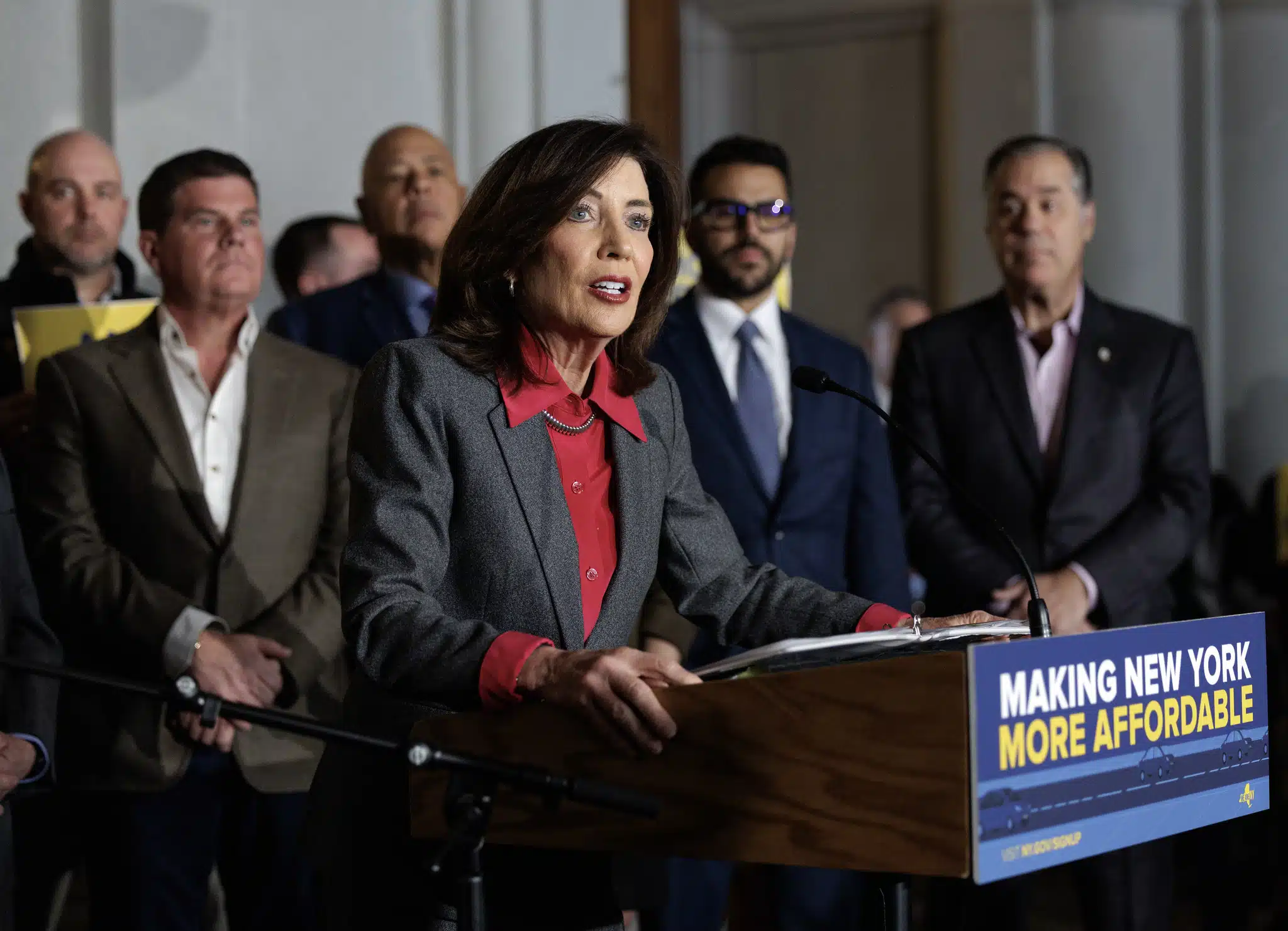
After more than a month of delays and closed-door negotiations, Gov. Kathy Hochul announced Thursday that she had reached a conceptual agreement with legislative leaders on New York’s Fiscal Year 2027 budget — a sprawling $268 billion spending plan focused on affordability, housing, energy, public safety, and child care.
But within hours of Hochul declaring “we got it done,” top Democrats in the Legislature publicly pushed back, exposing deep frustration inside the Capitol and raising questions about how complete the agreement actually is.

“There’s no budget deal. There’s no deal!” Assembly Speaker Carl Heastie told reporters Thursday in Albany, sharply criticizing the process that has dragged more than five weeks beyond the April 1 deadline.
The unusual public split underscored growing tensions between Hochul and legislative Democrats after months of negotiations that expanded far beyond spending into major policy fights involving housing, immigration, insurance reform, energy affordability, and criminal justice.
Hochul framed the agreement as a major affordability package for working families.
“I promised a Budget that works for working people and expands opportunities for all New Yorkers,” Hochul said Thursday. “We’re delivering on affordability, on safety, on childcare, on the environment and on housing.”
The governor’s office said the final budget framework totals approximately $268 billion — roughly $8 billion higher than the proposal Hochul introduced in January.
Among the largest pieces is a major child care expansion. The agreement commits another $1.7 billion toward child care and pre-kindergarten programs, bringing total state investment to $4.5 billion. The administration says the plan moves New York toward universal child care through expanded subsidies, broader pre-K access, and new programs aimed at reducing family costs.
The budget also includes a one-time $1 billion energy rebate program intended to offset rising utility bills while advancing broader utility oversight reforms. Proposed changes would tie executive compensation at utilities to affordability metrics, restrict certain costs from being passed onto ratepayers, and require utilities to present lower-cost alternatives during rate cases.
Housing and development reforms also emerged as a central piece of negotiations. The agreement includes significant changes to the State Environmental Quality Review Act, or SEQRA, which state leaders say will speed up housing and infrastructure construction by reducing duplicative environmental reviews for certain projects.
The budget additionally includes legal reforms targeting New York’s high auto insurance rates. Hochul said the measures are intended to crack down on fraud, reduce lawsuits, and prevent insurers from using factors like ZIP code, occupation, or education level when setting rates.
Immigration policy became one of the most politically charged parts of negotiations. The agreement includes restrictions on cooperation between local law enforcement and federal immigration authorities, limits on ICE activity in schools and hospitals without judicial warrants, and new legal protections for immigrants facing constitutional violations.
Other major provisions include expanded gun violence prevention funding, new restrictions targeting ghost guns and modified firearms, free school meals statewide, affordable housing investments, additional local aid, clean water funding, and billions for schools, roads, bridges, and hospitals.
But despite the governor’s announcement, legislative leaders made clear many details remain unresolved.
Heastie blasted the growing practice of tying major policy disputes directly into budget negotiations, arguing lawmakers still have not fully agreed on spending specifics.
“We signed off on nothing major,” Heastie said. “Budgets are supposed to be about money, not policy.”
Senate Deputy Majority Leader Michael Gianaris said lawmakers are only now beginning what he described as the “real budget work” — determining final spending details and bill language.
Other Democrats accused Hochul of declaring victory before major issues had been finalized, including proposals tied to pension benefits and New York City tax policy.
The budget process has now stretched 37 days beyond the constitutional deadline, leaving lawmakers unpaid under state law while negotiations continued behind closed doors.
Lawmakers are expected to return to Albany next week to continue working through final details before voting on budget bills that would formally enact the agreement.

FingerLakes1.com is the region’s leading all-digital news publication. The company was founded in 1998 and has been keeping residents informed for more than two decades. Have a lead? Send it to news@fingerlakes1.com.