

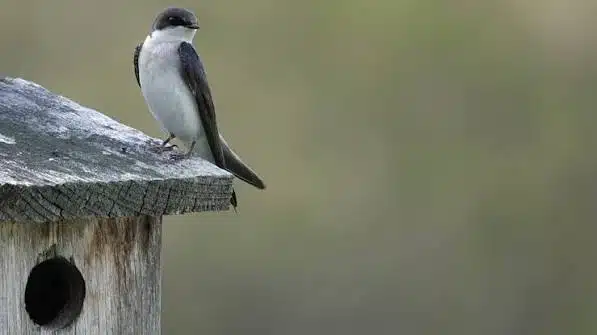
Tree swallows in the northern United States and Canada may be especially vulnerable to climate change, according to a new Cornell-led study that analyzed nearly 95,000 nests over five decades.
Researchers found that northern tree swallows respond to temperature in ways similar to southern populations, but they face greater warming, more year-to-year temperature swings and longer migrations before breeding.

The findings were published July 7 in Proceedings of the National Academy of Sciences.
The study was led by Cornell researchers and involved 28 research groups across North America, along with data collected by about 40,000 people through participatory science programs, including NestWatch, run by the Cornell Lab of Ornithology.
Researchers analyzed tree swallow nesting records and temperature data from 1966 to 2024 at 123 sites, spanning Alaska to the southern United States. They also used eBird data shared with the Cornell Lab to estimate when swallows arrived on their breeding grounds.
The study found that vulnerability to climate change can come not only from how strongly a species reacts to warming, but also from limits on its ability to respond. Northern birds face a tighter timing window because they must migrate farther, may arrive in poorer condition and are breeding in places where pre-breeding weather has become more variable.
Tree swallows are aerial insectivores, birds that eat flying insects. Cornell said that group has experienced steep population declines across North America and serves as an important indicator of ecosystem health.
The study suggests climate change may create a "timing squeeze" for northern tree swallows, even when the birds are capable of shifting nesting behavior in response to temperature.
Cornell Lab of Ornithology researcher Kathi Borgmann reported the findings for the Cornell Chronicle.

FingerLakes1.com is the region’s leading all-digital news publication. The company was founded in 1998 and has been keeping residents informed for more than two decades. Have a lead? Send it to news@fingerlakes1.com.