

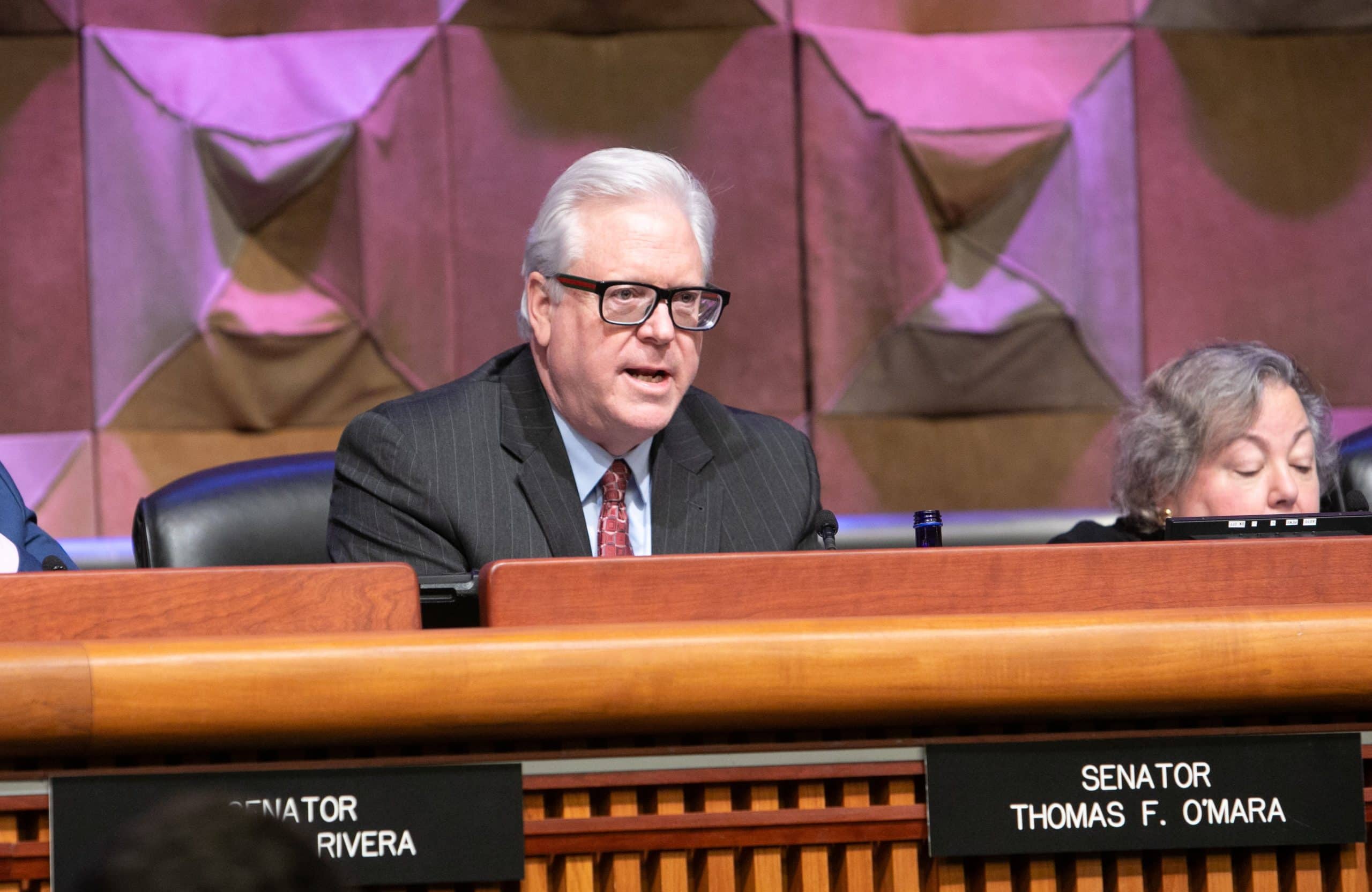
State Sen. Tom O’Mara is accusing New York’s Democratic leadership of worsening the state’s affordability crisis by continuing what he calls costly and unrealistic energy policies.
In his weekly legislative column, O’Mara pointed to the recently enacted 2026-27 state budget and argued that Albany’s approach to energy policy is driving higher utility bills, gasoline prices and overall living costs for New Yorkers.

O’Mara highlighted a revised state financial plan showing the budget totals approximately $277 billion, nearly $10 billion more than originally announced when lawmakers approved it in May. He said the increase reflects a continued pattern of excessive spending that fails to address the financial challenges facing residents and businesses.
The Elmira Republican focused much of his criticism on New York’s climate and energy policies, including the Climate Leadership and Community Protection Act, the state’s proposed Cap-and-Invest program and the electric school bus mandate. He argued those initiatives are contributing to rising energy costs while placing additional strain on the state’s electric grid.
Citing energy price data, O’Mara said New York residents pay some of the highest electricity rates in the nation and warned that continued electrification mandates could lead to higher costs and reliability concerns in the future.
The senator also promoted several proposals backed by Senate Republicans, including temporary utility tax holidays, repeal of the state’s electric school bus mandate, greater transparency regarding energy-related surcharges on utility bills and elimination of the System Benefits Charge that helps fund renewable energy programs.
O’Mara contended that New York’s current energy strategy is unaffordable and unworkable, particularly for families, businesses, school districts and farmers. He urged residents to continue voicing concerns about rising utility bills and state energy mandates.
The column is part of O’Mara’s ongoing criticism of state spending and energy policy following the conclusion of the 2026 legislative session.

FingerLakes1.com is the region’s leading all-digital news publication. The company was founded in 1998 and has been keeping residents informed for more than two decades. Have a lead? Send it to news@fingerlakes1.com.