


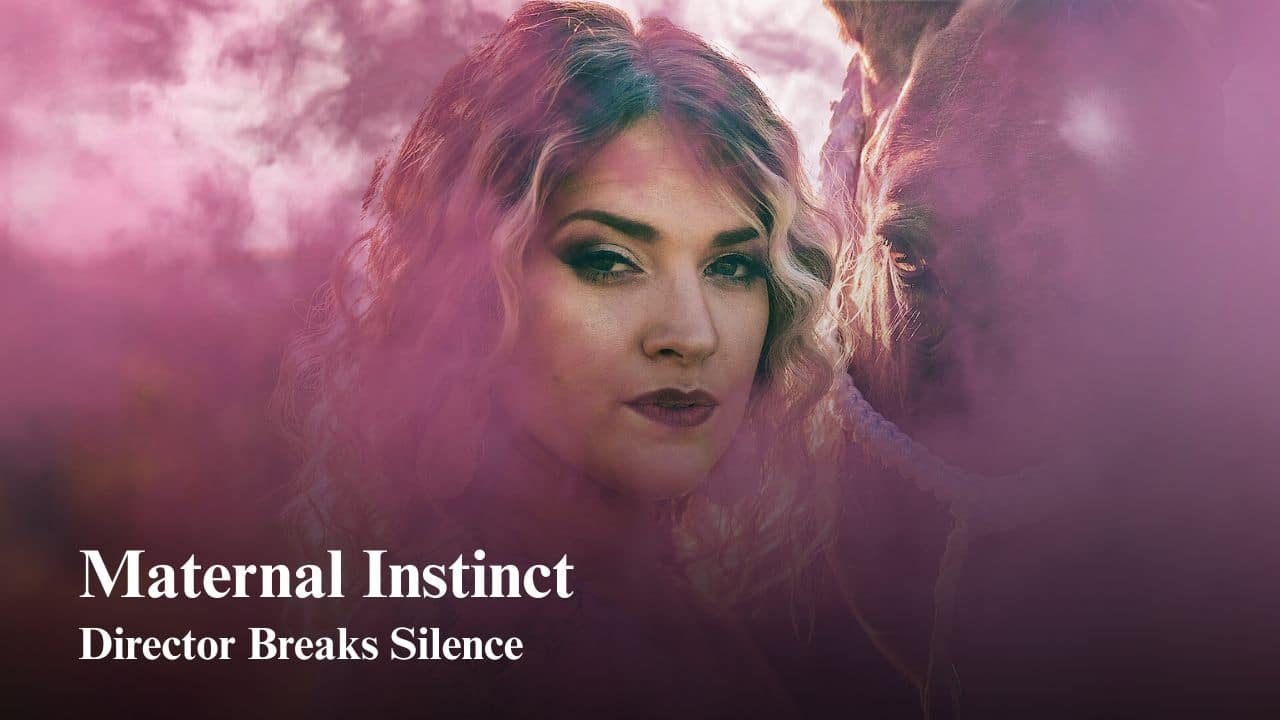
The true-crime documentary Maternal Instinct has left viewers deeply disturbed following the premiere of the film, which forces viewers to face the terrifying details of a crime that feels too dark to be real. Directed by Jessica Dimmock, the film investigates the actions of Taylor Parker, an East Texas woman who orchestrated an elaborate, months-long fake pregnancy that ended in the brutal murder of her casual friend, 21-year-old expectant mother Reagan Simmons-Hancock.
Even with the Texas Court of Criminal Appeals upholding Parker’s capital murder conviction and death sentence, the sheer malice of the case continues to haunt the public.
An Unfathomable and Unique Degree of Cruelty
What distinguishes this tragedy from typical true-crime stories is the shocking degree of premeditation and physical violence. Fetal abduction is still a statistical anomaly, but Dimmock points out that the duration of Parker’s calculated selfishness and pure barbarity puts her actions in a class by themselves. Simmons-Hancock was beaten and stabbed more than 100 times in her own home with her three-year-old daughter in the room.
Dimmock has an internal instinct of parental protection that makes it impossible for her to understand how a mother like Parker could commit such an act, steal an unborn infant, and just leave a toddler at the scene. The pure absence of human empathy, combined with the extreme physicality of the assault, is a major anchor for the audience to stay distressed.
Small Town Trust, Big Lie
The psychological mechanics of the ruse add an additional layer of horror to the documentary. Parker was able to weave a complicated web of conflicting lies that fooled an entire community, including her boyfriend. Dimmock wrestles with how the natural, close-knit trust of a small town was so heavily weaponized.
She used different lies for different people, deliberately keeping them apart so they’d never cross-reference her stories or learn to trust one another. She capitalized on a quiet, local culture where people were naturally averse to rocking the boat or meddling in other people’s business. By the time community members started to put things together and investigate her background, the deception had already become an active, lethal threat.
Close the Perpetrator Up for the Sake of the Victim?
Maternal Instinct makes a unique, creative choice in the absence of any direct commentary or interviews with Parker. Dimmock was careful not to give the killer a platform to spin more fabrications, noting that even as she awaited trial, Parker was still at it, spinning elaborate tales to avoid personal responsibility. Likewise, the film deliberately avoids the defense’s psychiatric diagnoses. Dimmock said, “The state’s experts said her actions indicated psychopathy and she never raised an insanity defense, so the exact clinical label was far less important than the devastating impact of her actions.”
Instead, the documentary puts its entire focus on the family she left behind and the memory of Simmons-Hancock, a wife, daughter, and mother who was the epitome of love and the best of all of us. But beyond the immediate tragedy, the film points to a troubling systemic failure with medical regulations. Medical practitioners were acting well within the bounds of the law, but the narrow confines of HIPAA regulations legally prevented professionals from warning those closest to Parker about her fraudulent medical claims. This critical vulnerability leaves viewers with a sobering final thought on how the very laws built to protect privacy can inadvertently isolate a dangerous individual, leaving vulnerable families entirely unprotected.
