


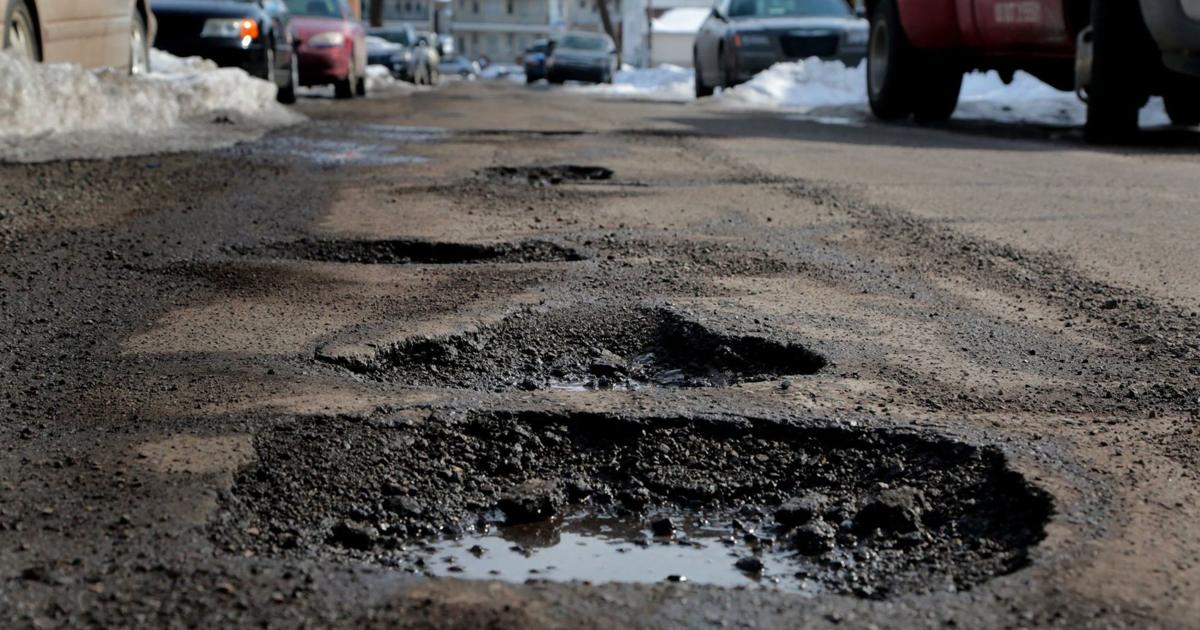
New York’s roads are still among the roughest in the nation, even after billions in new federal infrastructure funding poured into highway and bridge projects over the last several years.
A new analysis from Construction Coverage found that 24.3% of New York’s major roadways are in poor condition, ranking the state fifth worst in the country behind only Rhode Island, Massachusetts, California, and Hawaii. The report used data from the Federal Highway Administration’s 2024 Highway Statistics Series to evaluate interstate highways, expressways, and other major arterial roads.

The findings land as New Yorkers continue navigating pothole-filled streets, aging expressways, and heavily traveled corridors that have long frustrated commuters and local officials alike. While federal infrastructure spending has accelerated since passage of the Infrastructure Investment and Jobs Act in 2021, researchers say many states with older infrastructure systems continue struggling to keep pace with maintenance demands.
The report found that road construction spending nationwide surged roughly 25% in recent years, climbing from about $120 billion annually before the infrastructure package to nearly $150 billion by 2025 and early 2026 after adjusting for inflation.
Still, more than one in every eight miles of major roadways across the U.S. remains in poor condition.
New York’s ranking reflects challenges common across the Northeast, where dense urban development, older infrastructure, harsh winters, and heavy traffic volumes create constant wear on highways and local roads. Neighboring states also ranked poorly, including Massachusetts at 29.3% and Connecticut at 20.5%.
Researchers noted that the share of U.S. roads rated in good condition has improved over time, reaching 55.1% nationally in 2024. But the percentage of roads classified as poor has actually risen slightly since 2000, underscoring how difficult it has been for governments to overcome decades of deferred maintenance.
The study classified roads using the International Roughness Index, which measures pavement smoothness. Roads with ratings greater than 170 inches per mile were considered in poor condition.
States with lighter traffic volumes and more rural roadway networks generally performed far better. Kansas ranked best nationally, with only 2.8% of major roads classified as poor. Wyoming and Indiana also ranked near the top.
For New Yorkers, the report reinforces a reality drivers already know firsthand: despite massive public investment and ongoing construction projects statewide, smoother roads may still be years away in many communities.

FingerLakes1.com is the region’s leading all-digital news publication. The company was founded in 1998 and has been keeping residents informed for more than two decades. Have a lead? Send it to news@fingerlakes1.com.