


In the historic estates of Southampton, NY, architectural integrity is found in the details. Among the most sophisticated yet misunderstood features of these homes is the classic weight and chain counterbalance system. Unlike modern tension springs or vinyl tracks, the weight and chain system is a marvel of 19th-century engineering—designed to last centuries, provided it receives the master-level restoration it deserves.
At Artan Window Solutions, we believe that true preservation requires a deep understanding of these mechanical treasures. Our current project on Main Street serves as a premier example of professional historic window restoration in Long Island, where we marry traditional craftsmanship with modern precision to bring these “eyes of the house” back to life.
Understanding the Mechanics of Elegance
The beauty of a weight and chain window lies in its simplicity and physics. Inside the window “pocket” (the hidden hollow space in the frame) sits a heavy lead or iron weight. This weight is connected to the wooden sash by a durable bronze or iron chain that runs over a pulley.
When perfectly balanced, the heavy wooden sash should feel weightless, staying exactly where you leave it and moving with what we call “one-finger operation.”
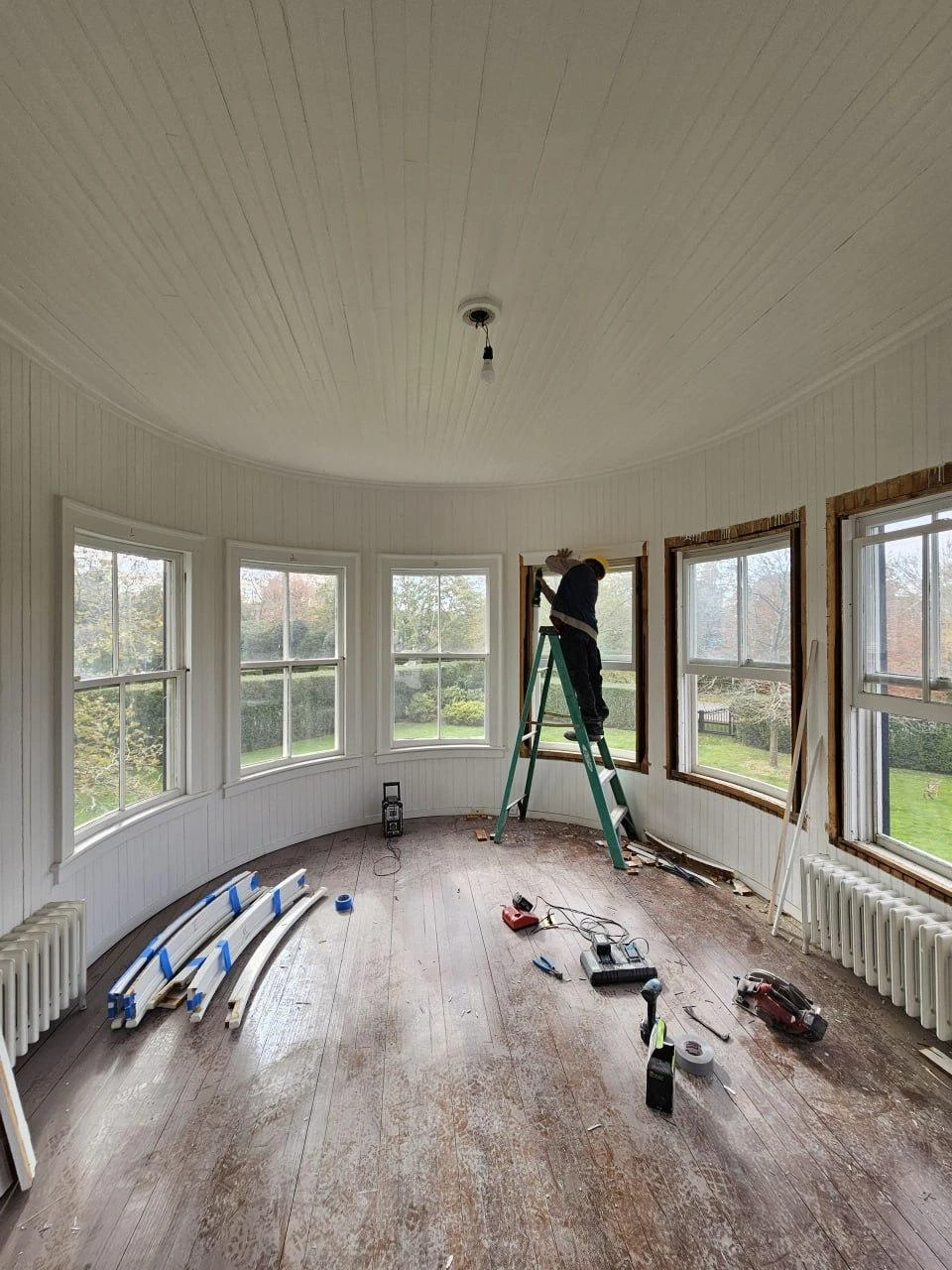
The Restoration Journey: A Step-by-Step Masterclass
Restoring these systems is a surgical process. At the Main Street residence, the Artan Window Solutions protocol follows a rigorous path:
1. Surgical Dismantling
The process begins with the careful removal of the interior stops and parting beads. Because these elements have often been painted over for decades, we use specialized tools to “break” the paint seal without splintering the historic wood. The sashes are then gently extracted, and the weights are secured to prevent them from dropping into the pockets.
2. Stripping to the Soul
To restore movement, we must first remove the friction. We utilize eco-friendly methods to strip away layers of old paint and brittle glazing. This reveals the old-growth timber—a material far denser and more rot-resistant than anything available in hardware stores today.
3. Structural Stabilization
Historic wood often suffers from minor decay at the meeting rails or stiles. We employ two primary methods:
- Dutchman Patches: Cutting out damaged sections and seamlessly inlaying new, matching wood.
- Epoxy Consolidants: Using high-grade resins to reinforce the cellular structure of the original timber.
4. Hardware Revitalization
The chains and pulleys are the “engine” of the window. In Southampton’s salt-air environment, bronze and iron hardware can become pitted or seized. We clean, lubricate, and polish the original pulleys. If a chain is compromised, we source period-accurate solid bronze replacements that offer superior strength and a timeless aesthetic.
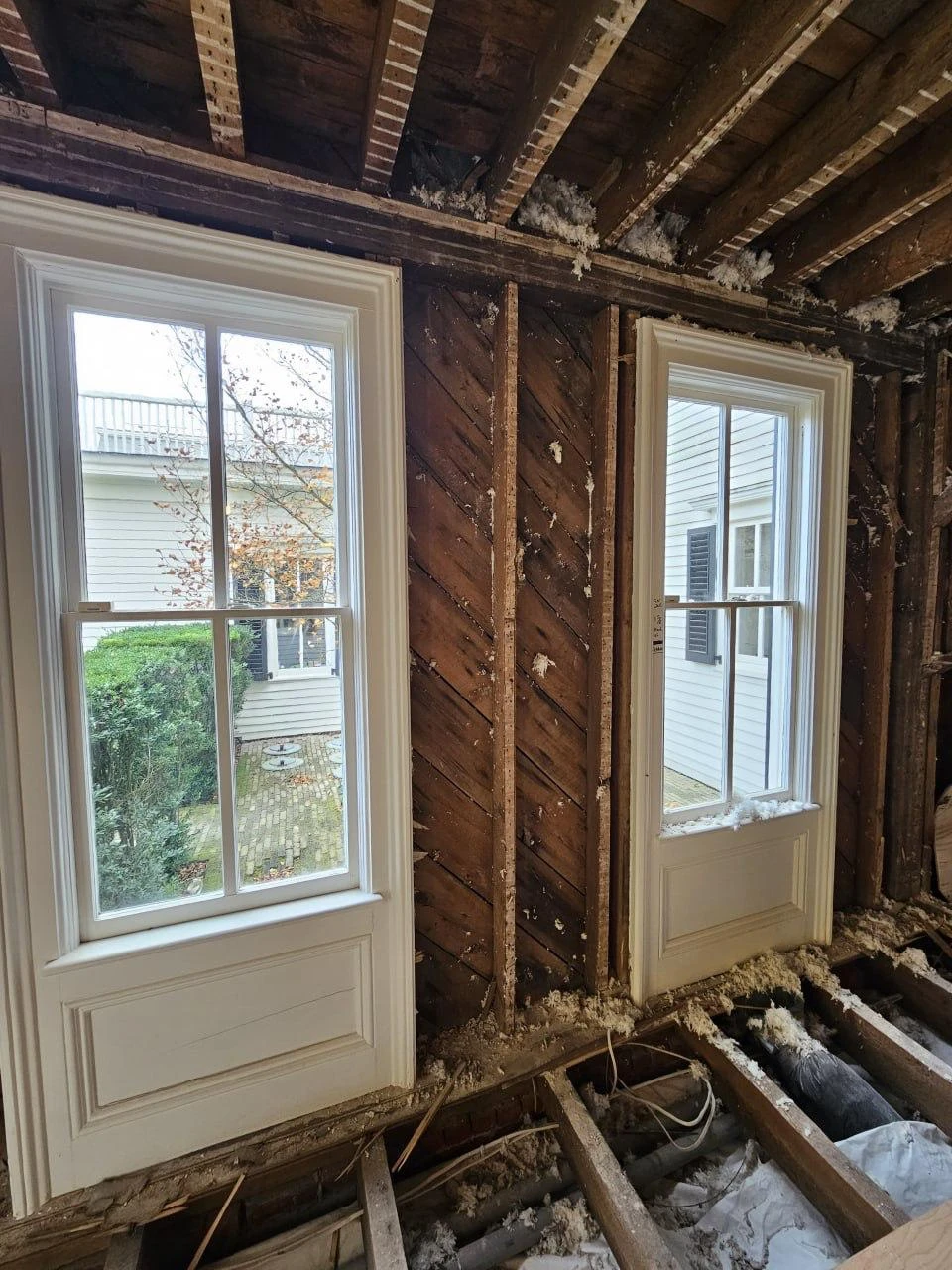
5. Precision Re-Weighting: The Perfect Balance
This is where the “art” meets science. If a homeowner decides to upgrade the glass to a thicker, restoration-grade pane, the original weight will no longer be sufficient. We calculate the exact weight of the restored sash and adjust the internal counterweights to ensure the physics are perfect.
Why Restoration Trumps Replacement
For a property on Main Street, the original weight and chain windows are irreplaceable assets.
- Longevity: A restored weight and chain window can last another 100 years. Modern replacement “inserts” typically fail within 15–20 years.
- Authenticity: The depth of the window profile and the mechanical sound of the chain over the pulley provide a sensory experience that defines luxury historic living.
- Sustainability: We are not just saving a window; we are keeping old-growth timber out of landfills and avoiding the high carbon footprint of manufacturing new units.
Preserving the Legacy
The work currently underway in Southampton serves as a reminder that we don’t have to sacrifice history for functionality. By treating the weight and chain system as a fine piece of machinery rather than an old building component, we ensure that the architectural soul of the Hamptons remains intact for the next generation of stewards.
This project at South Main Street is currently in progress. Stay tuned for a full technical case study upon completion.

This content is brought to you by the FingerLakes1.com Team. Support our mission by visiting www.patreon.com/fl1 or learn how you send us your local content here.