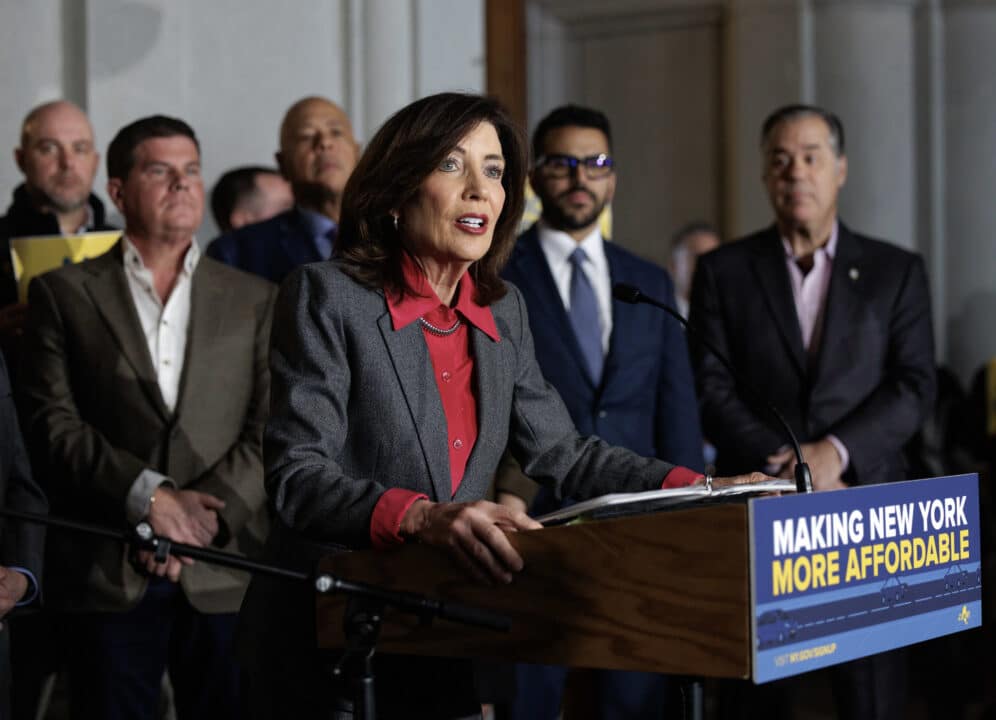
Gov. Kathy Hochul has vetoed two major bills in a bipartisan legislative package aimed at stabilizing emergency medical services across New York, approving only a county-level planning requirement as lawmakers and EMS officials warn of worsening service gaps, particularly in rural communities.
The vetoed measures would have allowed local governments to fund emergency medical services outside the state’s property tax cap and exempt ambulances and fire vehicles from New York State Thruway tolls while responding to emergencies. Supporters said the proposals were designed to address chronic underfunding, rising operating costs, declining volunteer participation, and long response distances that continue to strain EMS systems statewide.
Hochul rejected the EMS tax-cap exemption bill, sponsored by Sen. Rachel May and Assemblymember Donna Lupardo, arguing that removing EMS spending from the tax levy limit could lead to higher property taxes for homeowners and businesses. In her veto message, the governor defended the state’s tax cap, enacted in 2011, saying it has been effective in limiting local property tax growth and producing savings for taxpayers.
“This bill, as written, could lead to substantially higher property taxes imposed on homeowners and businesses in communities throughout the state,” Hochul said, adding that she was “constrained to veto” the measure.

The second vetoed bill would have required the New York State Thruway Authority to issue emergency services permits allowing ambulances and fire vehicles to travel toll-free while responding to emergencies. EMS officials said toll expenses can consume limited budgets, especially for rural agencies that routinely travel long distances to reach hospitals and specialty care facilities. Hochul vetoed the measure without issuing a detailed public explanation specific to the toll exemption.
Hochul did approve the third bill in the “#RescueEMS” legislative package, which requires counties to convene municipalities and regional EMS councils to develop comprehensive emergency medical system plans. The law mandates an assessment of current service levels, identification of coverage gaps, cost estimates, and decisions on how EMS services will be organized and funded within each county.
Supporters welcomed the planning requirement but cautioned that it does not address the underlying financial instability facing many EMS providers. Lupardo said the veto message did not offer alternative solutions to what lawmakers across party lines have described as a growing EMS funding crisis.
Lawmakers and emergency service leaders have repeatedly warned that without new funding mechanisms, municipalities — particularly rural towns and villages — face longer response times, reduced coverage, or the loss of ambulance services altogether. Rural agencies often rely heavily on volunteers, cover larger geographic areas, and incur higher transportation costs, making them especially vulnerable under the current tax cap.
Sen. Rachel May said the vetoes leave local governments with new planning obligations but few tools to pay for the services those plans are likely to identify as necessary.
While Hochul has emphasized fiscal restraint and taxpayer protection, EMS advocates argue that planning without sustainable funding risks formalizing service gaps rather than closing them — a concern they say could accelerate the erosion of emergency medical coverage in rural New York.

FingerLakes1.com is the region’s leading all-digital news publication. The company was founded in 1998 and has been keeping residents informed for more than two decades. Have a lead? Send it to news@fingerlakes1.com.