

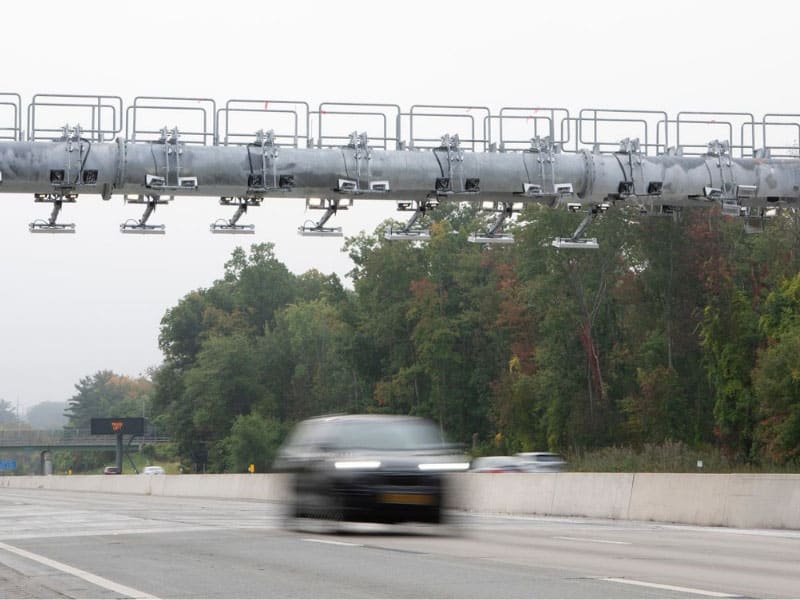
A new state audit reveals gaps in how the New York State Thruway Authority handles toll billing, discounts, and customer complaints — even as most toll transactions are billed correctly.

The report, released by State Comptroller Thomas DiNapoli, examined more than 22 million toll transactions and found that about 5% were billed incorrectly during a three-week period. While most issues were small, auditors say even limited errors can undermine trust in the system.
What did the report find?
- Thousands billed incorrectly near Exit 25A: Roughly 36,000 drivers were charged tolls when they shouldn’t have been, and 8,000 who should’ve been charged weren’t. This exit, located near Albany, is supposed to be free for short-distance travel under an agreement with the state DOT — but the system didn’t always get it right.
- Unbillable transactions rising: Over 91,000 transactions couldn’t be billed due to unreadable license plates or other technical issues. NYSTA recently updated its accounting method to reflect the higher potential revenue loss from these missed tolls.
- Discounts going unchecked: Nearly half of the Grand Island and Mario M. Cuomo Bridge E-ZPass discounts reviewed lacked documentation to show recipients actually lived in eligible areas. Some discount recipients were found living outside of the required zones.
- Free travel for some with no oversight: Of 75 non-revenue E-ZPass tags sampled — including those given to retirees, state employees, and officials — 61% had no paperwork to support why they were issued.
- Fee reductions not following the rules: In 12 out of 20 reviewed cases, the Toll Payer Advocate reduced or waived fees beyond what internal guidelines allow — and didn’t document why.
- Returned mail going ignored: Of 25 pieces of NYSTA mail returned as undeliverable, most were never flagged. Many involved New York and Massachusetts plates, yet toll bills kept going to the same wrong address.
Auditors say these gaps — especially in customer service and discount eligibility — risk creating a perception of unfairness, even if most tolls are billed correctly. They recommend NYSTA tighten oversight, improve documentation, and flag undeliverable mail for follow-up.
The audit reviewed transactions from 2019 through 2023. NYSTA has agreed to implement most of the nine recommendations, though it maintains that its fee reductions followed internal policy.


FingerLakes1.com is the region’s leading all-digital news publication. The company was founded in 1998 and has been keeping residents informed for more than two decades. Have a lead? Send it to news@fingerlakes1.com.