

States would get a new federal funding source to add recommended newborn health screenings under a bipartisan bill introduced by Rep. Nick Langworthy, the Western New York Republican's office announced Friday. The proposal would authorize $35 million annually for five years to help states put screenings on the federal recommended panel into practice.
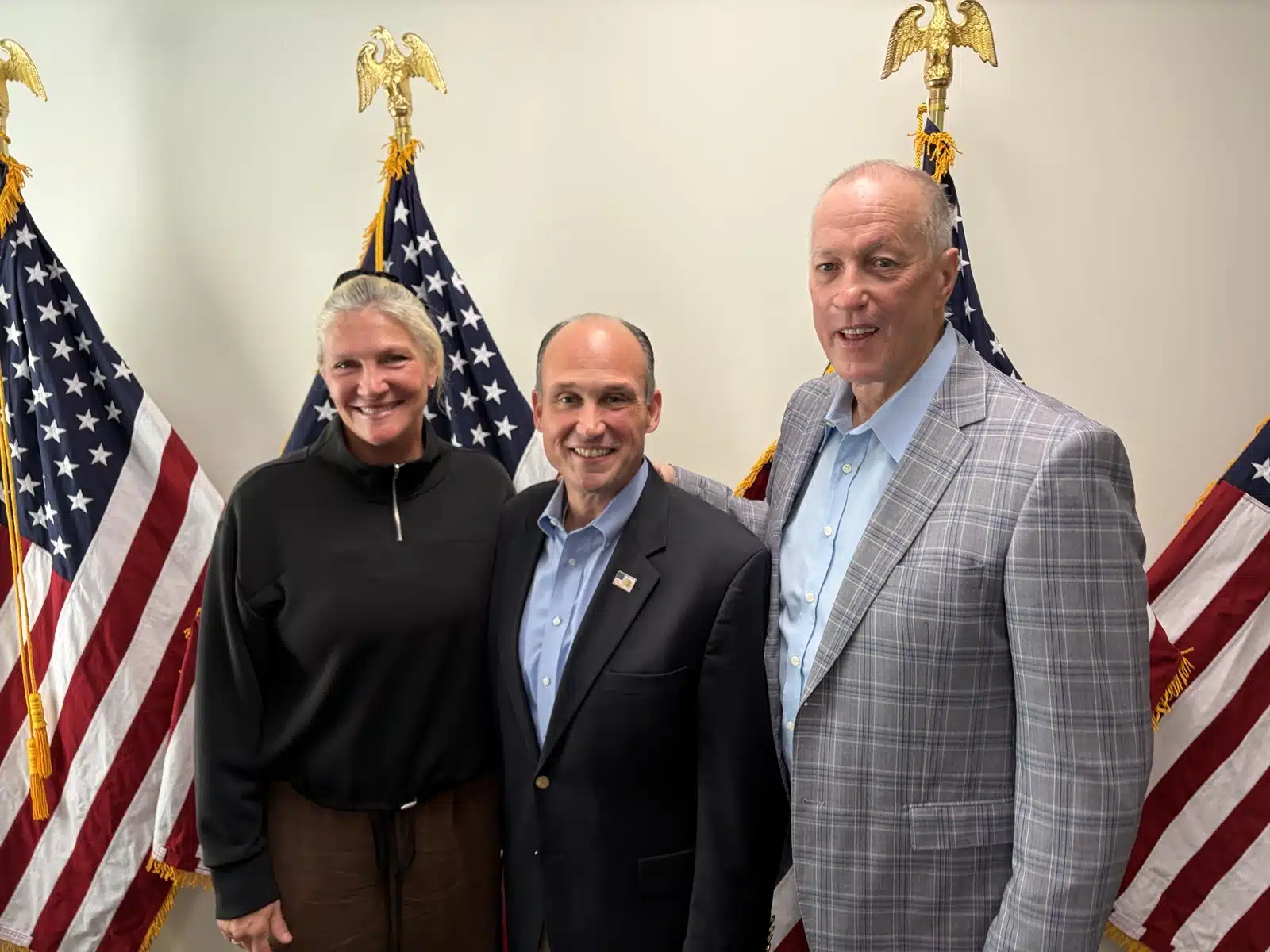
Langworthy announced the Surge to Save Newborns Act in Clarence with former Buffalo Bills quarterback Jim Kelly and his wife, Jill, whose son Hunter died of Krabbe disease. Rep. Kim Schrier, a Washington state Democrat and pediatrician, is co-leading the legislation, according to Langworthy's office.
The proposal addresses a gap between federal recommendations and state practice. A condition's addition to the federal Recommended Uniform Screening Panel does not automatically cause every state to screen newborns for it. The bill would give states resources to add recommended tests and strengthen the systems needed to perform them.
Newborn screening can identify serious conditions shortly after birth, allowing doctors and families to consider follow-up care earlier. The measure would not itself add a disease to the federal panel or guarantee that every state immediately adopts every recommended screening.
How the grant program would work
The bill would authorize $35 million in each fiscal year from 2027 through 2031. The money would remain available until spent, according to the release. The U.S. secretary of health and human services would administer the grant program.
A state's chief health executive, a designee or a state government agency could apply. Applications would explain how the state plans to use the money to implement screenings for conditions already included on the recommended panel.
The legislation also would require annual reports to Congress during the five-year period. Those reports would identify which recommended conditions each state screens for, which it has not implemented, how effective the grants have been and whether further legislative or administrative steps are recommended.
Schrier said in the release that early detection has helped patients in her pediatric practice, but that states do not always have the resources to screen for every condition on the panel. Langworthy said the federal recommendation is only a first step if states lack the means to put the screening into practice.
Krabbe disease shaped the push
The Kelly family's experience with Krabbe disease is central to the proposal. Their son Hunter, born in 1997, died in 2005. Jim Kelly said in the release that his family learned how consequential the timing of a diagnosis can be when treatment is most useful early in a disease's course.
Langworthy's office said he wrote to then-Health and Human Services Secretary Xavier Becerra in May 2023 urging a recommendation for universal Krabbe disease screening. A federal advisory committee voted in January 2024 to add Krabbe disease to the Recommended Uniform Screening Panel, and HHS gave final approval in July 2024. The new bill is aimed at helping states implement recommended screenings, including conditions added to that panel.
The office listed support from rare-disease and children's health groups, including Hunter's Hope Foundation, the Children's Hospital Association, ALD Alliance, Krabbe Connect, Parent Project Muscular Dystrophy and the National Organization for Rare Disorders. Annie Kennedy of the RARE Foundation said states need resources to turn the potential of recommended tests into actual screening programs.
Elisa Seeger of ALD Alliance said delayed implementation can delay diagnosis for families. Katherine Beaverson of Parent Project Muscular Dystrophy said earlier detection of Duchenne muscular dystrophy could help families reach specialized care, clinical trials and therapies sooner. The release did not give a committee assignment, hearing date or projected state-by-state grant amounts.

FingerLakes1.com is the region’s leading all-digital news publication. The company was founded in 1998 and has been keeping residents informed for more than two decades. Have a lead? Send it to news@fingerlakes1.com.