

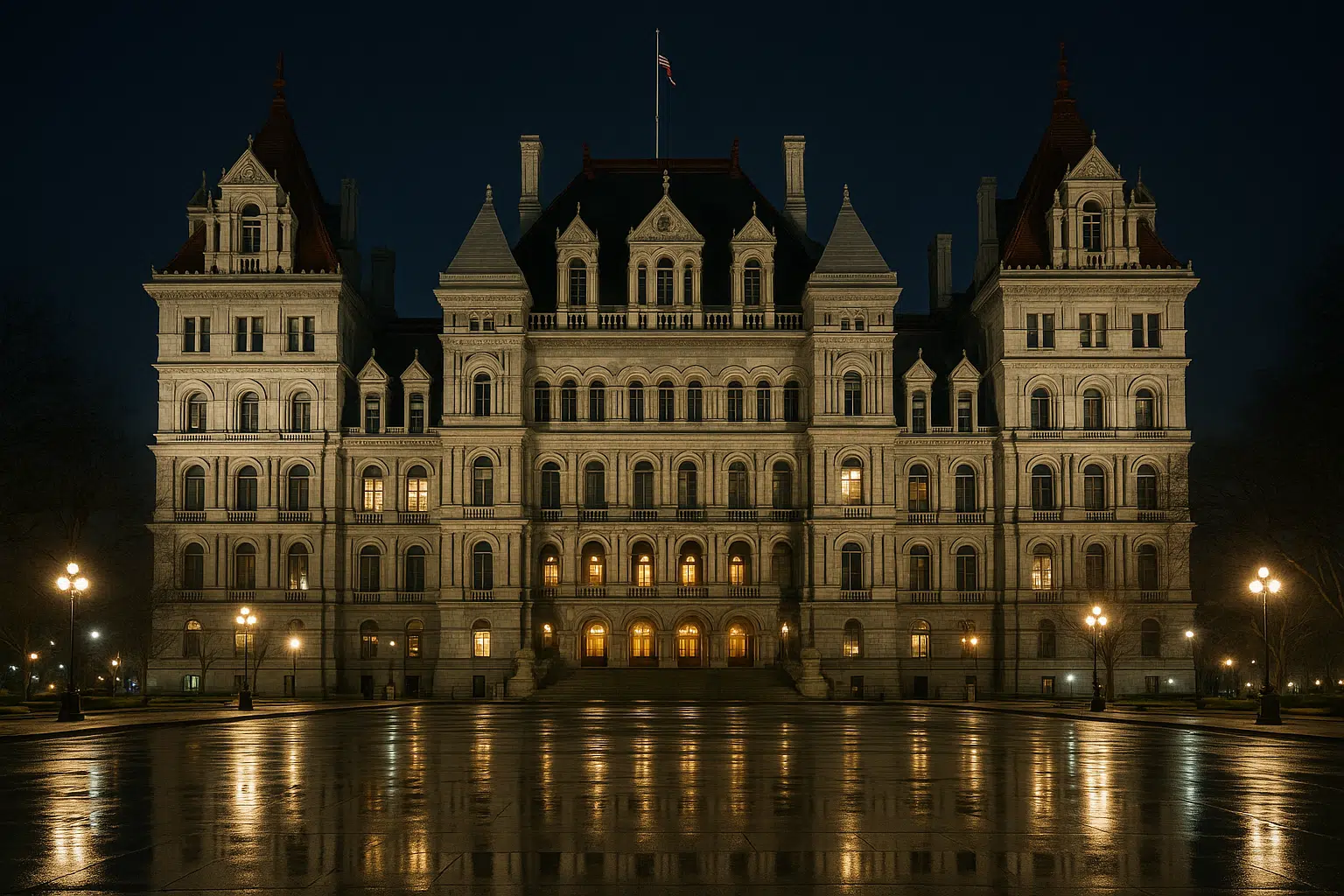

New York’s long-delayed state budget is finally nearing the finish line after nearly two months of stalled negotiations, late-night bargaining, and growing frustration inside the Capitol. But the final product is doing far more than funding state government — it is redefining the political and financial balance between New York City and Upstate New York.
Gov. Kathy Hochul’s $268.5 billion spending plan touches nearly every pressure point facing New Yorkers right now: Rising utility bills, child care costs, school funding fights, immigration enforcement, public pensions, electric school bus mandates, and New York City’s worsening fiscal outlook.
At the same time, lawmakers from both parties are openly criticizing how the budget came together after the latest delay in 16 years left legislators unpaid for weeks and forced Albany into a chaotic Memorial Day sprint.
The result is a budget that may define Hochul’s governorship heading into another politically volatile year — especially as tensions between New York City priorities and Upstate concerns continue growing.
The New York budget delay became a political story of its own
The state budget was due April 1. Instead, lawmakers spent nearly eight weeks passing temporary spending extenders while major policy fights dragged on behind closed doors.
The delay became so notorious that one Republican lawmaker, Southern Tier Assemblymember Joe Angelino, started growing a “budget beard” to track how late negotiations had become.
Behind the humor, however, frustration inside Albany intensified.

Because state lawmakers stop receiving paychecks when the budget is overdue, legislators from both New York City and Upstate New York said the stalemate created real financial strain. Some lawmakers reportedly deferred student loan payments, borrowed money from family members, or dipped into savings while continuing to travel to Albany each week.
Critics also accused Hochul of leveraging the late budget process to force lawmakers into accepting controversial policy priorities tied to immigration enforcement, education funding, energy policy, and New York City spending.
Even Assembly Speaker Carl Heastie signaled frustration with the process, saying he did not want to repeat another two-month negotiation cycle.
New York City emerges as one of the budget’s biggest winners
One of the clearest themes in the final budget is Hochul’s aggressive effort to stabilize New York City financially while strengthening ties with Mayor Zohran Mamdani’s administration.
The state agreed to provide nearly $8 billion in aid and support for New York City over two years, including an additional $4 billion package announced this month to help close a massive inherited budget gap.
The agreement also expands funding for universal child care, pre-K programs, education, and municipal services in the city. Hochul and Mamdani framed the deal as a reset in the often-contentious relationship between Albany and City Hall.
The budget also extends mayoral control of New York City schools for another two years, preserving one of the city’s most powerful governance tools.
That level of support is likely to deepen criticism from some Upstate lawmakers who already argue New York City dominates state spending priorities while rural and suburban communities absorb the costs of mandates tied to climate policy, pensions, and infrastructure.
Upstate New York lawmakers pushed back on costs and mandates
Some of the sharpest Upstate criticism centered on the state’s electric school bus mandate.
The budget delays New York’s requirement for districts to purchase only zero-emission school buses from 2027 to 2032, while pushing the deadline for fully electric fleets from 2035 to 2040.
School districts across Central New York and the Finger Lakes had warned the original timeline was financially and operationally unrealistic, especially for rural districts dealing with long transportation routes, winter weather, and infrastructure limitations.
Republican lawmakers argued the mandate could cost taxpayers billions statewide while disproportionately affecting rural Upstate communities. Some estimated replacement costs between $8 billion and $15 billion.
Even some Democrats acknowledged the transition timeline had become difficult to defend.
At the same time, the budget includes changes to school aid formulas, including guaranteed minimum increases and additional weighting for English language learners, homeless students, and foster children.
But school officials warned many districts may still struggle against inflation, health care costs, and pension obligations despite the increases.
Hochul centers affordability in the FY 2027 New York budget
Hochul has framed the FY 2027 New York budget as an affordability agenda aimed directly at working families.
The package includes:
- a $1 billion energy rebate program
- expanded child tax credits
- universal child care investments
- utility ratepayer protections
- auto insurance reform
- expanded pre-K access
- consumer protections tied to energy and insurance pricing.
The governor also pushed major immigration-related protections into the budget, including limits on local cooperation with ICE, expanded protections for “sensitive locations” like schools and hospitals, and new legal mechanisms allowing lawsuits over constitutional violations by immigration enforcement officials.
Those policies helped turn the budget into something far larger than a spending document.
Instead, it became a vehicle for major policy fights involving immigration, climate mandates, public safety, education, housing, and the growing divide between downstate and Upstate political priorities.
What happens next in Albany
Lawmakers are expected to continue voting on remaining budget bills after the Memorial Day weekend as Albany tries to close one of the most drawn-out budget cycles in years.
Even with most major agreements now publicly outlined, tensions remain high over the process itself and the long-term cost of many commitments included in the final plan.
For Hochul, the budget may ultimately become both a political victory and a major test.
She succeeded in pushing through sweeping policy priorities while preserving strong support for New York City and advancing a broad affordability message. But the drawn-out negotiations also exposed growing frustration among lawmakers, concerns about state spending, and continued anxiety in Upstate New York over whether Albany’s biggest priorities still reflect the realities facing communities outside New York City.

FingerLakes1.com is the region’s leading all-digital news publication. The company was founded in 1998 and has been keeping residents informed for more than two decades. Have a lead? Send it to news@fingerlakes1.com.