

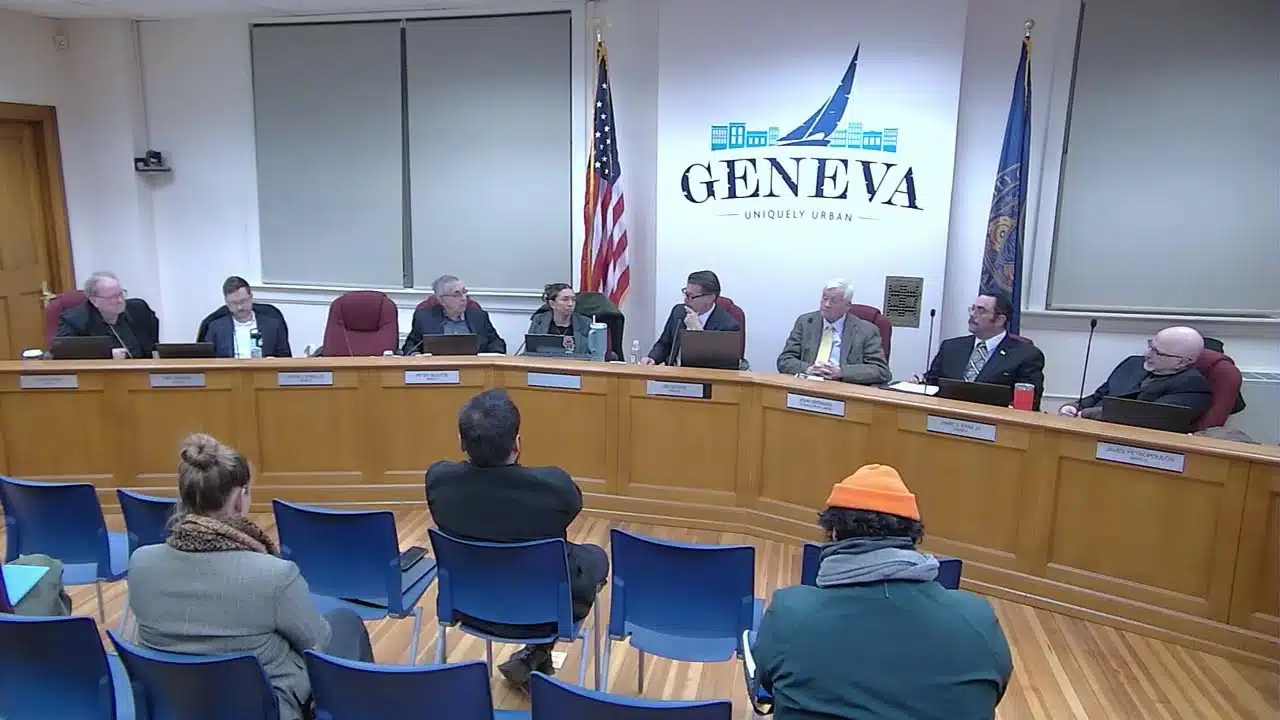
Geneva officials spent more than three hours Wednesday night tackling issues that touched nearly every pressure point facing the city: rising housing costs, aging infrastructure, regional growth, public safety operations and the financial realities shaping local government.
The May 6 City Council meeting featured emotional public comment from renters struggling with skyrocketing utility and housing costs, discussion about the city’s long-term debt strategy and infrastructure needs, and updates on millions of dollars in grant funding aimed at redevelopment, housing and public works projects.
The meeting also included a wide-ranging public safety discussion with Geneva Fire Chief Mike Eveland and Police Chief Ron Parada, as city leaders continue building out a strategic plan that Mayor Jim Cecere described as a roadmap for how Geneva will navigate mounting financial and operational challenges over the next several years.
Council hears concerns over affordability
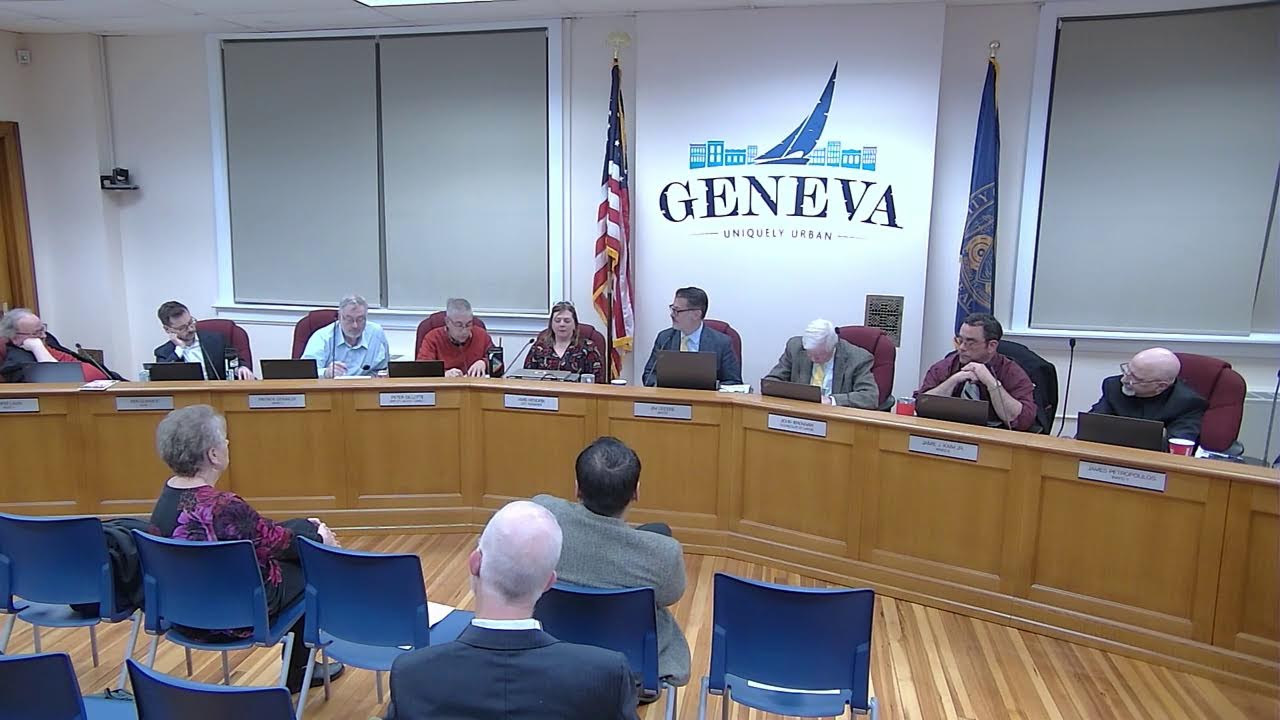
Much of the emotional weight of the evening came during public comment, where residents described increasing difficulty affording life in Geneva.
Olivia Estrada, a Ward 3 resident and Hobart and William Smith Colleges employee, told council her rent had increased from $1,100 to $1,600 per month over six years — a 45.5% increase — while utility costs have surged alongside it.
“This is not an outlier. It is a community crisis,” Estrada said.
She said her household’s NYSEG bills had averaged roughly $600 per month over the last three months and described herself and her partner as part of the “ALICE” population — households that are employed, but still struggling financially.
“We earn too much for public assistance … but too little to survive these systemic hikes,” she said.
Estrada questioned what the city plans to do to hold large landlords accountable for maintenance and prevent residents from being priced out of Geneva.
Her comments echoed concerns raised at recent town halls and strategic planning discussions, where council members have repeatedly pointed to housing affordability, rising rents and deteriorating housing stock as major issues confronting the city.
Councilor Jan Regan Lavin referenced a recent Ward 1 and Ward 2 town hall where residents described the growing challenge of remaining in Geneva even while working full-time jobs.
“One of the participants … gave us a very thoughtful, measured understanding of how two people living on $25 or $30 an hour … are finding it increasingly hard to live in this town,” Lavin said. “That is at the heart of our challenges.”
Sidewalk repairs draw criticism
Residents also criticized the city’s ongoing sidewalk repair enforcement process.
Ward 4 resident Steve Chilbert said homeowners were frustrated after receiving another round of notices requiring sidewalk repairs within 60 days, despite a nine-month moratorium intended to allow the city time to explore alternatives and funding solutions.
Chilbert said many residents, particularly seniors, remain overwhelmed by the potential costs.
“My mother’s corner lot, $15,000 last year was the estimate,” he said. “That has gone up because in the nine months now, the cost of cement has gone up, labor’s gone up.”
Chilbert said residents expected the city to return with new ideas, including grant opportunities or cost-sharing options, but instead received nearly identical notices to those issued last year.
“We respectfully request that the city and the council please meet on this and do due diligence,” he said.
Public safety discussion highlights regional pressures
A significant portion of the meeting focused on public safety operations and the city’s strategic planning process.
Cecere said the discussion with department heads was intended to ensure council members fully understand operational realities before entering budget season.
“I’m not a fan of surprises,” Cecere said. “I’m a fan of communicating and understanding as we go and move forward.”
Fire Chief Mike Eveland said Geneva’s combination paid and volunteer fire system remains one of the strongest in the region, but warned that maintaining it requires continued investment and community support.
“If you don’t have your volunteers in this community, our department will fail,” Eveland said.
He noted that Geneva is now the county’s only remaining combination fire department after neighboring communities shifted toward fully career staffing models.
Eveland also acknowledged growing regional strain on fire services and the increasing importance of mutual aid partnerships.
Council members questioned whether future regionalization or expanded service agreements may eventually become necessary as neighboring departments face staffing and operational pressures.
Grant funding tops $4.3 million
City officials also highlighted substantial grant activity during the first quarter of 2026.
According to the city manager’s report, Geneva has secured approximately $4.35 million in grant funding so far this year for projects tied to infrastructure, planning, housing and public safety.
Among the largest awards was more than $2.4 million through the federal Solid Waste Infrastructure for Recycling program, along with a $1 million Community Development Block Grant award for a new fire truck.
Additional awards include funding for a Castle Creek daylighting feasibility study, comprehensive planning efforts and housing readiness assessments.
City officials said several additional applications remain pending, including requests tied to rail-trail expansion, park improvements, housing repair funding and records management modernization.
Officials also said the city continues managing more than $10 million in active grant-funded projects dating back to 2016.
Fayette sewer agreement advances
Council also reviewed a proposed intermunicipal agreement with the Town of Fayette that would allow Fayette Sewer District No. 1 to connect to Geneva’s wastewater treatment system.
Under the proposed 20-year agreement, Fayette would be responsible for construction and maintenance of its sewer infrastructure while Geneva would provide treatment capacity through its municipal system.
City officials emphasized that financial terms, including sewer rates and user charges, would require separate council approval at a later date.
Council members also continued broader conversations tied to economic development, infrastructure investment and housing policy that have emerged through the city’s strategic planning process.
During council reports, multiple members referenced ongoing discussions around code enforcement, rental housing conditions, downtown development and recreation investments.
Mayor outlines long-term priorities
Cecere repeatedly returned to what he described as the need for long-term planning and structural reform as Geneva balances aging infrastructure, tax burdens and economic development goals.
The strategic planning process, first outlined publicly during a March town hall meeting, has increasingly centered on housing quality, infrastructure replacement, downtown revitalization and public safety sustainability.
At Wednesday’s meeting, Cecere said council’s focus remains on ensuring the city can maintain critical services while adapting to financial pressures and changing community needs.
“We’re a $28 million business,” Lavin said during discussion of the city’s broader direction. “And it affects everything.”
The meeting also included proclamations recognizing Public Service Recognition Week and Nurses Week.

FingerLakes1.com is the region’s leading all-digital news publication. The company was founded in 1998 and has been keeping residents informed for more than two decades. Have a lead? Send it to news@fingerlakes1.com.