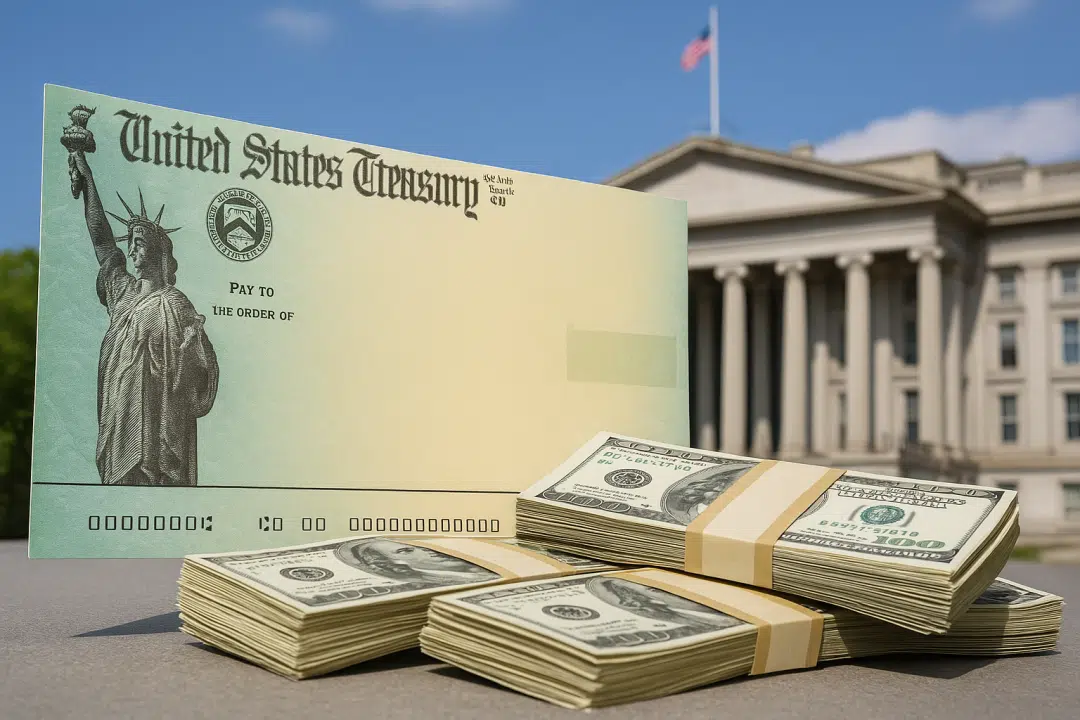
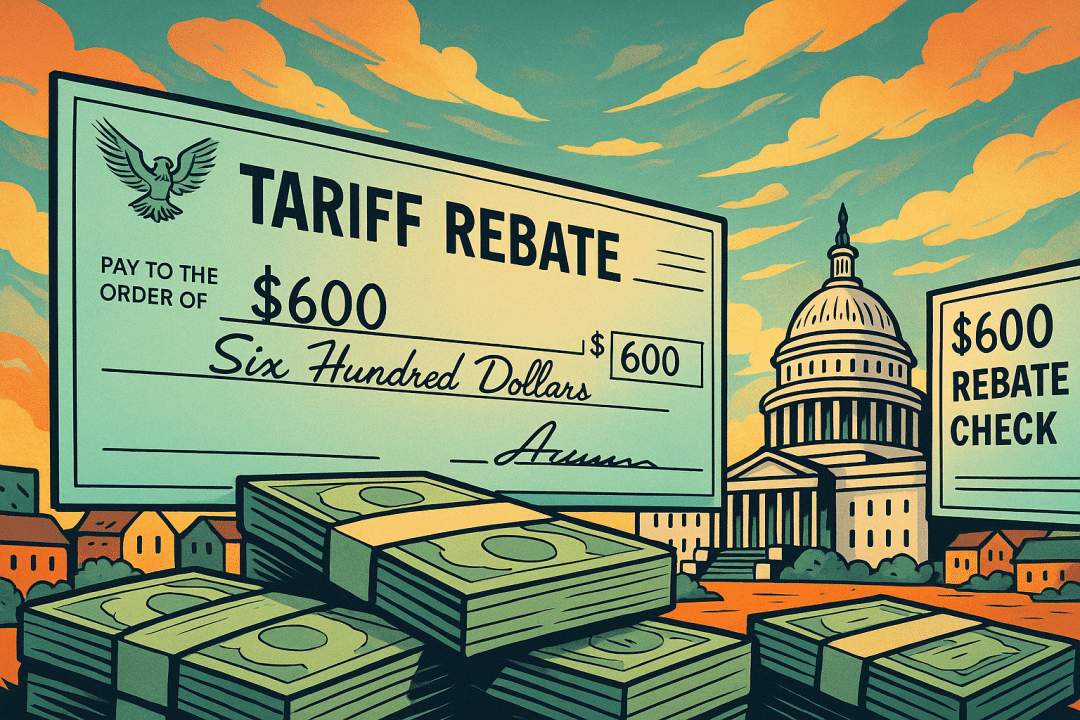
Stimulus checks are back in the spotlight as President Donald Trump renews promises of $2,000 “tariff dividend” payments. The idea hinges on revenue from new tariffs imposed in 2025. But as the year ends, no checks have been approved.
Administration officials now say Congress must act before any money goes out.
What Trump has promised about $2,000 checks
Trump has floated the tariff dividend for months, with shifting details.
Here’s what he has said so far:
- Payments could range from $1,000 to $2,000 per person
- Checks would exclude high-income earners
- A possible income cutoff is $100,000 per household
- Timing would be mid-to-late 2026, not sooner
Trump has described the payments as a way to return tariff revenue to households affected by higher prices.
Why Congress controls the outcome
Despite the White House messaging, stimulus checks cannot be issued unilaterally.
That power rests with Congress.
Kevin Hassett, director of the National Economic Council, made that clear during a recent TV interview. Kevin Hassett said tariff revenue is part of the federal budget and must be appropriated by lawmakers.
Without new legislation, no payments can move forward.

How much money tariffs are actually raising
Tariff revenue is central to the proposal—but the numbers are tight.
According to the Treasury Department, tariffs generated about $195 billion during fiscal year 2025.
Economists say that may not cover the full cost.
Key estimates show:
- Roughly 150 million adults could qualify
- Total cost could approach $300 billion
- Net revenue shrinks once lost tax income is factored in
That gap is fueling skepticism on Capitol Hill.
Economic risks economists are warning about
Some economists argue the checks could backfire.
Main concerns include:
- Higher inflation from sudden cash infusions
- Reduced tariff benefits once costs pass through consumers
- Added strain on a national debt near $37 trillion
The Federal Reserve has spent years fighting inflation, making lawmakers cautious about large new payouts.
Public reaction: hope mixed with doubt
Many Americans like the idea—but remain unconvinced it will happen.
Some shoppers say the checks could help with major purchases. Others worry the money would be offset by:
- Higher prices
- Tax changes
- Reduced purchasing power
That mirrors skepticism seen during previous stimulus rounds.
What happens next
The next move belongs to Congress.
Hassett said the president may submit a formal proposal in early 2026. Until then, the $2,000 tariff checks remain a political promise—not an approved program.
Key takeaway:
- No bill, no checks
- No official payment date
- 2026 is the earliest possible window

This content is brought to you by the FingerLakes1.com Team. Support our mission by visiting www.patreon.com/fl1 or learn how you send us your local content here.