

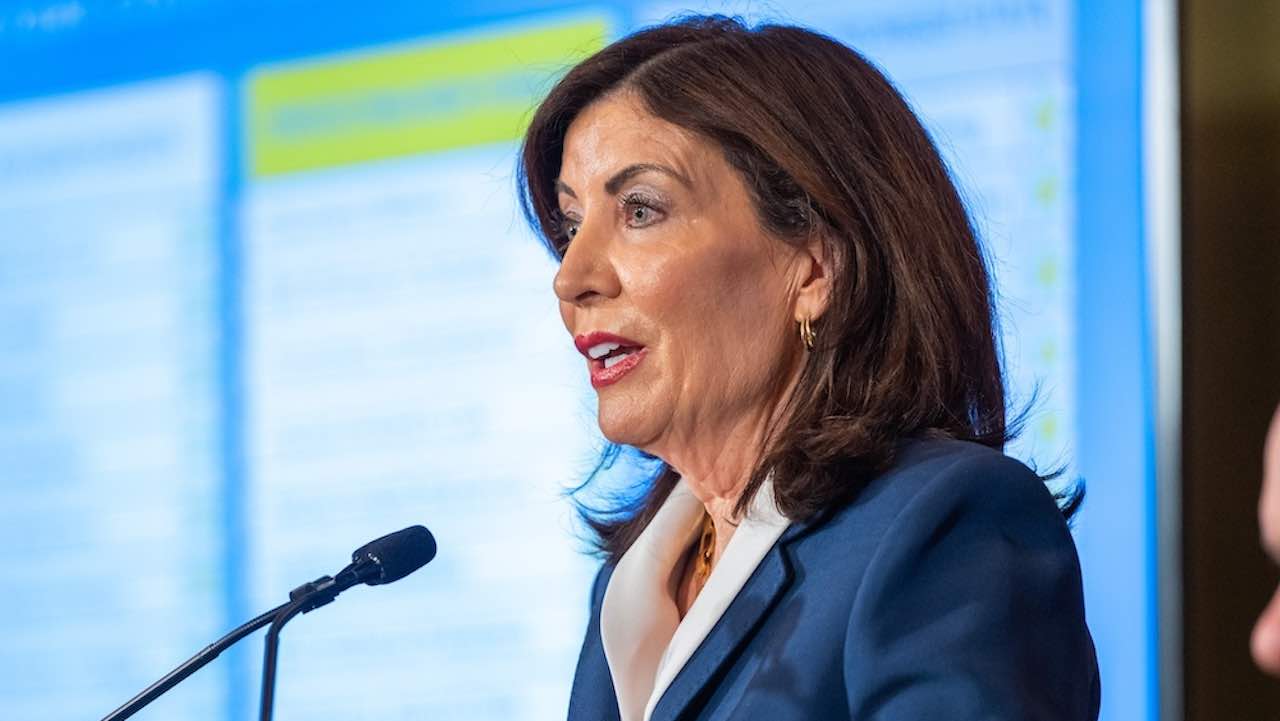
A new report from the Public Power NY Coalition claims fossil fuel interests have spent nearly $16 million lobbying Governor Kathy Hochul—allegedly influencing her decisions on energy policy at the expense of New York’s climate goals and working families.
The group, which helped pass New York’s Build Public Renewables Act (BPRA) in 2023, released the findings Tuesday, accusing Hochul of aligning with “pro-Trump” energy policies while ignoring public outcry and climate mandates set by the state.

“It certainly seems like the price tag for getting a pro-fossil fuel agenda enacted is about $16 million in lobbying fees,” the group said in a statement. “Unfortunately, regular New Yorkers can’t afford this kind of lobbying, so we have to rely on organizing to build enough power to make Governor Hochul do the right thing.”
Criticism intensifies amid climate setbacks
The coalition says Hochul’s recent approvals of the controversial Williams NESE Pipeline and the Greenidge cryptocurrency mining facility contradict New York’s own climate law. Adding fuel to the fire, the report highlights that Hochul’s husband earns close to $1 million a year at a law firm that represents both projects.
Public Power NY argues these decisions not only violate the state’s climate mandates but will raise utility costs for residents—despite the existence of a public solution.
Under the BPRA, New York authorized the state-run New York Power Authority (NYPA) to build public renewable energy projects and help meet the state’s 2030 target of 70% renewable power. NYPA initially planned to build only 3.3 gigawatts of renewable energy but increased that to 7 gigawatts after backlash from lawmakers and over 10,000 public comments.
The group insists NYPA must go further—to 15 gigawatts—if New York hopes to stay on track.
NYPA exec under fire for luxury travel
Separately, the coalition also criticized NYPA CEO Justin Driscoll for reportedly using a $7.5 million private plane for official appearances, calling it a wasteful expense amid delays in renewable development.
As public frustration mounts, activists say they’re ready to ramp up pressure on state leaders once again.
“We’ve done it before,” the coalition said, “and we will do it again.”

FingerLakes1.com is the region’s leading all-digital news publication. The company was founded in 1998 and has been keeping residents informed for more than two decades. Have a lead? Send it to news@fingerlakes1.com.