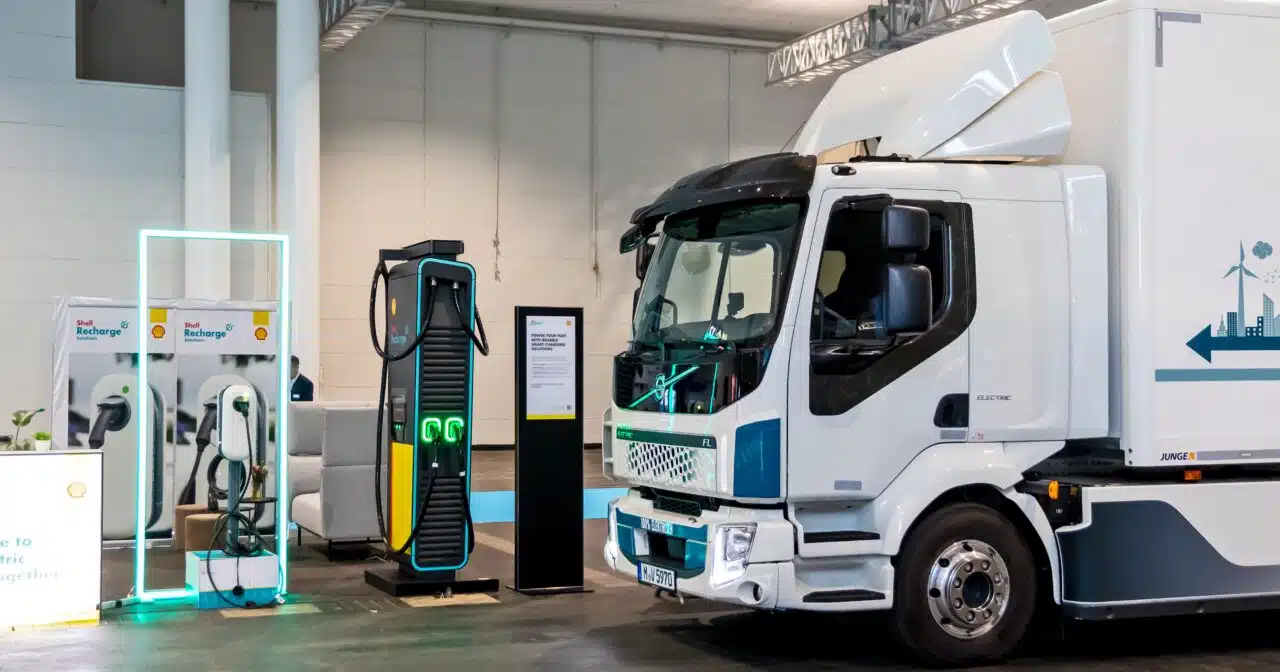
Electric trucks are seen as a possible solution for New York truck drivers struggling with volatile diesel prices.

Statewide diesel costs are more than $6 a gallon, up by almost $3 from a year ago but experts explained the up front costs for electric trucks can deter some trucking companies, with prices rising 27% from 2020 to 2025.
Guillermo Ortiz, senior clean vehicles advocate for the Natural Resources Defense Council, said some states are helping with the costs.
“Many states operate a voucher program,” Ortiz pointed out. “They give you a direct purchase incentive towards the purchase of a medium or heavy-duty vehicle. And these can apply to those delivery vans I mentioned, but it also goes up to those semitrucks on the road.”
New York is one of several states to offer a tax credit or a rebate to purchase electric trucks but the situation has become complicated since federal credits ended last year.

Beyond cost, electric trucks are subject to misinformation, with critics saying they are not as environmentally friendly as diesel trucks. Ortiz countered burning diesel fuel has lasting effects on the atmosphere, while a battery for an electric truck can be recycled for further use. Aside from the current diesel price spikes, other benefits associated with electric trucks include fewer emissions for communities inundated with industrial traffic and a smoother ride for drivers.
Ortiz argued other parts of the freight system could benefit from electrification.
“We’re also seeing ways for ships when they dock at port that they can plug into shore power so they don’t have to run their engines the entire time while they’re unloading cargo and equipment,” Ortiz observed. “There’s an opportunity for electrifying some of those operations.”
He noted electrifying cranes, forklifts and other equipment can make ports more environmentally friendly.
New York lawmakers introduced legislation to cut emissions across the transportation sector. The Planes, Trains and Boats Act would reduce emissions by requiring them to shift away from fossil fuels. The bill has been introduced in every legislative session since 2021 but has not passed out of committee.

Edwin is a reporter and producer in North Tonawanda, New York. He’s previously reported for the Niagara Gazette and the Ithaca Times. Edwin got an early start in radio interning for WBFO-88.7FM, NPR’s Buffalo affiliate. In 2018, he graduated from SUNY Buffalo State College with a B.A. in Journalism, and in 2022, graduated from Syracuse University with an M.S. in Communications.