

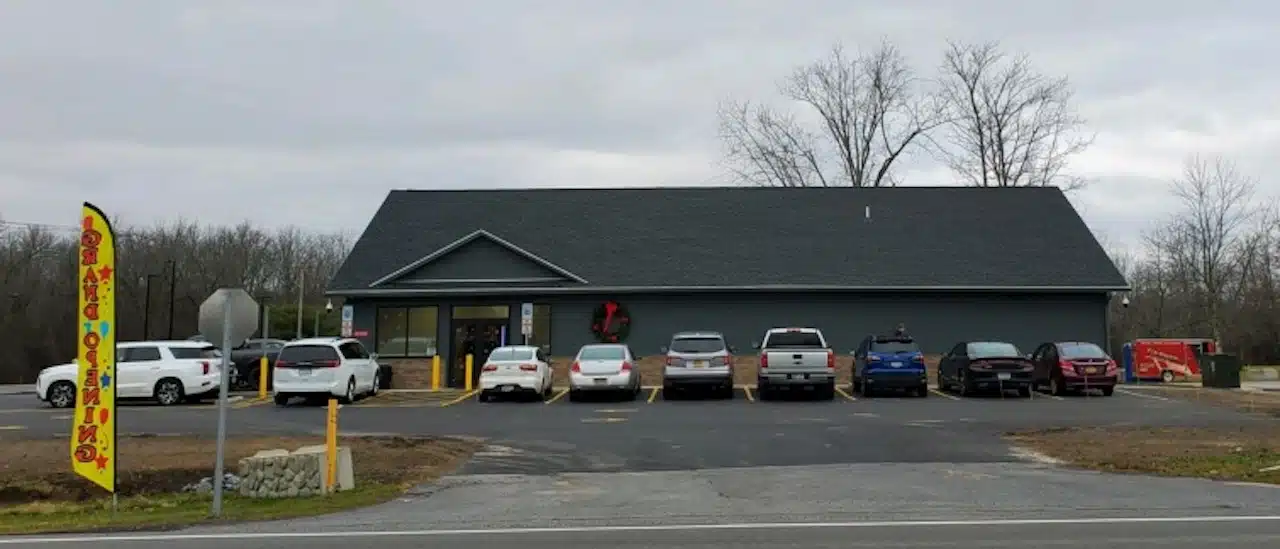
A state judge has ordered the New York State Liquor Authority to reconsider a Cayuga Nation-owned business’s liquor license application, finding that the agency’s explanation for denying it lacked adequate support in its own record.
The Oct. 2 decision gives Lakeside Enterprises another opportunity to obtain a license, but does not authorize the proposed store to begin selling wine and spirits. State Supreme Court Justice Donna Siwek explicitly declined to order the agency to issue the license.

The ruling turns on whether the Liquor Authority adequately supported and explained its decision. It does not establish that the Nation prevailed on all its allegations of unfair treatment, and a separate federal constitutional challenge remains unresolved.
Judge questions market saturation finding
Lakeside Enterprises, which is wholly owned by the Cayuga Nation, submitted its application in September 2024. The Liquor Authority initially rejected it in June 2025, agreed to reconsider and reaffirmed the denial in a written decision dated Dec. 3, 2025.
The agency said the proposed store would not serve “public convenience and advantage,” citing nearby competitors and what it characterized as stagnant or declining sales.
In defending the denial, the authority identified six package stores within 15 miles of the proposed location. The two closest were approximately one mile and 2.5 miles away.
The applicants disputed the agency’s characterization of the market, arguing that four of the six nearby stores reported higher gross sales in 2024 than in 2022.
Siwek found that the numbers did not necessarily establish declining sales or market saturation. She also faulted the agency for failing to explain sufficiently how its evidence supported the denial.
The authority relied on “speculation and conclusory assertions,” she wrote.
An affidavit from Liquor Authority Chair Lily Fan and additional explanations offered during court proceedings did not resolve that problem. Siwek noted that the written denial did not refer to the statewide decline in alcohol sales later cited in Fan’s affidavit. The court’s review was limited to the grounds the agency gave for its decision.
The findings appear in Siwek’s 11-page memorandum decision.
Application returns to the agency
The practical result is a new review of the application, rather than automatic approval.
Siwek recognized that the Liquor Authority has broad discretion over licensing. Her ruling requires the agency to reconsider this application in light of the deficiencies she identified in its explanation and supporting record.
The decision does not establish that local demand requires another liquor store. It finds that the agency did not provide a rational basis for the denial it issued.
Siwek directed the applicants’ attorneys to submit an order and judgment consistent with the decision within 14 days.
The judge also found several other challenges unpersuasive. Those included arguments concerning demands for New York-made products, permanent restrictions on the premises, inconsistent appearance requirements and considerations involving the Nation’s sovereign status and tax treatment.
The Nation’s success in state court therefore rests on the inadequacy of the agency’s factual justification, rather than a finding endorsing every allegation in the petition.
Federal challenge addresses a different question
A separate lawsuit examines whether the licensing denial violated the Constitution by favoring New York-made alcoholic beverages.
On Sept. 23, Chief U.S. District Judge Brenda Sannes allowed the Commerce Clause claim to proceed after finding that the allegations plausibly raised concerns about discrimination against out-of-state products.
That ruling addressed a motion to dismiss. It did not determine that unconstitutional discrimination occurred or require issuance of a license. Sannes also dismissed several other claims, narrowing the federal case.
The federal decision is available through the government’s court opinion archive.
The two rulings address distinct issues: the state court found an insufficient explanation for the administrative denial, while the federal court allowed a constitutional claim to continue.
Nation says litigation will continue
Cayuga Nation representative Clint Halftown criticized the licensing process, saying the authority repeatedly changed its rationale.
“For more than two years, the Liquor Authority has done everything it could to avoid giving the Nation a straight answer,” Halftown said in the Nation’s statement.
The Nation says it will continue pursuing its federal lawsuit while the application returns to the Liquor Authority.
For now, the state ruling secures reconsideration. Whether Lakeside receives the requested license remains a decision for the agency.

FingerLakes1.com is the region’s leading all-digital news publication. The company was founded in 1998 and has been keeping residents informed for more than two decades. Have a lead? Send it to news@fingerlakes1.com.