

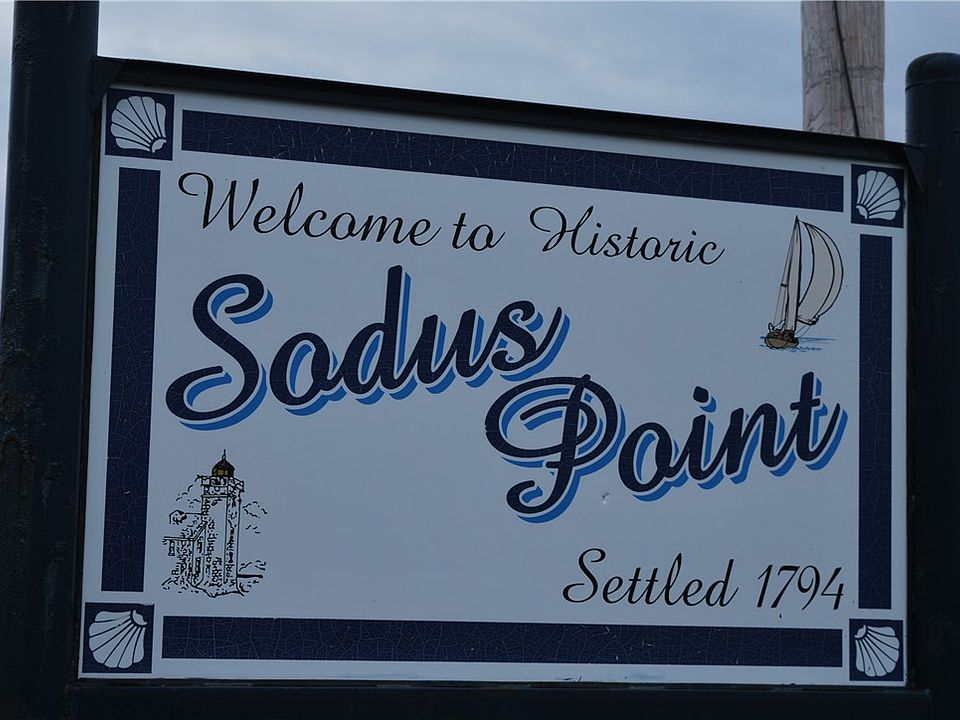
Lake Ontario is still rising along the southern shore, and officials in Sodus Point say the next phase of flood response could be triggered within days if conditions don’t improve.
In an update Monday, Mayor Pat Nolan said water levels have climbed to about 247.1 feet, continuing an upward trend that began in April, though the pace has slowed in recent days. The lake is now rising at roughly 0.02 inches per day, a sharp drop from earlier increases that reached as much as a half-inch daily during wetter conditions.

Even with that slowdown, Nolan said the village is preparing for the possibility that its emergency plan will need to escalate later this week, driven largely by forecasts calling for additional rainfall across the Lake Ontario basin.
“We have not reached the next trigger in our plan,” Nolan said, “but at the current rise and weather conditions, I expect it could happen later this week.”
That next trigger would activate sandbagging operations in the village’s most vulnerable areas — a more visible and labor-intensive phase of the response. Officials say the effort would begin with a day of sandbag production to build a reserve, followed by three to four days of production and placement.
The update comes as officials continue balancing preparedness with restraint. Last week, Nolan said the village was holding off on deploying large-scale resources too early, even as outflows from Lake Ontario were increased above average — now reaching about 7,550 cubic meters per second — helping slow the rate of rise.
Water levels first crossed the 247-foot threshold on April 30, activating the village’s flood response plan and putting shoreline communities on alert. While that level remains below historic flooding benchmarks closer to 250 feet, officials say it is high enough to create localized impacts, especially when combined with wave action and saturated ground conditions.
At the same time, Wayne County is deploying additional tools to better understand and respond to flood risk. County and state officials began conducting high-resolution drone surveys along the Lake Ontario shoreline this week, using LiDAR technology to map elevations and identify vulnerable areas.
The aerial surveys, running through May 6, are designed to improve flood modeling and help guide mitigation strategies by creating detailed 3D maps of shoreline conditions, including infrastructure and vegetation. Officials said the data will strengthen long-term planning efforts and help communities prepare for future high water events.
The broader challenge remains largely outside local control. Lake levels are influenced by regional rainfall, inflows from the upper Great Lakes, and regulated outflows into the St. Lawrence River. Those outflows are constrained by downstream flooding risks, limiting how quickly water can be released.
In Sodus Point, preparation efforts are already underway. The village has secured sandbags and equipment, adjusted stormwater systems, and coordinated with county and state emergency management officials.
Nolan also urged residents to rely on official village communications as conflicting information circulates. He said updates shared through the village’s email alerts and social media are coordinated with county and state officials to ensure accuracy.
For now, officials say the situation remains fluid. While the recent slowdown offers some relief, the combination of elevated lake levels and the potential for renewed rainfall means shoreline communities are not yet out of danger.

FingerLakes1.com is the region’s leading all-digital news publication. The company was founded in 1998 and has been keeping residents informed for more than two decades. Have a lead? Send it to news@fingerlakes1.com.