


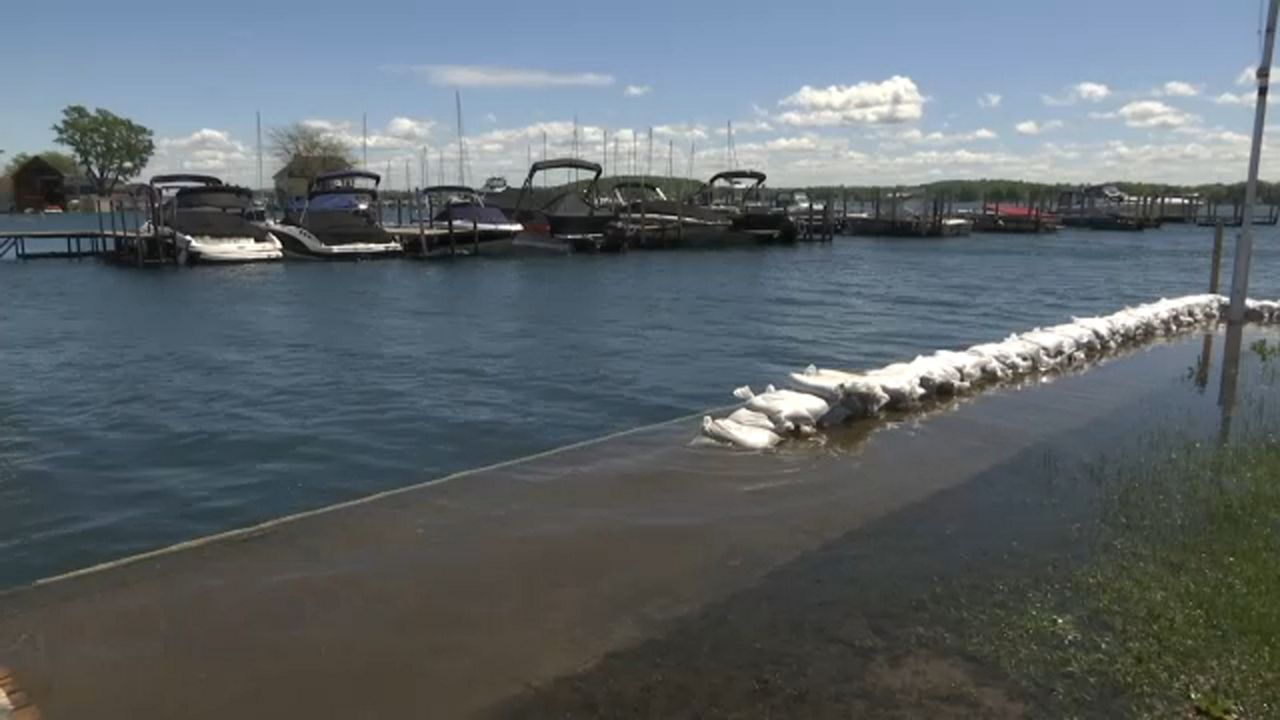
Lake Ontario has reached a critical threshold along parts of its southern shore, prompting emergency preparations as officials warn water levels will continue rising in the days and weeks ahead.
In Sodus Point, the lake hit 247.00 feet on April 30 — a trigger point that activates the village’s flood response plan and signals the potential for protective measures if conditions worsen. That level is now being closely watched across the region, with similar readings reported along the Rochester shoreline.

According to the International Joint Commission, current lake levels are hovering around 247 feet — still below the roughly 250-foot mark that has historically brought serious flooding to areas like Edgemere Drive in Greece, but close enough to raise concern among shoreline communities.
The rapid rise has been driven in part by an exceptionally wet early spring. Local observers say the lake has climbed roughly two feet over the last month alone, reversing what had briefly appeared to be a more stable outlook earlier this year.
The rising water is being fueled by a widening imbalance between inflows and outflows. Recent data shows inflow at Niagara Falls at roughly 9,920 cubic meters per second, while outflow into the St. Lawrence River remains significantly lower at about 6,630 cubic meters per second — a gap that continues to push lake levels higher.
Officials say outflow cannot be significantly increased due to downstream flood risks in Montreal and along the Ottawa River, leaving Lake Ontario with limited short-term options to relieve pressure. Water level management is governed by Plan 2014, which requires balancing conditions across the entire Great Lakes and St. Lawrence system.
As a result, water levels have been climbing steadily — roughly a third to a half inch per day — and are expected to continue rising for several more weeks, particularly if wet weather persists.
Communities along the shoreline are already taking action. In Wayne County, local and state officials are coordinating flood response efforts, staging sandbags and equipment, and preparing infrastructure to handle potential impacts. In Greece, town officials say pumps have been deployed along the lakeshore and sandbags are being made available to residents as a precaution.
In Sodus Point, crews have adjusted stormwater systems by closing gravity-fed gates and activating pumps to manage rising water and protect critical infrastructure.
Residents are being urged to prepare now by checking sump pumps, elevating valuables out of low-lying areas, and clearing debris from shorelines in case emergency measures are needed.
At the same time, officials caution that sandbags are not a long-term solution for shoreline erosion. More durable protections, such as riprap stone and reinforced breakwalls, are recommended to reduce damage from wave action as water levels climb.
Local leaders are also turning to more advanced planning tools. In Wayne County, officials have requested state assistance to map shoreline elevations using drone-based lidar technology, which would provide detailed data to identify areas most at risk at different lake levels and guide future mitigation efforts.
While no widespread flooding has been reported yet, officials say conditions remain fluid. Additional rainfall, wind-driven waves, or changes in water management decisions could quickly escalate impacts along the Lake Ontario shoreline.

FingerLakes1.com is the region’s leading all-digital news publication. The company was founded in 1998 and has been keeping residents informed for more than two decades. Have a lead? Send it to news@fingerlakes1.com.