

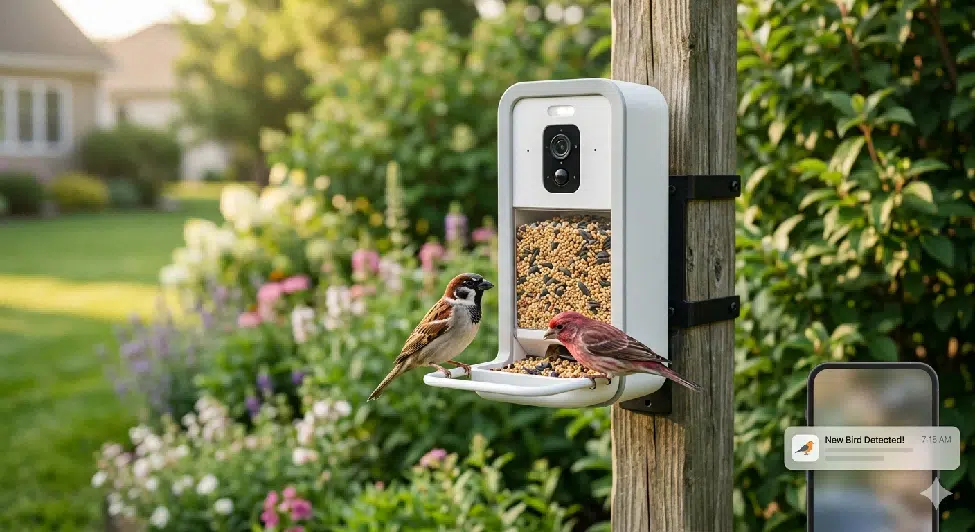
Your backyard is filled with the gentle sounds of birdsong. It is a familiar and soothing rhythm. A sparrow dances around the feeder. A finch calls from a nearby branch. There is a moment of calmness for everything.
However, the news about avian flu spreading among wild birds has resurfaced. All of a sudden, that peaceful scene raises a new question. Is feeding backyard birds still safe?
Numerous individuals now hesitate. They are concerned about exposure. They wonder if traditional bird feeding might do more harm than benefit. Hence, they do not wish to lose that regular interaction with nature.
So, what is the balance? What can you do to enjoy birdwatching while protecting yourself and the birds?
A smarter strategy holds the key to the solution. With today’s technology, it is easier to take care of backyard birds with minimal risks. With advanced tools, like smart bird feeders, you can minimize the need to have physical access, track activity securely, and fully enjoy every visit.
With a fusion of simple safety measures and considerate technology, your backyard can still be a place of rest that is secure, supportive, and full of life.
Bird Flu and the Risks of Backyard Feeding
This is why backyard feeding requires extra care during bird flu season.
Highly Pathogenic Avian Influenza (HPAI), commonly known as bird flu, is a disease that is spread primarily among wild birds through close contact. The virus might be transmitted via saliva, nasal secretions, and droppings. The risk of spreading the disease is higher when birds are crowded together in shared places, like feeders or water sources.
This is the reason why backyard feeding needs to get extra care during the season of bird flu.
Key Risks to Be Aware Of
- Repeated cleaning exposure: Handling feeders commonly involves contact with bird droppings or secretions.
- Flocking at feeders: Conventional designs can bring a large number of birds simultaneously, spreading them.
- Sick birds converging: Infected or weak birds are more likely to go to easy food sources.
All these risks do not imply that you have to give up on feeding birds. Rather, they emphasize the importance of safer habits.
The Positive Side
Backyard feeding still plays a critical role. It assists birds in finding reliable food, particularly in times of migration or seasonal changes. It also keeps people linked to nature – something that many depend on to stay mentally well.
The secret lies in the fact that it is necessary to practice a smart and safe approach.
- Clean feeders less frequently but more efficiently.
- Spacing feeders helps avoid overcrowding.
- Observe birds without unnecessary handling.
When the appropriate balance is struck, you can continue supporting the bird population while minimizing health risks for both birds and humans.
How Smart Technology Is Changing Backyard Bird Feeding
Traditional bird feeding is time-consuming and also requires effort. You refill seeds, wash feeders, and watch activity manually. It can be daunting in the modern, hectic world- particularly with added health issues.
Shifting weather patterns also raise some challenges. Feeder hygiene and bird activity can be influenced by rain, wind, or temperature variations.
This is where smart technology provides a more effective way of bird feeding.
Why Upgrade to Smart Feeding?
- Less physical contact with feeders
- Reduced cleaning frequency
- Improved tracking of avian activity and health
- More convenience for everyday life.
Key Features of Smart Bird Feeders
Birdfy bird feeder with camera is one example of a modern device that combines simplicity and safety.
AI Auto-Recognition & Alerts
- Recognizes bird species on-the-fly.
- Identifies unusual activity or patterns.
Remote Viewing + Mobile Notifications
- Watch birds with your phone.
- Limit the number of times going out.
- Ideal during concerns of avian flu.
Solar Power + Weatherproof Design (IP65)
- Works well in a changing climate.
- Requires minimal maintenance.
Large Capacity + Easy Cleaning
- Less handling is associated with fewer refills.
- Simple design minimizes contamination risk.
Video Recording
- Record and share bird activity.
- Participate in citizen science projects.
A Smarter, Safer Experience
Smart bird feeders guarantee clear, reliable recording even during bad weather or smoky conditions. More importantly, they lessen the frequency of touching or cleaning up the feeder.
It helps in making the feeding process of birds safer, efficient, and fun without losing the connection with nature.
Real-Life Example and Benefits
Consider a retired homeowner who is fond of birds, but likes to spend more time indoors. He does not give up on birdwatching, but places a smart feeder in his backyard.
Now, he watches a wide variety of birds without going outside so often. At every visit, he gets an instant notification on his phone. Every moment is recorded in vivid video.
This mere transformation ensures both comfort and confidence.
Key Benefits of Smart Bird Feeding
Health and Safety
- Minimizes direct contact with feeders.
- Limits exposure to droppings or secretions.
Convenience
- Ideal for busy individuals.
- Best suited to older people or those with low mobility.
- Reduced time wastage in maintenance.
Enhanced Enjoyment
- High-definition videos, which means you can see every detail that you may not see when in the field.
- Real-time alerts create moments of surprise and joy.
- Birdwatching turns into a daily indoor activity.
What used to be an occasional outdoor hobby has become a continuous, stress-free activity. One that maintains a connection to nature while blending seamlessly into contemporary life.
Conclusion
Although bird flu season brings serious concerns, you don’t have to stop feeding your backyard birds. This straightforward act can continue to be meaningful and safe with a smart, deliberate approach.
Modern technology has changed bird feeding into a low-risk, high-reward activity. It lessens interaction, enhances observation, and responsibly supports bird populations.
Think about upgrading your bird feeding setup and joining others who are using more smart methods to observe and record the local bird life. It will make your backyard a quiet and safe place for you and the birds that come to visit.

This content is brought to you by the FingerLakes1.com Team. Support our mission by visiting www.patreon.com/fl1 or learn how you send us your local content here.