

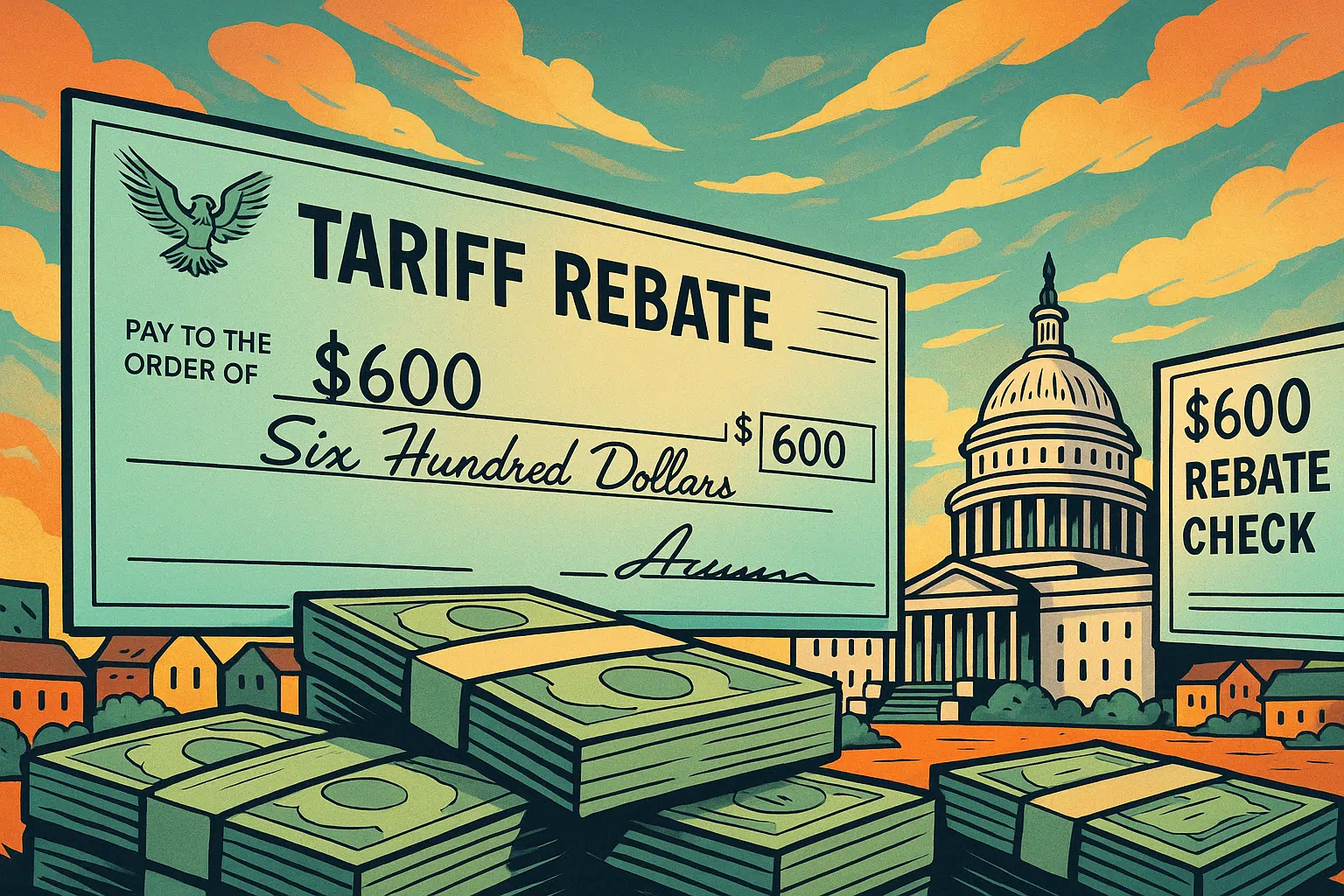
Recent fundraising emails from President Donald Trump’s political team claim supporters could receive “tariff rebate checks”—but the promise is completely false. The misleading message, disguised as a “poll,” actually redirects users to a donation page.
The emails, which target Trump’s so-called “trusted one percent”, ask recipients if they want tariff revenue returned to them in the form of direct checks. But economists, lawmakers, and even Trump allies agree: there is no check coming.
The fake rebate “poll” is just a donation funnel
The August 2025 email was designed to look like an urgent survey. Its subject line—“Rebate checks?”—suggested Trump was weighing whether to send bonus tariff revenue to voters. But every button in the email, whether “yes” or “no,” led directly to a Trump campaign donation page.
This tactic isn’t new:
- In April, Trump’s team teased $5,000 DOGE checks, also fake.
- In past cycles, they’ve promised Social Security tax relief, also false.
- Now, the tariff rebate lie is just the latest ploy to boost donations.
The email claimed to be collecting one million responses to send a message to Congress. But there’s no legislative backing, and no actual benefit being planned or funded.
Where the idea came from—and how fast it collapsed
The idea of “tariff rebate checks” gained traction after Sen. Josh Hawley (R-MO) introduced a bill to issue $600 refundable tax credits funded by tariffs. Trump, ever alert to popular-sounding ideas, briefly said, “We’re thinking about a little rebate.” But:
- Trump never endorsed Hawley’s bill.
- He publicly called Hawley a “second-tier senator” days later.
- GOP lawmakers quickly rejected the idea as unaffordable and unserious.
Sen. James Lankford called it a “bad idea.” Sen. Roger Marshall said funds should go to paying down national debt. And Sen. Bernie Moreno labeled it “insane.”
The numbers don’t add up
According to NBC and Bloomberg analysis, the proposed rebate would cost around $164 billion—roughly the total tariff revenue for the first half of 2025. But that money is already budgeted, and Congress is in no position to spend more following the passage of a massive $4.1 trillion spending bill in July.
Republicans have shown no interest in greenlighting new stimulus-style payouts. In fact, Trump’s current allies in Congress are pushing for spending cuts, not direct aid.
Emails weaponize false hope for campaign cash
Political analysts say the emails are less about public policy and more about psychological tactics:
- They trigger curiosity and urgency (e.g., “Poll closing soon!”).
- They suggest exclusive access to presidential decision-making.
- They exploit financial stress by dangling “free money”.
- Then, they redirect users to donation pages disguised as surveys.
This cycle has played out before, and it’s especially effective in low-information environments—where social media shares and search engine results give the claims undeserved legitimacy.
These lies feed the misinformation machine
The damage extends beyond inboxes. False claims like these:
- Appear in local news stories, giving them unearned credibility.
- Show up in Google searches for “tariff rebate check.”
- Fuel social media echo chambers that recycle old promises.
Trump’s advisors appear to be counting on this viral cycle. It keeps his base hopeful—and donating—even when there’s no real policy proposal behind the message.
What happens next?
No legislation exists to issue tariff rebates to Americans. Despite brief headlines and viral emails, no checks are being mailed, and no bipartisan support exists for such a program. Economists warn the rebates would be inflationary, ineffective, and politically toxic.
For now, the rebate check narrative appears to be just another campaign gimmick—not a governing plan.

This content is brought to you by the FingerLakes1.com Team. Support our mission by visiting www.patreon.com/fl1 or learn how you send us your local content here.