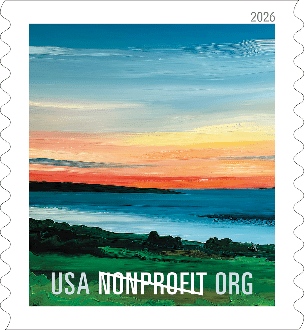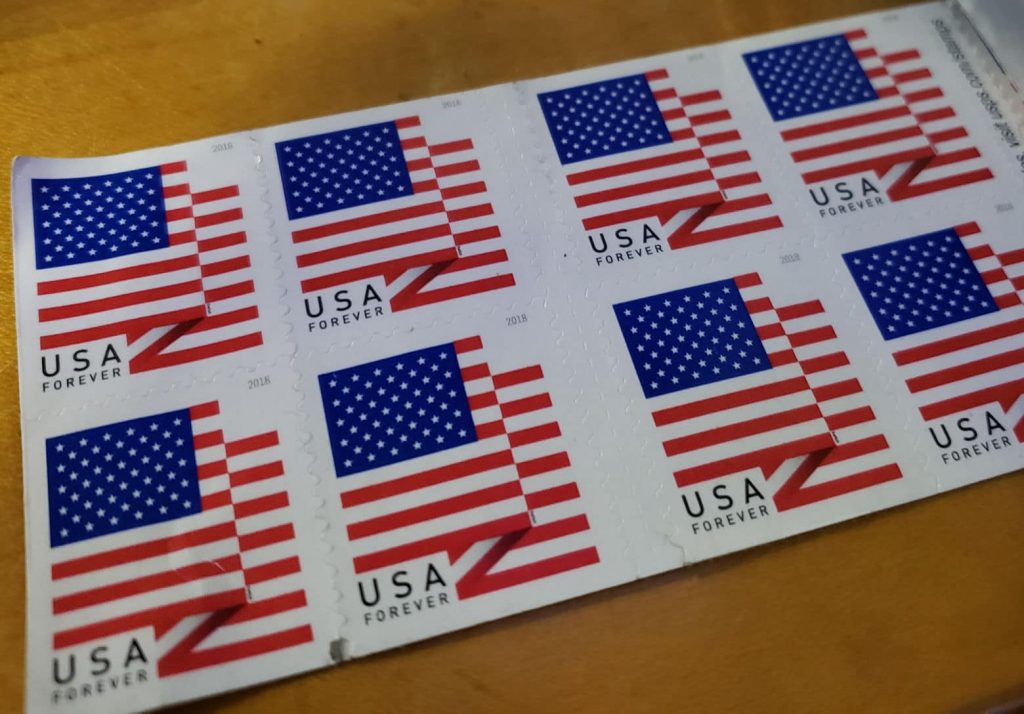
If you haven’t stocked up on Forever stamps yet, you might want to. The U.S. Postal Service recently raised prices—and more hikes are already scheduled through 2027.
July hike marks record increase
On July 13, the price of a Forever stamp increased to 78 cents, a 7.4% jump and the largest single increase in recent memory. It was the seventh stamp price hike since 2021, following two increases each in 2023 and 2024.
Since 2014, stamp prices have climbed by nearly 30 cents, with consistent 5-cent bumps becoming the norm. If the current trend continues, a Forever stamp could cost 98 cents by the summer of 2027.
USPS has more hikes on the calendar
The Postal Service previously proposed five increases over three years, with the July 2025 hike being the first. Additional hikes are planned for January and July of each year through 2027, as part of a USPS effort to improve finances.

The Postal Regulatory Commission oversees and approves these changes, ensuring they comply with price caps based on inflation and mail density.
“The USPS has to comply with price caps… impacted by factors like inflation and mail density,” the commission noted in prior guidance.
How much could stamps cost?
Based on recent trends:
- If each hike adds 5 cents, a stamp could reach 98 cents by mid-2027.
- If increases average 5.2%, the cost could rise to 96 cents.
These projections depend on inflation and regulatory approvals, but both scenarios bring stamp prices dangerously close to $1—a psychological milestone for consumers.
Historical context
Only twice in history have stamp prices dropped:
- In 1919, prices briefly fell from 3 to 2 cents per ounce.
- In 2016, they dropped from 49 to 47 cents but returned to 49 cents in early 2017.
Since then, it’s been a steady upward trend.
USPS finances and political pressure
The price increases come as USPS continues to face financial challenges. Former President Donald Trump has criticized the agency’s structure and recently floated the idea of moving the USPS under the Department of Commerce.
“We want to have a post office that works well and doesn’t lose massive amounts of money,” Trump said in February.
However, current Postmaster General David Steiner opposes privatization.
“I believe in the current structure of the postal service as a self-financing, independent entity,” Steiner said, emphasizing USPS’s role in national communication and commerce.

This content is brought to you by the FingerLakes1.com Team. Support our mission by visiting www.patreon.com/fl1 or learn how you send us your local content here.