New York is checking road-salt supplies and planning how to move equipment, open shelters and restore essential services when winter storms hit. Across the Finger Lakes and Central New York, the work comes as federal forecasters continue to favor a warmer season.
The latest outlook offers reasons to expect milder conditions overall. It also leaves plenty unresolved about the storms that will determine whether a particular commute, holiday weekend or snow-removal contract becomes difficult.
For the region, winter preparations now involve several concerns at once: lake-effect snow, higher salt costs, power outages and water supplies depleted by a dry fall.
The latest outlook still favors warmth
The Climate Prediction Center’s Nov. 19 forecast for December through February gives the Northeast and Great Lakes greater than a 50% chance of above-normal average temperatures. A strong El Niño is expected to remain a major influence into early 2027.
El Niño involves unusually warm tropical Pacific waters that influence atmospheric circulation. The pattern can shift storm tracks far from the Pacific, but its effects vary by location and from one winter to another.
The new forecast continues the warmer tendency outlined in the Finger Lakes’ earlier winter outlook.
Precipitation is harder to summarize locally. The November discussion favors wetter conditions across much of the Northeast and drier conditions in parts of the Great Lakes. That broad pattern should not be converted into a snowfall prediction for individual counties.
NOAA’s seasonal outlooks do not forecast accumulated snowfall. They describe probabilities for average temperatures and total precipitation, including rain and melted snow.
Lake-effect travel remains a concern
Cold air crossing relatively warm lake water can still generate heavy snow during a winter that finishes warmer than normal.
The National Weather Service explains that wind direction controls where lake-effect bands travel. Narrow bands can create sharply different conditions over short distances.
For drivers moving between Rochester, the northern Finger Lakes, Syracuse and communities closer to Lake Ontario, the forecast along the route matters alongside conditions at home.

Snow-dependent businesses face similar uncertainty. The potential effects of a warmer winter include lower heating demand and fewer weather interruptions for some work, alongside challenges for winter recreation and snow-removal businesses. The timing of cold weather and storms will help determine those outcomes.
The region also entered Thanksgiving week with growing drought concerns. Cayuga, Ontario, Seneca, Schuyler, Tompkins, Yates and Onondaga were among counties placed under a drought watch after a dry fall.
Winter precipitation will matter for water supplies as well as roads. One snowy day will not establish whether groundwater and streamflows recover before spring.
State planning starts before a storm arrives
New York’s March 2026 severe-winter response plan calls for advance coordination over travel restrictions, snow clearance, shelter needs and equipment. As forecasts become clearer, agencies reassess likely impacts and potential requests for assistance.
The State Watch Center monitors developing incidents, shares information with agencies and counties, and activates the state Emergency Operations Center during emergencies.
Weather observations also feed those decisions. The New York State Mesonet collects data every five minutes, supporting forecasts and decision-making by transportation agencies and emergency managers.
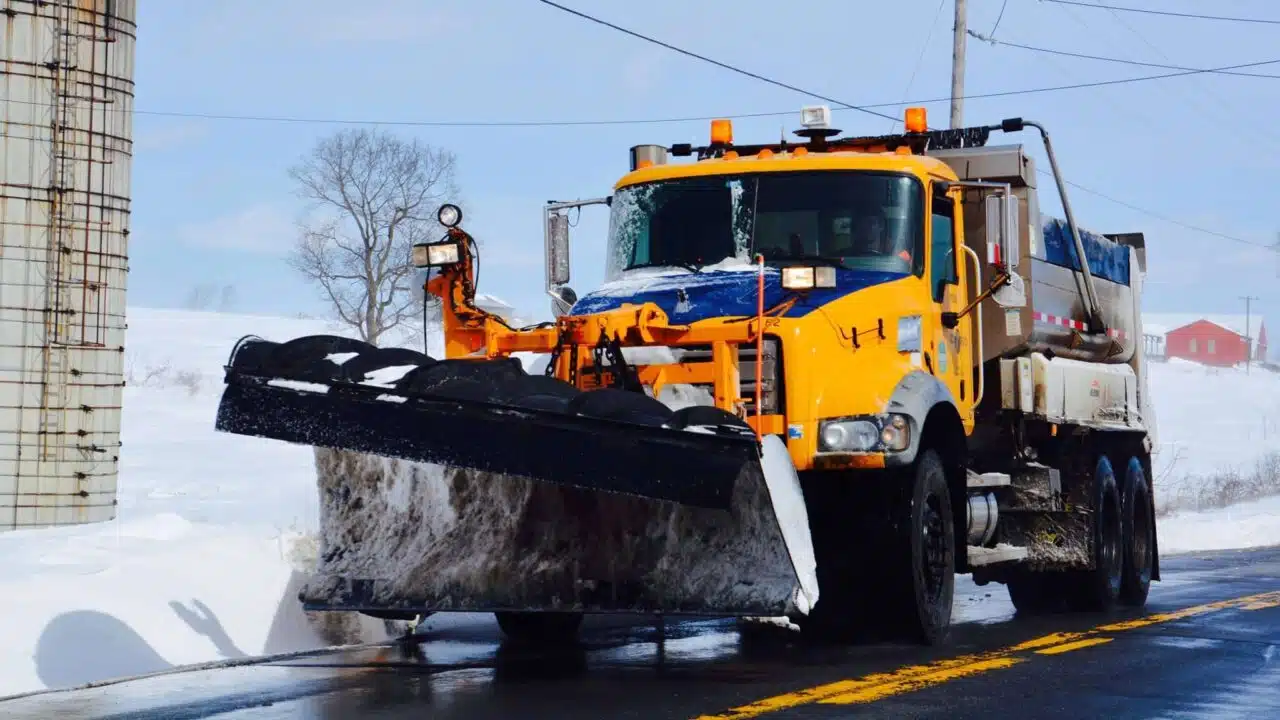
Road salt is receiving attention after last winter’s shortages. State Homeland Security Commissioner Terry O’Leary told Spectrum News that his agency is working with the Office of General Services on supplies for the state and local partners.
The financial pressure is already visible. Higher rock-salt costs have affected Rochester-area retailers and contractors, including a property maintenance business that reported an increase of roughly 25%.
What residents can do now
The state’s winter preparedness guidance recommends servicing snow-removal equipment, having heating systems inspected, maintaining fuel supplies and checking smoke alarms.
Residents should also plan for interruptions: keep essential supplies available, charge devices before an approaching storm and consider how household members would stay warm during an outage.
Before traveling, check 511NY for road information. Free NY Alert notifications can deliver severe-weather warnings and significant highway closure notices for selected areas.
Make FL1 part of your day.
Local reporting. Useful updates. More ways to stay close to your community.
Go ad-free
Support independent local reporting and enjoy FL1 without display ads.
$4.99 / month
Become a member →Cancel anytime. Third-party media players may contain ads.Get the daily briefing
Start your morning with the headlines that matter across the Finger Lakes.
Find more FL1 on Google
Choose FingerLakes1.com as a preferred source to see more of our reporting in your Google news results.

FingerLakes1.com is the region’s leading all-digital news publication. The company was founded in 1998 and has been keeping residents informed for more than two decades. Have a lead? Send it to news@fingerlakes1.com.