Seventeen states have never had a woman governor and 15 have never had a woman U.S. senator, but several races in this year’s midterm elections could change that record, according to a new Pew Research Center analysis.
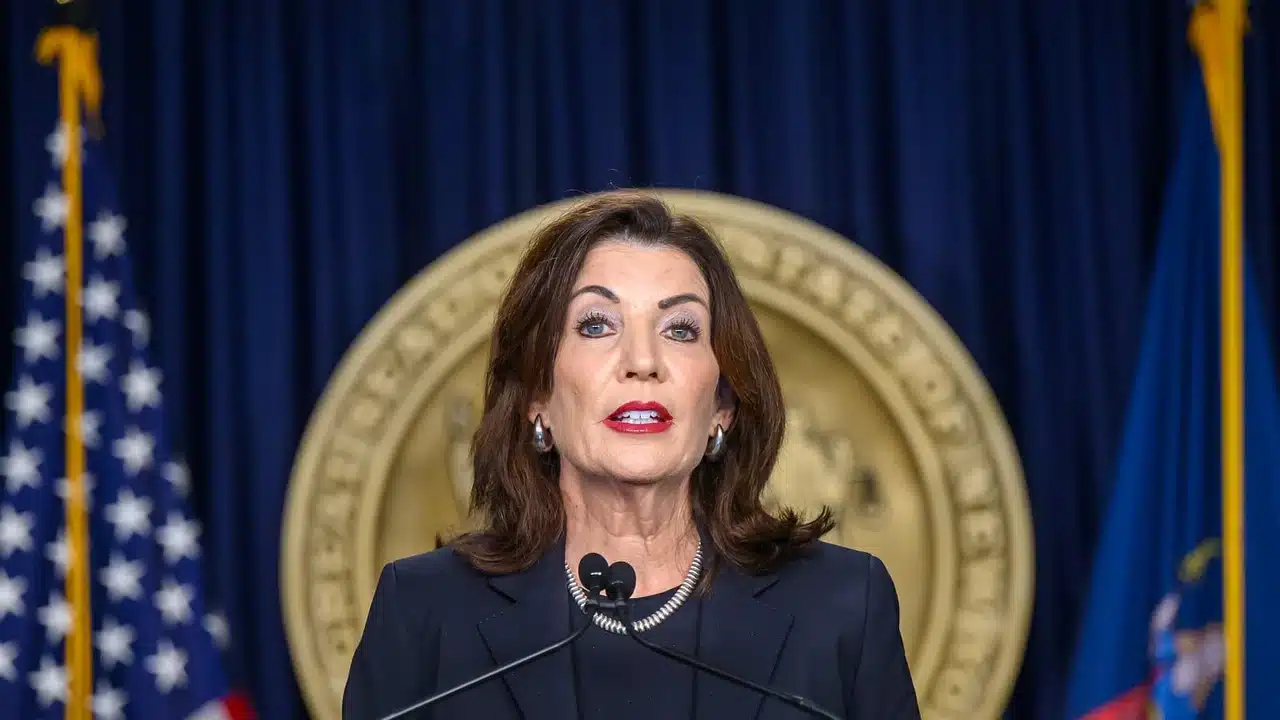
New York has had women in both offices, including its first woman governor, Kathy Hochul, who is seeking reelection this fall. The Pew analysis, published Oct. 28, places the state’s experience in a national history that still leaves four states without a woman in either office.

Pew used data from Rutgers University’s Center for American Women and Politics and state and federal historical records. Its historical counts include appointed and other unelected officeholders; its counts of 2026 candidates include only major-party nominees.
Governor races could bring several firsts
Both major-party nominees for governor are women in Minnesota and Tennessee. A victory by either major-party nominee would give each state its first woman governor.
Minnesota’s nominees are Democratic Sen. Amy Klobuchar and Republican state House Speaker Lisa Demuth. In Tennessee, Republican Sen. Marsha Blackburn faces Democrat Jerri Green, a Memphis City Council member.
Three other states have major-party nominees who could become their first woman governor: Democrat Keisha Lance Bottoms in Georgia, Democrat Terri Pickens in Idaho and Republican Stacey Garrity in Pennsylvania. Bottoms would also be Georgia’s first Black governor and the nation’s first Black woman governor.
Ohio’s race presents a different milestone. Nancy Hollister served as interim governor for less than two weeks after George Voinovich resigned on New Year’s Eve 1998 following his election to the Senate. Democrat Amy Acton could become Ohio’s first elected woman governor this year.
Women currently lead 14 of the 50 states, with 10 Democrats and four Republicans holding governorships. Five are the first women to govern their states: Hochul, Maine’s Janet Mills, Virginia’s Abigail Spanberger, Arkansas’ Sarah Sanders and Iowa’s Kim Reynolds.
Hochul and Sanders are seeking reelection. Mills is leaving because of term limits, while Reynolds is not running again, Pew reported.
Women hold a record 27 Senate seats
Women hold 27 of the Senate’s 100 seats, the highest number to serve simultaneously. Sixteen are Democrats and 11 are Republicans, accounting for 34% of the Democratic caucus and 21% of the Republican conference.
The women senators represent 23 states. Minnesota, Nevada, New Hampshire and Washington each have women in both Senate seats.
Fourteen current women senators are their state’s first. Their service ranges from Washington Democrat Patty Murray, who took office in 1993, to South Carolina Republican Darline Graham, who was appointed this summer.
Two of the 15 states that have never had a woman senator have a Democratic woman nominee this year: Alani Bankhead in Montana and N’Kiyla Thomas in Oklahoma.
Colorado, Idaho, Indiana and Pennsylvania have never had a woman governor or senator. Every state has been represented by at least one woman in Congress, however, counting both the House and Senate. Vermont was the last to do so, in 2022.
New York’s two women senators have been Hillary Clinton and Kirsten Gillibrand, according to Senate historical records. Clinton served from 2001 to 2009, and Gillibrand has served since 2009.
A century of women in statewide offices
Sixty-five women have served in the Senate, representing 35 states. Fifty-one, or 78%, first took office after 1980, and 22 states have had more than one woman senator.
California has sent four women to the chamber, the most of any state. They include Dianne Feinstein, who served from 1992 until her death in 2023, and Barbara Boxer, who served from 1993 to 2017. Alabama, Louisiana, Maine, Minnesota, Nebraska and New Hampshire have each had three women senators.
The Senate’s first woman was Rebecca Felton of Georgia, appointed at age 87 in 1922 for a symbolic one-day term.
Fifty-three women have served as governors in 33 states since 1925. Arizona has had five since 1988, more than any other state, including three consecutive women whose combined service ran from Jane Hull’s swearing-in in 1997 through Jan Brewer’s departure in 2015.
The first two women governors took office in 1925. Wyoming’s Nellie Ross won a special election after the death of her husband, Gov. William Ross. Texas’ Miriam Ferguson, the first woman chosen as governor in a general election, was sworn in 15 days later.

FingerLakes1.com is the region’s leading all-digital news publication. The company was founded in 1998 and has been keeping residents informed for more than two decades. Have a lead? Send it to news@fingerlakes1.com.