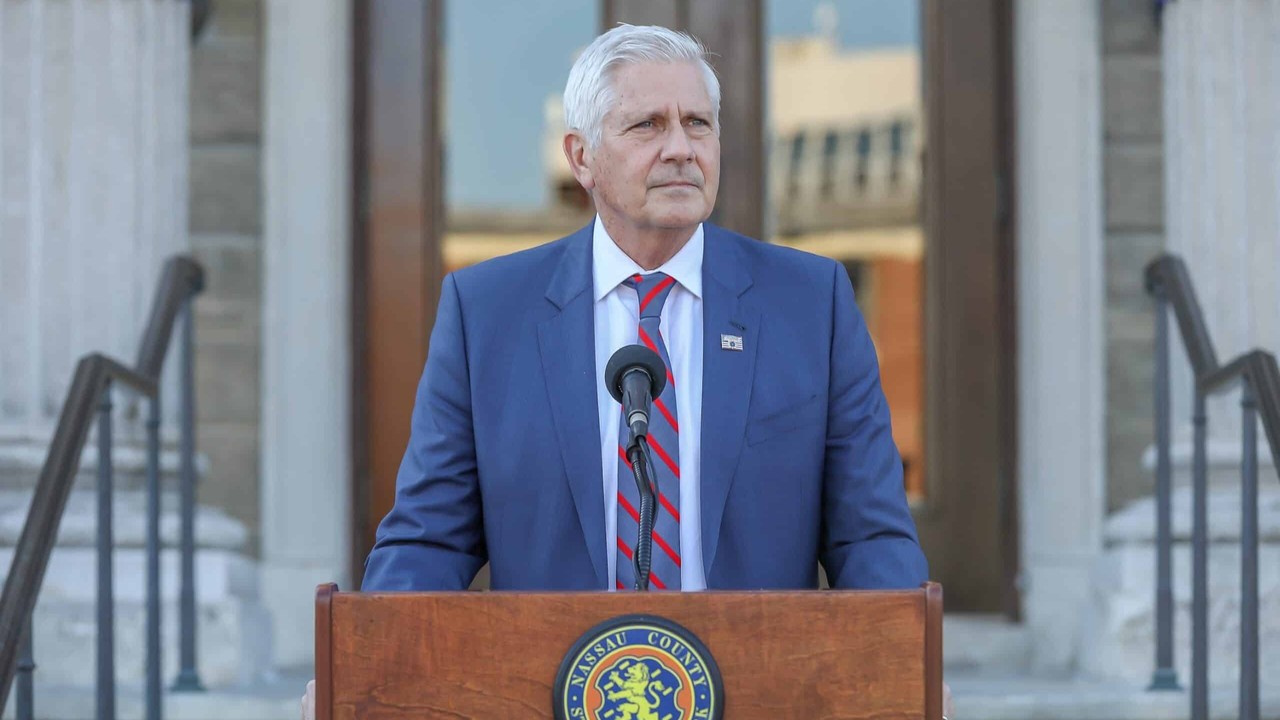
Republican gubernatorial candidate Bruce Blakeman challenged conflicting independent-voter findings Wednesday, accusing pollsters of discouraging his supporters as Siena and Marist released statewide surveys showing Gov. Kathy Hochul leading the race.
Blakeman called the polls “voter suppression tactics” and said his internal surveys showed a close contest. His campaign did not release those internal survey results, field dates or methodology with the statement.

The Siena Research Institute survey put Hochul ahead 54% to 40% among likely voters statewide. Marist’s survey showed her leading 53% to 42% among likely voters. The campaign’s dispute centered on a smaller group within each poll, rather than those overall results.
Independent-voter findings differ
Siena reported Hochul leading 51% to 40% in its combined independent-and-other-voter category. Marist found Blakeman ahead 49% to 39% among self-identified independents. That produces a 21-percentage-point difference between the candidates’ margins across the surveys; it does not measure a shift by the same voters over time.
The campaign also questioned the polls’ racial makeup. Their weighted likely-voter profiles were 62% white in Marist and 73% white in Siena. Those percentages describe the weighted electorates used in the results, rather than raw counts of people contacted.
The studies used different field periods and methods. Siena interviewed 807 likely New York voters Oct. 19-22, using live telephone interviews and text invitations to an online questionnaire. It weighted responses by demographic characteristics, party and estimated voting likelihood. Its overall margin of error was 4.1 percentage points.
Marist interviewed 1,448 registered New York voters Oct. 22-25 through live telephone interviews, text messages and online panels. Its likely-voter results apply a voting-probability weight to registered voters’ responses. Marist reported a 3.9-point margin of error for likely-voter results and 3.5 points for registered voters overall. Neither poll’s overall margin of error should be treated as the margin for its independent-voter subgroup.
The campaign called for greater transparency about methodology, independent-voter samples and turnout models. Both pollsters published methods and detailed result tables with their releases. The campaign’s statement did not provide evidence that either organization intended to suppress turnout.
Campaign points to other surveys
Blakeman cited a Pollfinity survey showing Hochul ahead 48% to 47% in a direct two-candidate matchup. That same survey’s full-field question put Hochul ahead 47% to 44%, with other candidates and undecided voters included.
Pollfinity surveyed 499 registered voters who answered the governor-ballot question Oct. 8-12 by text invitation to a web questionnaire. It used demographic targets based on the 2022 electorate and recalled-vote weights tied to certified election results. Its overall margin of error was 4.8 points. Pollfinity said the survey was self-funded by its owner, former Libertarian presidential candidate Lars Mapstead, and was not commissioned by a campaign or party.
Two earlier polls also found Blakeman leading among independents while trailing statewide. Quinnipiac’s Oct. 21 release showed him ahead 51% to 44% among independents and Hochul ahead 55% to 41% overall. It surveyed 1,167 likely voters Oct. 15-19 by live telephone interviews, with an overall margin of error of 3.8 points.
An Emerson College/PIX11 survey conducted Oct. 3-5 found Blakeman leading independents 55% to 34% and Hochul leading overall 52% to 40%. Its 900 likely-voter sample combined text-to-web and panel interviews, with an overall credibility interval of 3.3 points.
Blakeman presses affordability message
Pollster John McLaughlin, quoted in the campaign’s statement, described Siena’s poll as “a gift to Kathy Hochul” and argued that dissatisfaction with taxes and utility bills would help Blakeman. He predicted strong Election Day turnout for the Republican.
Blakeman renewed his promises to lower taxes and utility bills, arguing that affordability would decide the contest. The campaign continued to describe the race as competitive despite the double-digit statewide leads in the Siena and Marist results.
The election is Nov. 3.

FingerLakes1.com is the region’s leading all-digital news publication. The company was founded in 1998 and has been keeping residents informed for more than two decades. Have a lead? Send it to news@fingerlakes1.com.