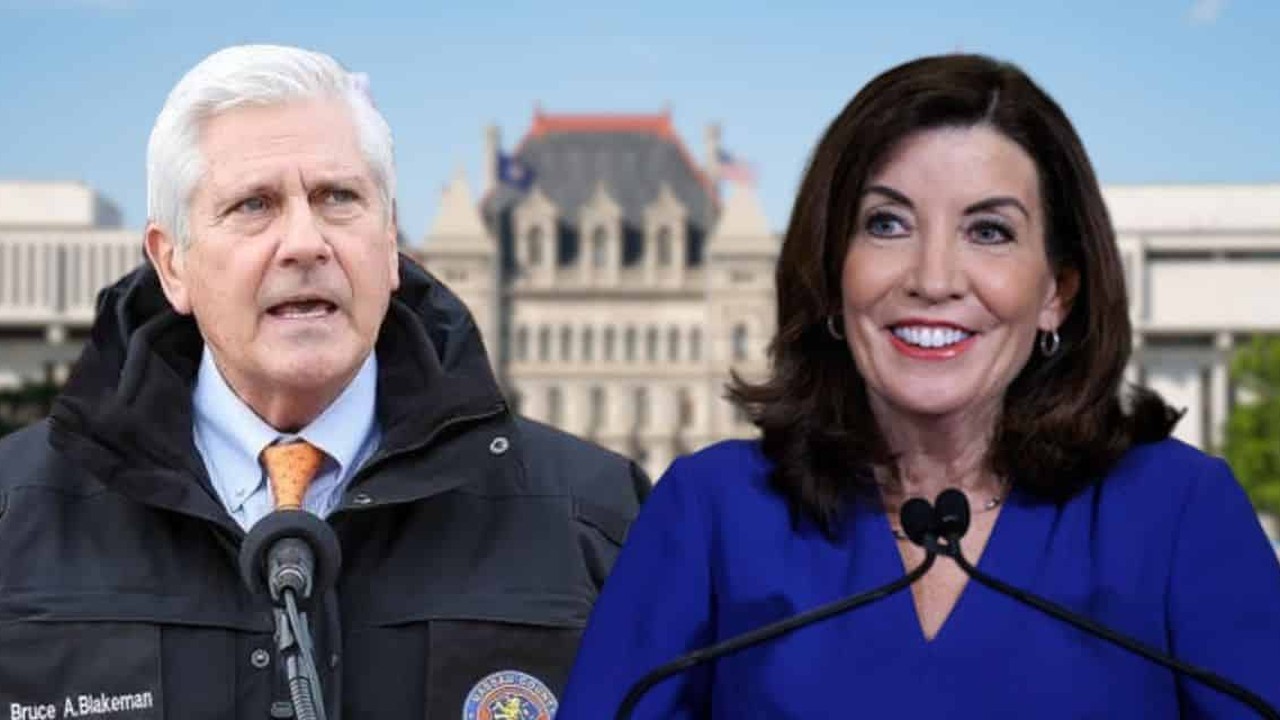
Domestic violence survivors who keep their voter registration information confidential will receive advance renewal notices under legislation signed by Gov. Kathy Hochul, giving them warning before the four-year protection expires.
The state Board of Elections will be required to mail a notice at least six months before expiration with instructions for renewing confidentiality. The measure is part of a three-law package that also expands address privacy protections and strengthens enforcement of human trafficking information requirements at hotels and motels.
Keeping voter records confidential
Under existing law, eligible domestic violence survivors can request that their voter registration information remain private for four years. S.9671A/A.10960A adds a requirement to warn them before that period ends so they can seek another term of protection.
The legislation builds on a 2021 change allowing survivors to request confidentiality directly from the Board of Elections rather than obtain a court order.
Sen. Michelle Hinchey said a six-month notice will help prevent lapses in a protection intended to keep survivors safe. Assemblymember Linda Rosenthal said privacy can remain important long after someone leaves an abusive situation because threats, stalking and harassment may continue.
People seeking victim assistance can find programs through OVS Connect. New York’s Domestic and Sexual Violence Hotline operates 24 hours a day at 1-800-942-6906, by text at 844-997-2121 or through online chat at opdv.ny.gov.
Hochul’s office cited $100 million in state support for victim assistance programs and a $23 million investment in the Statewide Targeted Reductions in Intimate Partner Violence initiative. STRIVE supports law enforcement responses and services for survivors.
Address protection after intimate-image abuse
A separate bill, S.5041/A.6338, allows people whose intimate photographs or videos have been illegally shared without consent to participate in New York’s Address Confidentiality Program.
The program helps eligible people who have moved keep their new home address private by using a substitute mailing address. The change extends access to that protection to people targeted by nonconsensual intimate-image sharing.
Sen. Luis Sepúlveda said people seeking justice should not have to expose their location or compromise personal safety. Assemblymember Latrice Walker said the program can help people in Family Court avoid further abuse or victimization.
Lindsey Song, co-chair of the New York Cyber Abuse Task Force, said people targeted by image-based abuse can face continuing threats, harassment and physical confrontations from abusers or others who have seen the material online. Keeping a home address private is intended to reduce that exposure.
The governor also pointed to earlier laws prohibiting discrimination against domestic violence survivors in housing and other parts of daily life and expanding access to orders of protection for family and household members through Melanie’s Law.
Hotels face stronger enforcement of posting requirements
S.9341A/A.8939A creates civil penalties for hotels, motels and other lodging facilities that fail to display required information about services for human trafficking victims.
The information-posting requirement already exists. Sen. Jessica Scarcella-Spanton said some facilities have not complied and that penalties are intended to make the service information more accessible to people who need it.
Assemblymember Amy Paulin said information cards in guest rooms can connect people experiencing exploitation with help. The law strengthens enforcement of the facilities’ obligation to make those resources available.

FingerLakes1.com is the region’s leading all-digital news publication. The company was founded in 1998 and has been keeping residents informed for more than two decades. Have a lead? Send it to news@fingerlakes1.com.