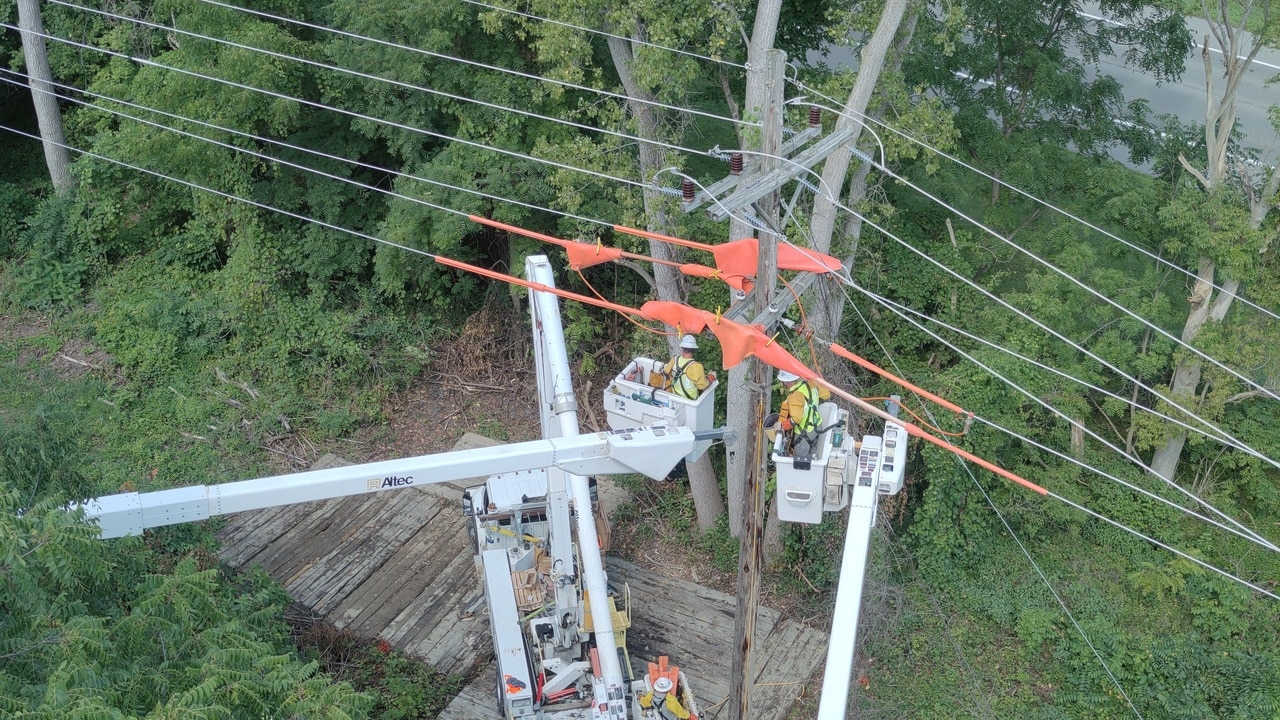
NYSEG plans to upgrade more than 230 transmission lines spanning about 800 miles through 2031 as New York faces a broader reliability challenge: replacing worn equipment while adding enough dependable electricity supply to meet rising demand.
The utility said Tuesday it has corrected 200 equipment-condition problems across 35 transmission lines this year. Its work comes as the New York Independent System Operator warns that demand growth, generator retirements and delays in new resources are reducing the cushion available when equipment fails or extreme weather pushes the system harder.

State regulators, meanwhile, expect adequate electricity and natural gas supplies for the coming winter. That near-term assessment and NYISO’s longer-range warnings address different questions: whether utilities are prepared for this heating season, and whether new supply and infrastructure will arrive fast enough to keep the system reliable in the years ahead.
What NYSEG is repairing
Transmission lines carry large amounts of high-voltage electricity from generating sources to substations. NYSEG’s transmission line deficiencies program targets infrastructure beyond its useful operating life, including aging poles, deteriorated crossarms and hardware, and transmission structures.
The company prioritizes work according to equipment condition and the consequences of a failure. It addressed more than 500 equipment-condition issues across 62 transmission lines in 2025 and aims to address about 370 deficiencies by the end of 2026.
“Transmission lines are the backbone of electric infrastructure,” NYSEG President Marc Geaumont said in the company’s Oct. 20 announcement. “Any disruption to the transmission network could have a ripple effect for customers.”
NYSEG says the work should reduce outage risks, improve performance during extreme weather and support growing electricity demand. The utility operates about 4,500 miles of electric transmission lines and 35,000 miles of distribution lines, serving roughly 894,000 electricity customers across its upstate territory.
Those repairs address the condition of the delivery network. NYISO’s planning work also examines whether sufficient generation will be available and whether power can move from the places producing it to the places that need it.
Rising demand meets an aging generation fleet
NYISO’s 2025–2044 System & Resource Outlook examines 20 possible futures with different demand, policy and resource assumptions. Across them, the operator identifies a need to coordinate new generation, transmission development and plant retirements.
Its planning includes about 2,567 megawatts of additional large-load demand by 2035 in the baseline, with higher-demand scenarios exceeding 4,000 megawatts. Manufacturing developments such as Micron’s planned semiconductor campus in Clay are part of that outlook, alongside demand from data centers. Electrification of transportation and buildings adds further pressure.
Where that demand locates matters. NYISO says placing large users near available generation or underused transmission can improve use of the system, while poorly aligned locations require more reinforcement. Transmission constraints can also prevent available power from reaching customers, even when generation exists elsewhere.
An earlier NYISO electricity-price white paper, published in January, described how an aging fleet and shrinking supply margins can raise costs. It cited the greater fuel and maintenance expenses of older, less efficient generators, along with supply-chain delays affecting plants, transformers and renewable-energy equipment.
The regional stakes extend beyond new industrial projects. NYISO’s white paper identifies Ginna and Nine Mile Point 1 as the country’s two oldest operating nuclear units. Its Outlook finds that nuclear power can contribute substantial energy and dependable capacity in a lower-emissions system, while stressing the importance of bringing replacement resources online in step with retirements.
Heat and cold test the grid in different ways
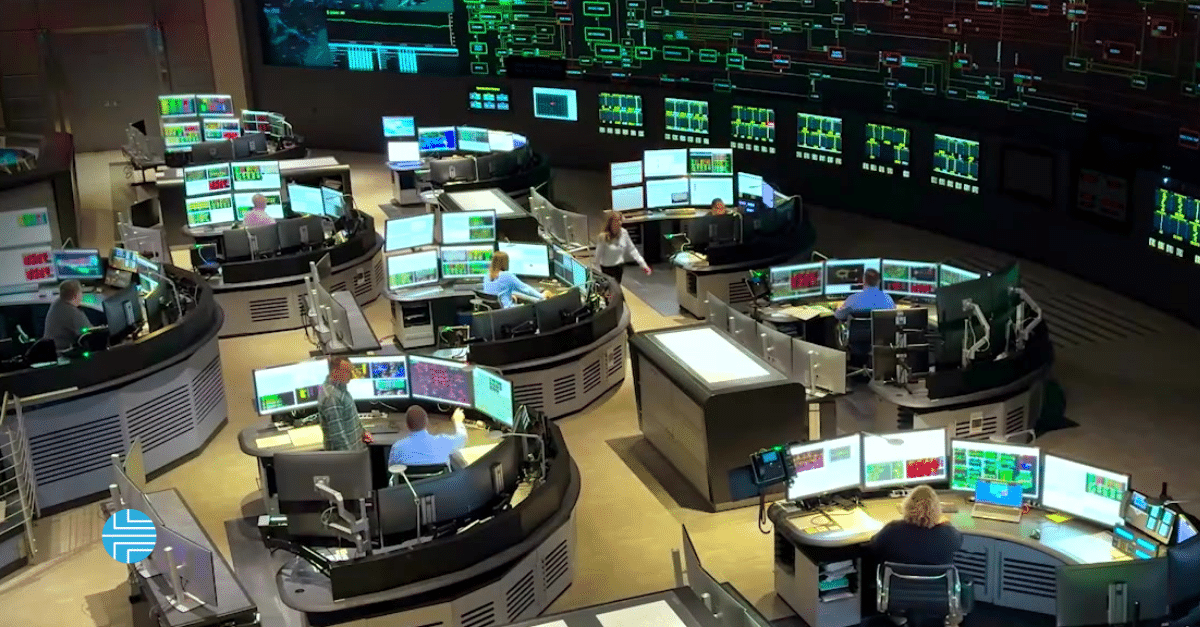
NYISO’s review of summer and winter extremes describes two recent tests: the Independence Day heat wave and Winter Storm Fern in late January.
During the summer heat, high demand coincided with unexpected generator outages and outages on the new Champlain Hudson Power Express line. NYISO used emergency operating procedures to maintain service.
Winter brought sustained demand and fuel constraints, particularly for natural gas, while snow-covered solar panels reduced renewable output. Transmission bottlenecks also limited delivery of available Long Island generation to other downstate areas, requiring more expensive resources, NYISO said.
The operator identifies the planned Propel NY Energy transmission project as a way to expand transfer capability between Long Island and the rest of the state by at least 3,000 megawatts.
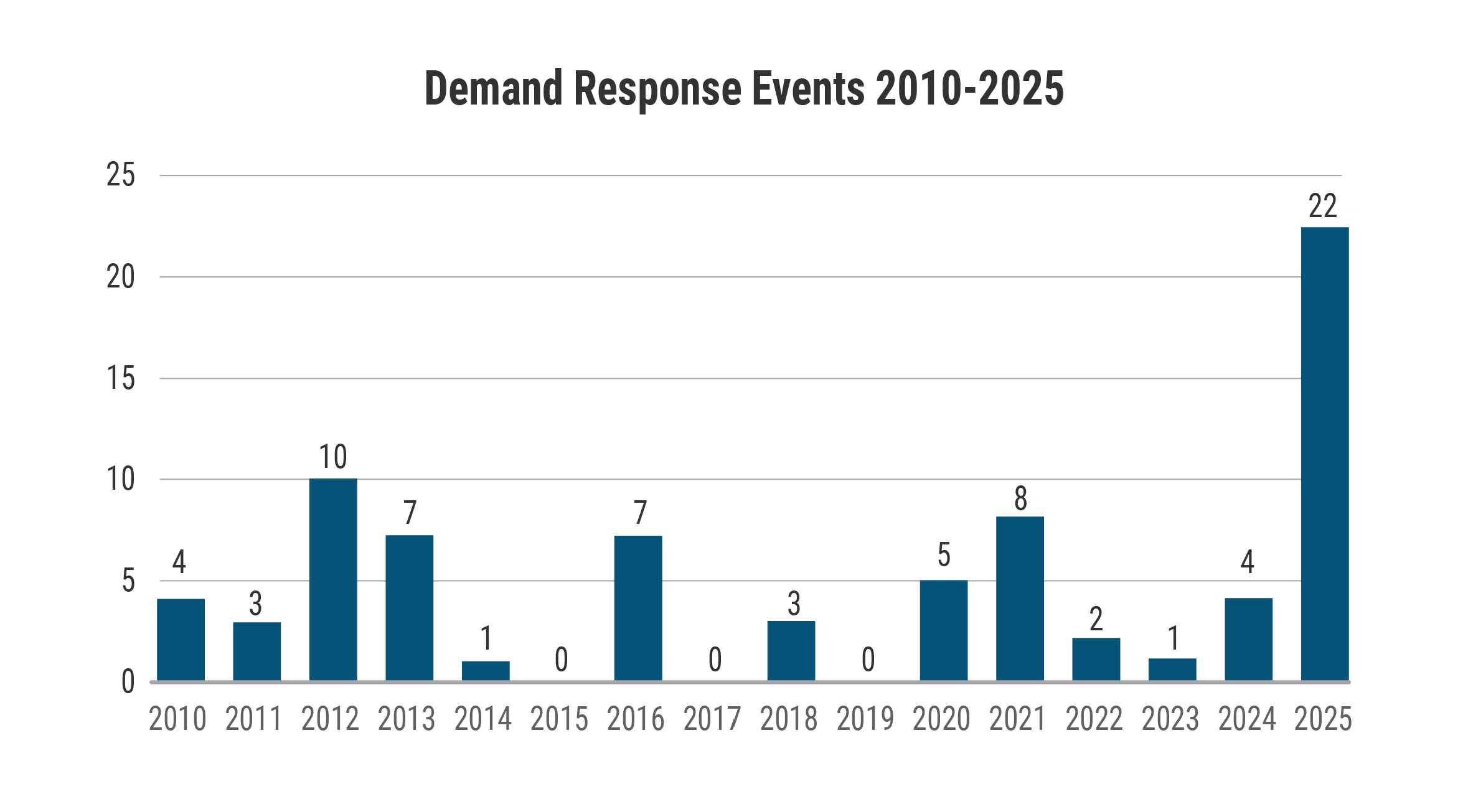
Emergency imports and demand response remain important operating tools. NYISO says using them more frequently leaves operators with fewer remaining options if conditions deteriorate further. Its longer-term planning identifies flexible demand, efficiency and storage alongside new generation and transmission as ways to ease system pressures.
Adequate winter supplies still require preparation
The Public Service Commission’s Oct. 15 winter assessment expects adequate electricity and natural gas supplies. Gas utilities have sufficient supplies, delivery capacity and storage for firm customers under severe winter design conditions, the commission said.
Staff identified limited gas capacity in the Capital Region and downstate but did not expect it to prevent utilities from meeting customer demand this heating season. Regulators will continue monitoring supplies and preparations.
NYISO’s Oct. 9 winter fuel analysis explains why fuel availability for generators also matters. During prolonged cold, gas used to heat buildings competes with gas used to generate electricity. Dual-fuel plants can switch to oil when gas becomes constrained, giving operators another source of power.
That flexibility depends on fuel being available and deliverable. NYISO cited below-normal East Coast distillate inventories and volatile oil markets as concerns for generators maintaining backup fuel.
Generator readiness, fuel transportation and available imports all affect the response.
Lower wholesale prices do not translate directly into lower bills
Fuel costs and weather can move electricity prices sharply in either direction. In an April 20 market update, NYISO reported early-April real-time wholesale prices averaging about $30 to $40 per megawatt-hour, compared with $141 in January and $114 in February.
Milder weather reduced heating demand before summer cooling demand arrived. Lower gas prices, stronger wind and solar output and limited transmission congestion helped reduce the cost of serving the grid, the operator said.
Those figures describe the real-time market, which NYISO says accounts for roughly 5% of daily electricity transactions. Most wholesale electricity is purchased in the day-ahead market. A retail bill also includes delivery and other utility costs, so a short-term wholesale decline is not a matching reduction in a household’s total bill.
The PSC’s current winter outlook estimates that a residential customer using 600 kilowatt-hours a month would pay about $74 monthly for market-priced electricity supply, up 4.6% from the prior winter on a statewide average. Actual costs vary by utility and usage. Utilities have hedged about 70% of their estimated statewide full-service residential electricity needs to reduce exposure to unexpected market swings.
Grid upgrades bring their own cost pressures. NYISO’s January white paper says investments in aging infrastructure, transmission expansion and grid modernization can increase retail rates in the near term, even as the work supports long-term reliability.
The difficult economics of the last emissions cuts
NYISO’s Oct. 19 discussion of an emissions-free grid highlights an analysis by its independent market monitor, Potomac Economics, of the cost of moving from a 95% emissions-free system to 100%.
In the 95% scenario, fossil-fueled plants could run infrequently during high-demand periods or extended stretches when other resources cannot meet the need. A fully emissions-free scenario would require dependable replacements, including hydrogen-fueled generation or long-duration storage at a scale not yet commercially available in New York.
Potomac’s modeling comparison estimated about $15 billion more in annualized investment, fixed and production costs in 2044 for the 100% case than the comparable 95% case, in 2025 dollars. It estimated an incremental cost of roughly $1,500 per additional ton of carbon dioxide avoided.
The estimate depends on modeled technology costs, resource development and demand assumptions; it is not a forecast of household bills. Potomac’s methodology compares baseline-load cases with limits on new nuclear development and scales production costs from a higher-load scenario. NYISO’s broader Outlook evaluates several possible resource mixes rather than prescribing a single construction plan.
Data centers raise a question of who pays
New York’s large-load interconnection proceeding, Case 26-E-0045, addresses how major new electricity users connect and how the resulting costs should be allocated.
The PSC’s February order warned that speculative or duplicate requests can complicate planning. Its September draft environmental-review scope reported nearly 14 gigawatts of large-load requests in the NYISO queue as of August, with data centers accounting for 88%. Queue requests describe proposed demand, a broader measure than the load NYISO includes in its baseline forecast.
The proceeding is examining cost-sharing rules, customer-supplied generation or storage, flexible electricity use, long-term contracts and ways to reuse waste heat. The PSC also wants to assess whether new demand can spread system costs and put downward pressure on other customers’ rates, while protecting them from costs imposed by large users.
The commission adopted a draft scope for a generic environmental review in September following Gov. Kathy Hochul’s July data-center moratorium order. The review will examine potential effects on air, water, agriculture, communities and public health, as well as energy use and cost allocation.
An Oct. 19 notice extended comments on that draft scope to Nov. 4, replacing the earlier Oct. 20 deadline. A technical conference is scheduled for Oct. 28 from 10 a.m. to 4 p.m., with in-person participation in Albany and remote access. People attending in person must register by Oct. 26.
Planning for equipment that may not be available
In an October commentary, NYISO planning executive Zach Smith described why planners had not assumed full summer availability of the 1,250-megawatt Champlain Hudson Power Express line before it began operating.
That conservative approach helped support the decision to retain older peaking plants. When the new line shut down during the July 4 heat wave, other resources and operating preparations helped keep the grid reliable, Smith wrote.
Smith argues that independent planning and competitive markets are necessary to identify risks and attract investment before shortages become operating emergencies. NYISO runs the bulk electric system and wholesale markets; utilities such as NYSEG maintain and improve the networks delivering that power.

FingerLakes1.com is the region’s leading all-digital news publication. The company was founded in 1998 and has been keeping residents informed for more than two decades. Have a lead? Send it to news@fingerlakes1.com.