

Launching a new product usually starts with a difficult question: where will the customers come from?
Established ecommerce operators have a different problem. They already have customers, traffic, email subscribers, purchase data, and a brand people recognise. Instead of building demand from zero, they can look at their existing customer base and identify products that naturally belong in the same ecosystem.
That shift explains why more ecommerce businesses are exploring their own product lines. Rather than relying exclusively on third-party products, retailers can use private-label products to build offerings under their own brand, control positioning, and create additional opportunities to sell to customers they have already acquired.
The opportunity doesn’t mean every store should launch a dozen new SKUs. Product expansion works when the new product solves a relevant customer problem and supports the economics of the existing business.
For an established ecommerce operator, the question becomes less about whether they can sell another product and more about whether they can own the product relationship.
Why Ecommerce Operators Are Building Their Own Product Lines
Owning a product gives an ecommerce business more control than simply reselling another company’s brand.
The retailer can decide how the product looks, how it gets positioned, what audience it targets, and how it fits into the wider customer experience. That control can create a stronger point of differentiation in categories where competitors sell many of the same products.
Product lines can also increase the value of existing customer relationships. A store doesn’t necessarily need to find a new customer every time it introduces a product. An existing buyer may purchase a complementary item if the product solves another problem within the same category.
Consider the natural connections:
- Fitness apparel → supplements
- Skincare tools → skincare products
- Coffee equipment → branded coffee
- Wellness content → wellness products
- Pet accessories → pet-care products
The strongest opportunities usually come from these existing relationships. An operator can examine customer orders, search behaviour, product reviews, email questions, and support requests to identify gaps in the current catalog.
Private label also creates an opportunity to build brand equity instead of sending every product sale toward someone else’s brand. However, traditional private-label manufacturing introduces its own complications. Minimum order quantities, upfront production costs, warehousing, inventory forecasting, packaging, and fulfillment can turn a promising product idea into a significant financial commitment.
That creates a problem for operators who want to test a new category before committing substantial capital.
Where Supliful Fits Into the Ecommerce Product-Line Model
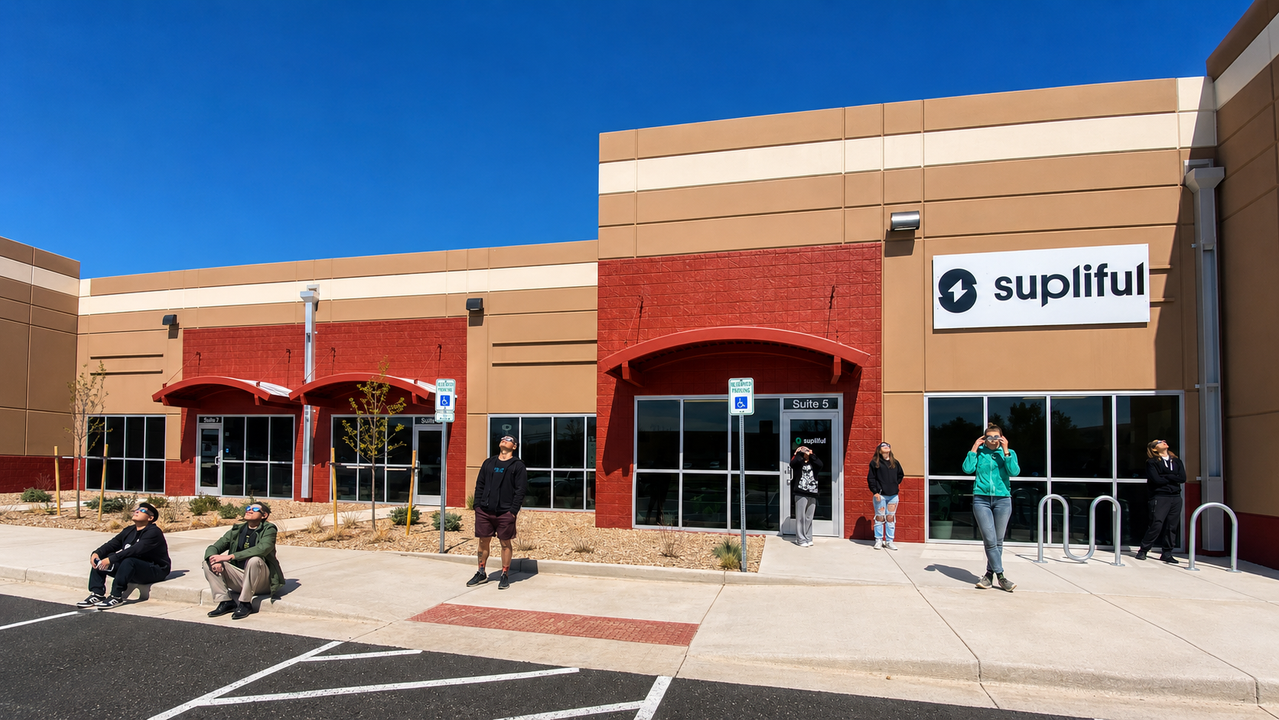
Supliful provides infrastructure for businesses that want to create and sell branded consumer products without taking on the entire traditional manufacturing and fulfillment operation themselves. The platform supports categories including supplements, beauty products, and coffee, while allowing brands to customize 190+ products with their own branding.
The company’s model fits particularly well with an ecommerce operator that already has a store and wants to test a complementary product. Supliful currently offers products without minimum order quantities, allowing a brand to start with individual SKUs instead of committing to a large production run.
The process remains relatively straightforward. A merchant selects a product, customizes its branding and label, sets a retail price, and publishes it through its store. When a customer places an order, Supliful handles the product preparation, picking, labelling, packing, and shipping. The customer continues to interact with the merchant’s brand rather than having to navigate a separate fulfillment operation.
That separation matters. The ecommerce operator still owns the commercial side of the business: product selection, pricing, positioning, marketing, customer acquisition, and customer relationships. Supliful provides the physical infrastructure behind the transaction.
The economics also remain measurable. Supliful separates product, fulfillment, processing, and shipping costs, while its product pricing can vary according to factors such as SKU volume and membership plan. That allows operators to calculate contribution margin before deciding whether a product deserves further investment.
The biggest advantage, therefore, isn’t simply avoiding inventory. It’s being able to test whether a product deserves inventory before committing to inventory.
For an established ecommerce business, that can change how product expansion works. Instead of forecasting thousands of units and hoping demand follows, an operator can start smaller, measure actual customer behavior, and use the results to determine what comes next.
Build the Product Line After the Customer Base
An ecommerce brand doesn’t need a massive catalog to create a successful product line.
A more disciplined approach starts with the customers already on the books. Identify a recurring need, find a product that fits the brand, launch one SKU, and measure what happens.
The useful sequence looks like this:
Existing customers → complementary product → first sales → margin analysis → customer feedback → product expansion
Supliful’s current infrastructure can support that approach by combining branded products with on-demand fulfillment, allowing operators to test new categories without immediately building a separate supply chain.

This content is brought to you by the FingerLakes1.com Team. Support our mission by visiting www.patreon.com/fl1 or learn how you send us your local content here.