

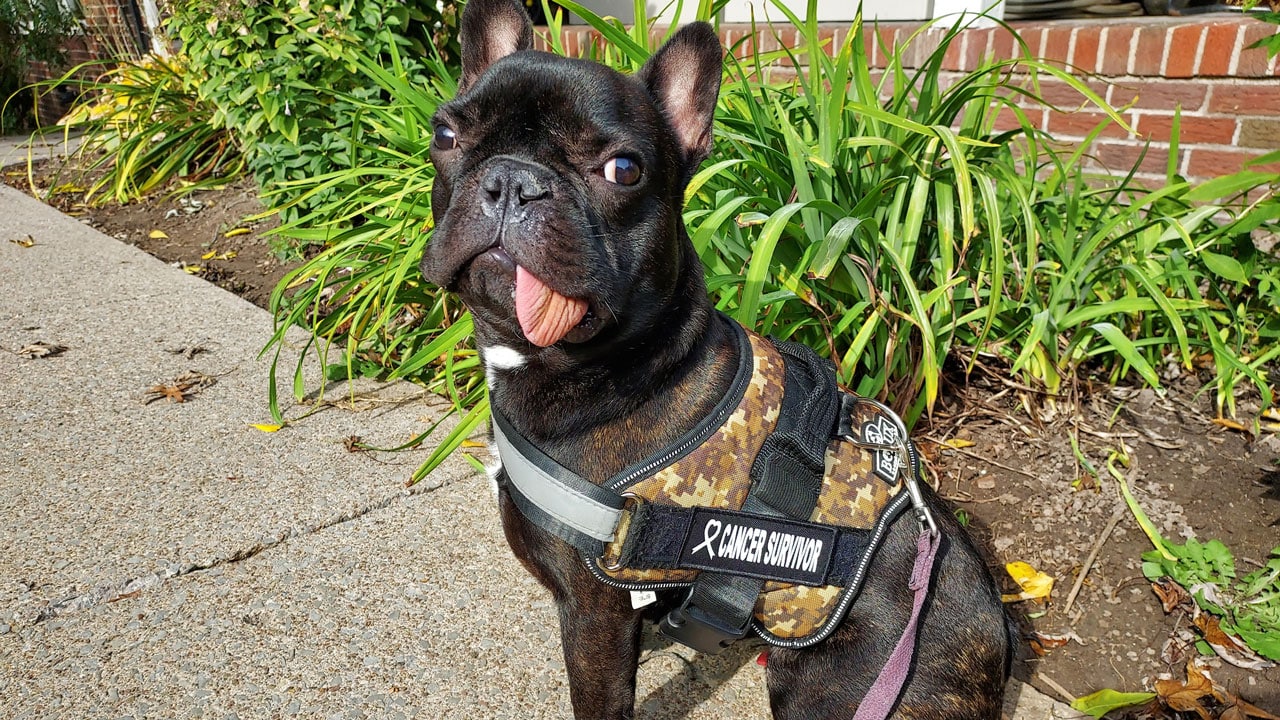
Cornell University researchers have identified a promising drug treatment for a common but aggressive canine oral tumor, a finding that could eventually reduce the need for dogs to undergo extensive jaw surgery.
The research focused on canine acanthomatous ameloblastoma, or CAA, a benign but locally invasive tumor that can destroy surrounding tissue and bone. Because the disease can closely resemble canine oral squamous cell carcinoma, a malignant cancer, the two are misdiagnosed in close to one-third of cases.

Researchers developed a new diagnostic approach that can more accurately distinguish between the two cancers and also identified an existing FDA-approved drug that appears capable of suppressing CAA tumor growth.
The findings were published July 21 in the journal Molecular Therapy Oncology.
Rare cell type provided a new target
The Cornell-led team used single-cell RNA sequencing to examine individual cells taken from tumor samples.
That approach allowed researchers to identify a rare population of cells found in CAA that carried an unexpected neuron-like molecular signature.
One gene expressed by those cells, ERBB4, drew particular attention because it belongs to a family of genes that has already been extensively studied in human cancers.
Researchers then tested dozens of therapeutic compounds on living CAA tumor tissue. Neratinib, an FDA-approved cancer drug known to inhibit ERBB4, proved effective at suppressing tumor growth in those experiments.
The work now creates a path toward clinical trials in dogs.
Goal is to shrink tumors before surgery
CAA is currently treated primarily with surgery, and in many cases that requires removal of part of a dog’s jaw.
Dr. Santiago Peralta, an associate professor of dentistry and oral surgery at Cornell’s College of Veterinary Medicine and a senior author of the study, said researchers are trying to find treatments that could shrink tumors enough to reduce the extent of surgery or eliminate the need for it altogether.
That makes an accurate diagnosis particularly important. Treatments targeted to the biology of one tumor may not work against another cancer that appears similar under traditional diagnostic methods.
The newly identified cell signature could give veterinarians another way to distinguish CAA from canine oral squamous cell carcinoma before deciding how to treat a patient.
Research could have implications beyond veterinary medicine
The study brought together expertise from Cornell’s College of Veterinary Medicine and its biomedical engineering programs, along with researchers at the Fred Hutchinson Cancer Center.
Praveen Sethupathy, professor of physiological genomics and chair of Cornell’s Department of Biomedical and Translational Sciences, said the project depended on collaboration between clinicians, genomic researchers and cancer specialists.
The researchers ultimately hope to test neratinib in dogs diagnosed with CAA.
There is also a similar tumor in humans, although it is relatively rare. Researchers said successful canine trials could therefore provide information useful for understanding or treating the human form of the disease.
Dogs offer researchers a potentially faster path for studying the treatment because naturally occurring canine cancers can be investigated through veterinary clinical trials without some of the logistical hurdles involved in launching human trials for a rare cancer.
The project is part of Cornell’s growing Comparative Oral Oncology Laboratory initiative, which studies naturally occurring oral cancers across species.
Researchers said the immediate objective, however, is straightforward: determine whether a drug already available for cancer treatment can safely shrink CAA tumors in canine patients and give veterinarians an alternative to removing large portions of the jaw.
Make FL1 part of your day.
Local reporting. Useful updates. More ways to stay close to your community.
Go ad-free
Support independent local reporting and enjoy FL1 without display ads.
$4.99 / month
Become a member →Cancel anytime. Third-party media players may contain ads.Get the daily briefing
Start your morning with the headlines that matter across the Finger Lakes.
Find more FL1 on Google
Choose FingerLakes1.com as a preferred source to see more of our reporting in your Google news results.

FingerLakes1.com is the region’s leading all-digital news publication. The company was founded in 1998 and has been keeping residents informed for more than two decades. Have a lead? Send it to news@fingerlakes1.com.