

Geneva officials are confronting preliminary budget gaps totaling more than $2.5 million across the city’s general, water and sewer funds as they begin shaping a 2027 spending plan that could force difficult choices over equipment, staffing, services and future borrowing.
City Comptroller Adam Blowers told City Council during its July 21 operations meeting that the initial projections show a $1.1 million gap in the general fund, a $655,000 gap in the water fund and an $800,000 gap in the sewer fund. He stressed that the figures are typical for this point in the budget process and are expected to change as revenue projections are updated and departmental requests are reviewed.

Acting City Manager Taylor Youngs said the estimates reflect what departments believe is needed to maintain current service levels. They do not include the city’s capital improvement plan, which will be presented separately during an Aug. 5 meeting.
Youngs said departments had already reduced equipment purchases, supplies, software, deferred maintenance and, in some cases, personnel requests before submitting their proposed budgets.
The administration is not recommending specific departmental cuts yet. Instead, council members were asked to provide broad policy direction before management returns with efficiency proposals and spending options next month.
The proposed city manager’s budget is expected to be presented in September.
Budget pressure centers on staffing, debt and deferred purchases

Personnel costs account for 41% of the general fund budget before health insurance, retirement and Social Security expenses are included. Police and fire spending totals about $8.5 million, while public works and code enforcement account for roughly $4.4 million.
Debt service represents a larger share of the smaller water and sewer budgets. Blowers said the city will begin repaying debt in 2027 for projects approved this year, including water and wastewater infrastructure work.
Youngs said equipment replacements would likely be among the first expenses considered for removal if council does not want to increase taxes, use fund balance or pursue other revenue options.
However, she warned that repeatedly delaying purchases can increase repair expenses and interfere with city operations. She pointed to code enforcement, where access to only one city vehicle limits the number of inspections employees can complete at the same time.
Youngs said departments are not requesting newer vehicles or equipment simply as upgrades. Many requests involve items that repeatedly break down or have become costly to maintain.
Council members also questioned whether the city could reduce the frequency of some services, use personal vehicles with mileage reimbursement, share services with other governments or outsource selected work.
Youngs said staff could calculate the savings from service reductions, but noted that previous councils have generally chosen to maintain existing service levels after reviewing those options.
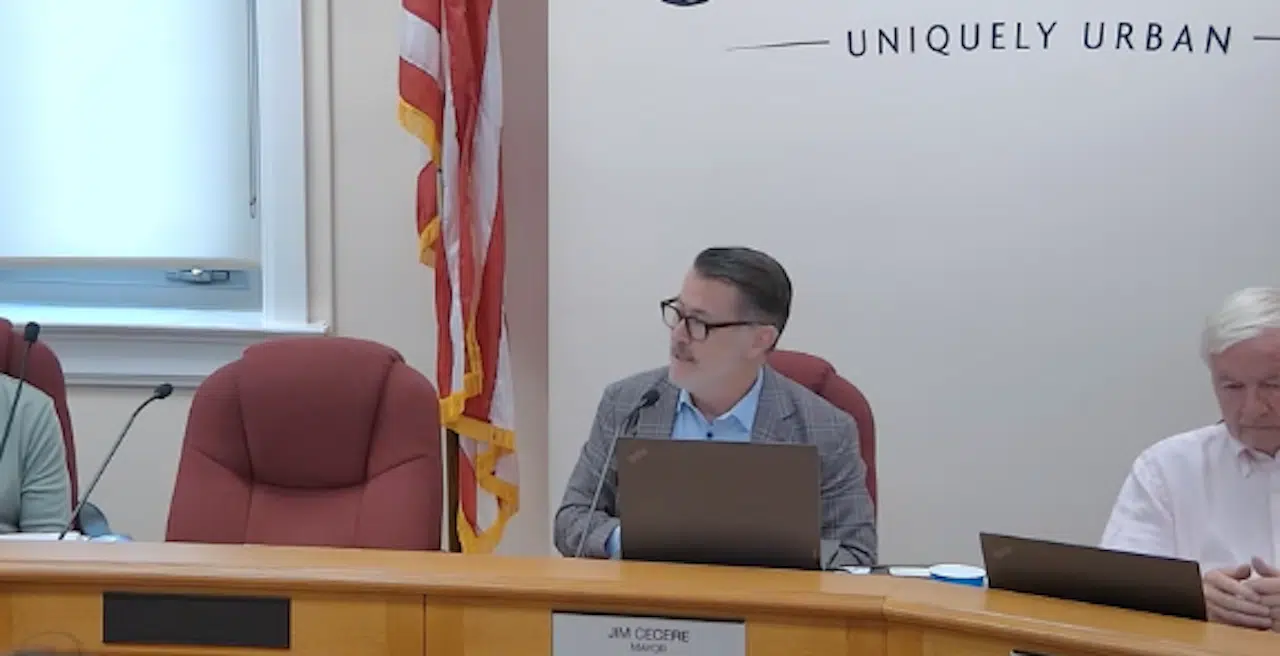
Mayor Jim Cecere asked administrators to identify investments that could produce long-term efficiencies, including software that reduces administrative work or allows employees to complete more tasks.
He also recommended that the city avoid replacing every dollar of debt that is scheduled to be paid off. Blowers said approximately $2.1 million in general fund debt, $1.3 million in water debt and $2.4 million in sewer debt is expected to come off the books.
City Hall roof, street reconstruction remain capital concerns
Although the full capital plan will not be discussed until August, Youngs identified several projects that are likely to require attention.
The City Hall roof has been deferred for years and experienced additional water intrusion during recent heavy rainfall. Netting has also been installed because pieces of the building’s cornice have fallen.
Youngs said an earlier project was intended to address both the roof and windows, but the window work consumed the available funding.
Street reconstruction will also remain a priority. Survey and design work is underway for Pulteney Street, and the administration is considering a schedule that would complete one reconstruction project and design another each year.
Council members said they want the capital plan to distinguish urgent infrastructure needs from discretionary improvements.
Reassessment removes nearly $6 million from tentative roll
City Assessor Tina Rados also gave council a final update on the 2026 reassessment process.
The city mailed 2,628 reassessment notices and later sent 265 follow-up notices after informal contacts, reviews or corrections. About 90% of those follow-up cases resulted in some level of change.
A total of 119 formal grievances were filed, including 72 stipulation agreements reached between property owners and the assessor. The Board of Assessment Review considered 47 properties, granting changes to 32 while leaving 15 unchanged.
Combined stipulations and board decisions removed approximately $5.9 million from the tentative assessment roll.
Rados said most challenges involved claims that a property’s value was excessive. Interior photographs, recent appraisals and information about property conditions were particularly important because assessors generally evaluate homes from public rights of way and cannot see interior conditions.
She described the grievance volume as typical for a reassessment involving substantial market increases.
The final roll increased the city’s total assessed value by about $114.6 million compared with 2025. The taxable value increased by approximately $142.4 million.
Rados estimated that if the city held its tax levy flat, the city tax rate could decline from $12.72 to $10.64 per $1,000 of assessed value. A home assessed at $225,000 would have an estimated city tax bill of about $2,394, although the final levy will be set through the budget process.
A proposed discussion about phasing in assessment increases was postponed until a future meeting when more council members can attend.
Police chief proposes tougher rules for e-bikes, scooters and minibikes
Police Chief Ron Eveland presented a proposed city law that would regulate battery- and gas-powered alternative motorized vehicles, including throttle-powered electric bicycles, electric scooters, minibikes, dirt bikes, hoverboards and similar devices.
Eveland said complaints are increasing and officers need clearer authority to address reckless riding, underage operators and repeat offenders.
The proposed law would prohibit operators younger than 16 from using covered vehicles on public highways or city property. It would also prohibit covered battery-powered vehicles on sidewalks, city parks, pathways, playgrounds and cemeteries and limit their speed to 20 mph.
Parents or guardians could be held responsible when minors operate the vehicles illegally unless they can show they took reasonable steps to prevent the violation.
The proposal would allow police to impound vehicles and establish fines of up to $500 for a first offense, $750 for a second offense and $1,000 for subsequent offenses. Separate redemption and daily storage fees would apply to impounded vehicles, with higher fees for gas-powered vehicles.
Eveland said officers frequently encounter riders who refuse to stop and flee, knowing police pursuit policies may prevent officers from following them.
Some council members questioned whether the proposal could unfairly restrict responsible e-bike users, particularly on roads with speed limits above 30 mph or along recreational pathways.
Eveland said many of those restrictions already exist under state law, but agreed that language involving parks and pathways could be reviewed before the proposal advances.
Council is expected to hold a first reading Aug. 5, followed by a public hearing and final vote at a later meeting.
Storm response, garbage complaints and grant applications
Youngs also reported that the city’s wastewater system handled about 2.5 inches of rain during a recent storm without requiring activation of an emergency treatment process. She credited sewer cleaning and lining work completed earlier this year.
City staff responded to downed trees, flooding and other storm-related problems, although officials said the extent of any additional damage along the lakefront remains unclear.
The city also confirmed that Casella had violated Geneva’s ordinance prohibiting garbage collection before 7 a.m. Youngs said the company was notified and assured the city that the early collections would stop.
Council held a public hearing on potential Community Development Block Grant applications. The city is considering seeking funding toward a roughly $12 million lead service line replacement project and the remaining cost of demolishing Building C at the Geneva Enterprise Development Center.
No members of the public spoke during the hearing.

FingerLakes1.com is the region’s leading all-digital news publication. The company was founded in 1998 and has been keeping residents informed for more than two decades. Have a lead? Send it to news@fingerlakes1.com.