

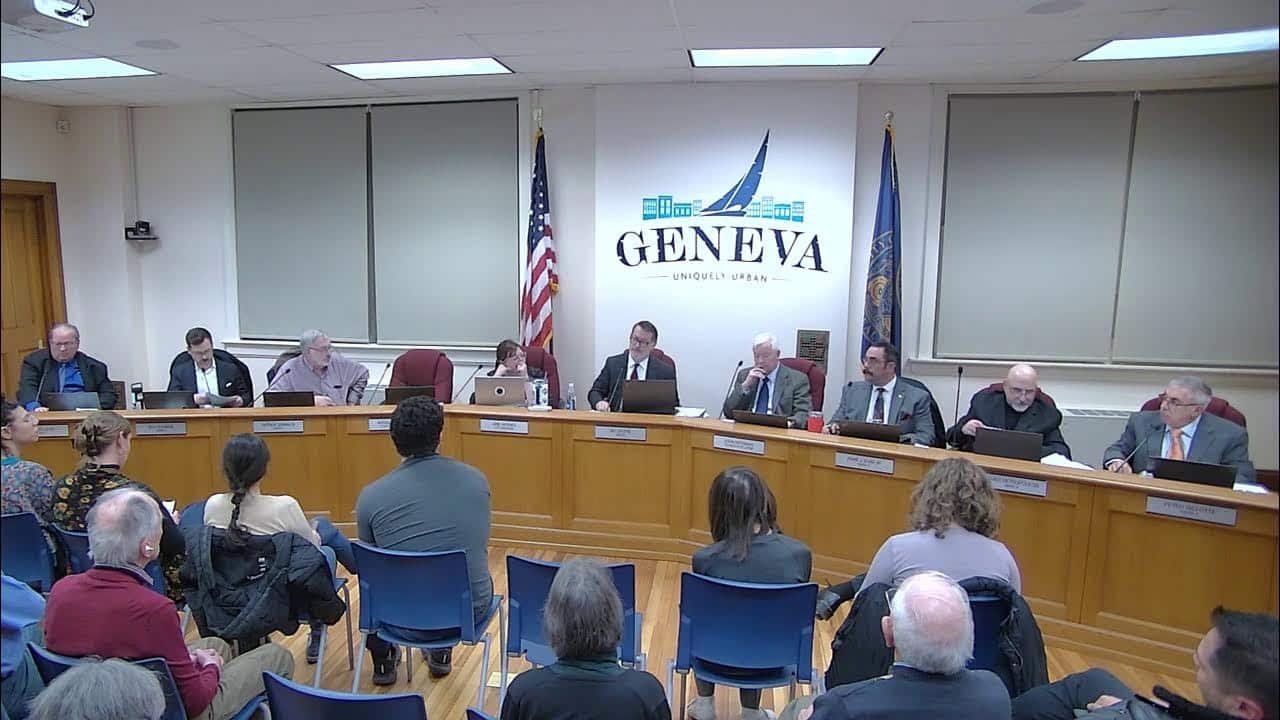
A nearly 20% spike in projected costs is forcing Geneva city leaders into early, difficult conversations about taxes, services, and long-term financial stability.
City officials outlined the challenge during a recent budget planning presentation, warning that rising expenses could create a multi-million-dollar gap heading into 2027 if no changes are made.

Based on current projections, the city’s general fund costs could climb from about $22.9 million in 2026 to roughly $27.5 million in 2027, driven largely by increases in salaries, health insurance, and retirement obligations. At the same time, revenues are expected to grow far more slowly, constrained by the state’s property tax cap and modest gains in other sources.
That imbalance could leave a structural gap of more than $5 million, though more refined estimates place the recurring shortfall closer to $4 million depending on assumptions used in the analysis.
Mayor Jim Cecere signaled early on that relying on tax increases alone is not a viable solution, citing the existing burden on residents. Instead, he directed staff to develop a budget framework focused on long-term structural balance, cost control, and prioritization of essential services.
Under that guidance, public safety and core infrastructure are expected to remain protected, while discretionary services could face reductions if necessary. The city is also exploring expanded shared services, fee adjustments, and new revenue streams to help close the gap.
The financial pressure is being driven largely by workforce-related costs, which account for the majority of city spending. Health insurance is projected to rise by as much as 16%, while retirement costs could increase 8% and wages more than 3%.
To address the situation, city staff are preparing three potential budget scenarios for council consideration. One would maintain current service levels but likely require a significant tax increase. Another would attempt a moderate balance of cuts and efficiencies within a limited tax increase. A third, more aggressive option would fully close the gap within the tax cap, potentially requiring service reductions or restructuring.
The budget process is still in its early stages, with department requests and financial analysis underway this spring and summer. A proposed budget is due to City Council by Sept. 30, followed by public hearings and a final vote expected by Oct. 31.
Officials say the decisions ahead will require balancing fiscal reality with community expectations, as the city works to maintain services without creating long-term financial instability.

FingerLakes1.com is the region’s leading all-digital news publication. The company was founded in 1998 and has been keeping residents informed for more than two decades. Have a lead? Send it to news@fingerlakes1.com.