State Sen. Rachel May warned that New York is heading into a difficult 2026 budget cycle as federal cuts to Medicaid, education programs and Affordable Care Act subsidies come into focus.
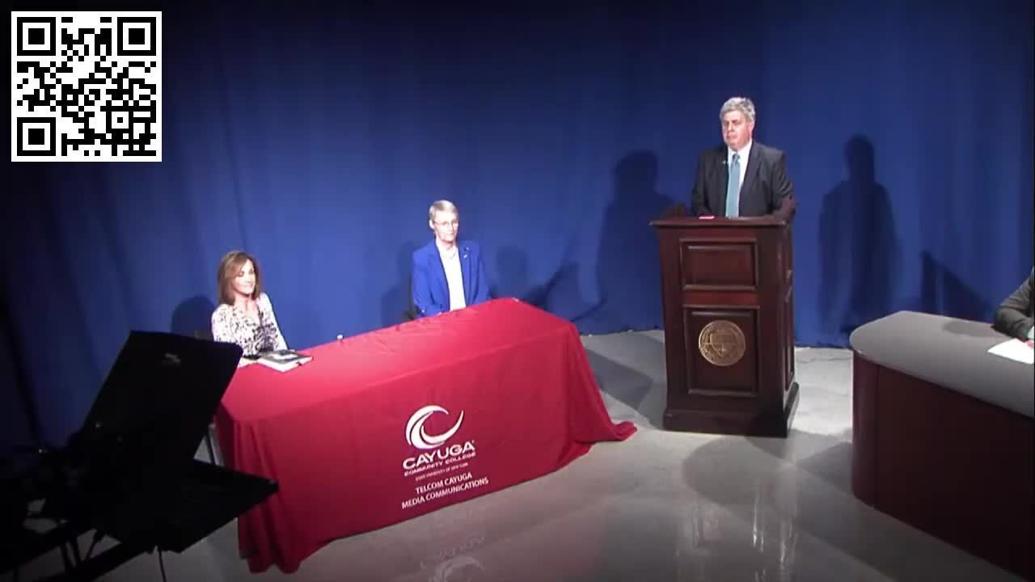
Speaking on “Inside Government” with Guy Cosentino, May said uncertainty from Washington is complicating the state’s planning. She noted that reductions in Medicaid reimbursements alone could create multibillion-dollar gaps New York cannot reasonably backfill without new revenue. Federal support for special education, after-school programs and homeless student services also remains unsettled.

May said core obligations will take priority, putting additional pressure on nonprofits, arts groups, environmental organizations and transportation agencies that rely on state funding.
Health-care coverage concerns

May said roughly 450,000 New Yorkers could lose access to the state’s Essential Plan if federal subsidies collapse. The state may revert to a more limited “basic plan,” narrowing eligibility and forcing many working-class families toward higher ACA premiums.
Hospitals — especially rural ones — are warning lawmakers that more uninsured patients will end up in emergency rooms, driving smaller facilities closer to closure. “If your clientele doesn’t have insurance, you’re out that money,” she said.
Energy mandates delayed
May discussed the state’s all-electric building requirement, previously set to begin January 1, which was placed on indefinite hold because of ongoing litigation. While the delay does not affect Micron’s planned semiconductor campus, it could slow housing development tied to the project, including proposals in Auburn.
She also said lawmakers will likely need to revisit the 2027 mandate for school districts to transition to fully electric bus fleets. That law passed during a period of rapid EV cost reductions and strong federal incentives—conditions that no longer exist.
Local control debates and renewable siting
May discussed her legislation aimed at increasing transparency and adding guardrails to the state’s approval process for wind and solar projects. The bill would require clearer public tracking of proposals and more rigorous review of issues such as geology and groundwater impacts.
She acknowledged local frustration over large renewable projects but said misinformation—much of it driven by fossil-fuel interests—has worsened public fears. “We have to take a broader view,” she said.
Cato ICE raid reaction
May said her office has spoken with workers and company officials affected by the September ICE raid at a food processing facility in Cato, though federal agencies have not briefed her directly. She said the disruption to the workforce and employer has been significant.
With Cayuga County legislators debating a resolution discouraging cooperation with federal immigration raids, May pointed to Onondaga County’s similar policy. She said non-cooperation improves public safety by ensuring victims and witnesses aren’t afraid to contact police.
Bottle bill and politics
May’s proposal to expand the state’s bottle deposit law and raise the deposit to ten cents passed the Senate but stalled in the Assembly. She expects the Packaging Reduction Act to advance first in 2026.
May has not endorsed Gov. Kathy Hochul or Lt. Gov. Antonio Delgado in next year’s Democratic primary. She confirmed she will run for reelection.

FingerLakes1.com is the region’s leading all-digital news publication. The company was founded in 1998 and has been keeping residents informed for more than two decades. Have a lead? Send it to news@fingerlakes1.com.