

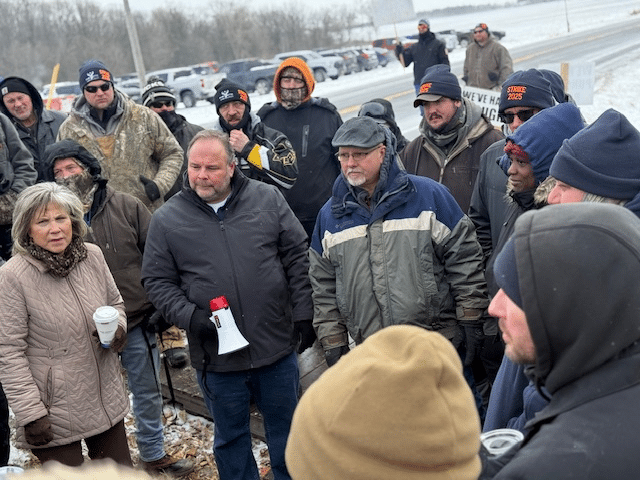
After nearly two weeks of disruption, a mediated agreement has been reached to bring an end to the ongoing strike by New York correction officers, with returning employees granted amnesty from disciplinary action if they report back to work before the deadline outlined in the deal. The agreement, formalized as a Mediator’s Consent Award, sets legally enforceable terms aimed at stabilizing prison staffing while addressing officer concerns over overtime, safety, and the controversial HALT Act.

While the New York State Correctional Officers and Police Benevolent Association (NYSCOPBA) did not officially sanction the strike, union leaders are now urging officers to return to duty, warning that those who continue striking could face termination, fines, and even contempt charges under a court order prohibiting the work stoppage.
Key provisions in the proposal
Mediators issued the legally binding Consent Award, which includes several provisions aimed at easing officer workload and temporarily modifying HALT-related programming. Key highlights of the deal include:
- No Disciplinary Action for Returning Workers – Any officer who resumes duty by the deadline will not receive a Notice of Discipline (NOD) for participating in the strike.
- Temporary Suspension of HALT Act Programming – Programming related to the Humane Alternatives to Long-Term Solitary Confinement (HALT) Act will remain suspended for 90 days to alleviate staffing concerns.
- Use of the National Guard – National Guard personnel will continue providing support to correctional facilities to stabilize staffing levels and reduce excessive overtime requirements.
- New Staffing Metrics for HALT Compliance – If staffing levels drop below a certain threshold on a given day, HALT-related programming will cease for that day.
- Increased Overtime Pay – Officers will receive 2.5 times their regular pay for all overtime worked in the first 30 days after the agreement takes effect.
- Limits on Mandatory Overtime – Officers who voluntarily work four overtime shifts in a two-week period will be exempt from mandatory overtime for the remainder of that period. If an officer works two voluntary overtime shifts in one week and is then mandated for an additional shift, they will receive a $750 penalty payment for the forced shift.
- Weekend Overtime Bonus – Officers who volunteer for overtime on Fridays, Saturdays, or Sundays will receive a $100 bonus per shift.
- Changes to Legal Mail Handling – New security measures will be implemented for incoming mail to correctional facilities.
- Civil Service Upgrade Review – The state will complete its analysis of NYSCOPBA’s request for a classification upgrade for correction officers and sergeants.
- Referral Bonuses for Recruitment – A new hiring incentive program will be introduced to address ongoing staffing shortages.
Hochul says safety is top priority
Gov. Kathy Hochul issued a statement late Thursday night, emphasizing that the deal aims to restore stability to New York’s correctional system while addressing safety concerns raised by officers.
“My top priority is the safety of all New Yorkers,” Hochul said. “Working with a mediator, we have reached a consent award that addresses officer concerns, stabilizes DOCCS operations, and prevents future work stoppages.”
NYSCOPBA leadership acknowledged that while the agreement does not repeal the HALT Act, it does provide temporary relief through staffing-based suspensions and increased overtime compensation. Union officials are now strongly encouraging officers to end the strike and return to work before the deadline, warning that those who continue the stoppage could face termination and legal consequences.
“The terms of this award are not subject to a membership vote,” a union statement said. “This is an individual choice for each and every one of you. For those who remain on strike, the State is expected to begin effecting terminations and issuing contempt charges.”
What’s next?
The 90-day suspension of HALT Act programming will take effect immediately, with future decisions on the law expected to be debated in Albany. The National Guard will remain in prisons temporarily, and the staffing circuit breaker—which suspends HALT programming on days with staffing shortages—will be closely monitored in the coming months.
As correction officers weigh their options, prison facilities across the state are preparing for an influx of returning workers, with strike amnesty in place for those who meet the deadline. However, for those who refuse to return, legal battles and possible terminations loom.

FingerLakes1.com is the region’s leading all-digital news publication. The company was founded in 1998 and has been keeping residents informed for more than two decades. Have a lead? Send it to news@fingerlakes1.com.