

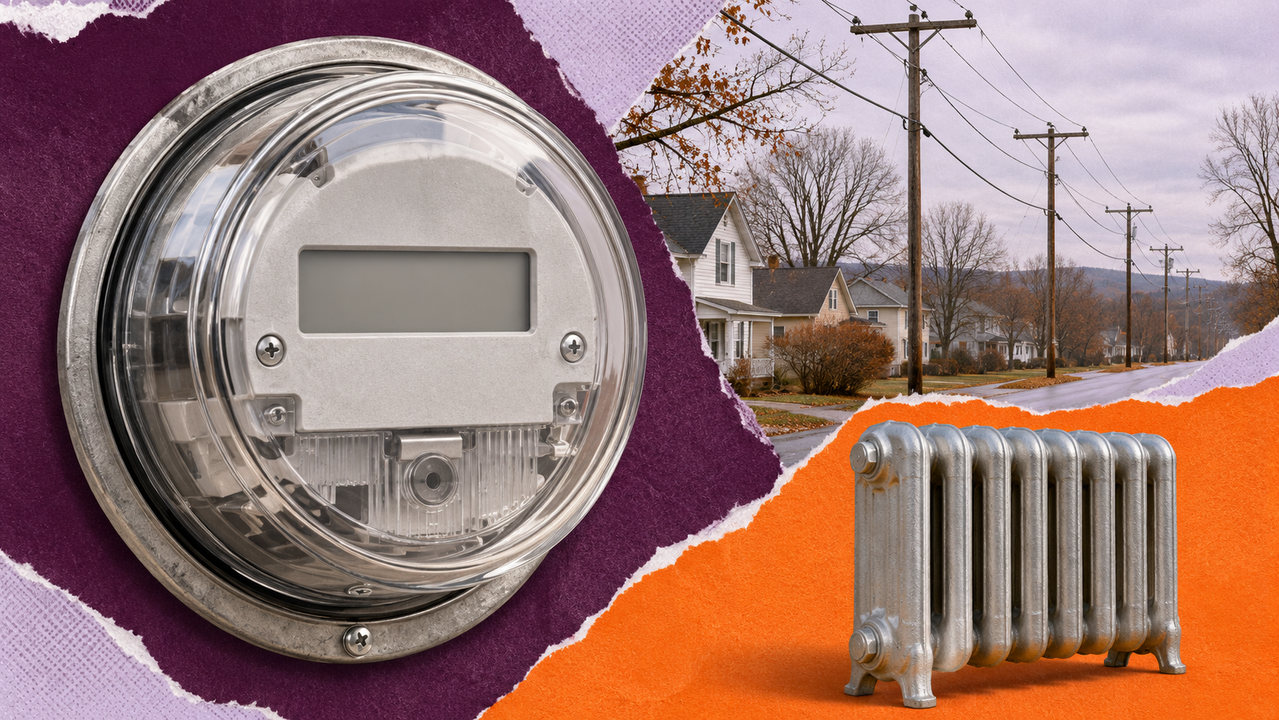
Electricity prices are rising faster in New York than nationwide, putting more pressure on Finger Lakes households as regulators weigh NYSEG and RG&E’s next rate increases.
The state’s average residential electricity price reached 28.65 cents per kilowatt-hour in August, up about 7.5% from a year earlier, according to the U.S. Energy Information Administration. The national average increased about 3.4%, to 18.16 cents.
Those statewide figures cover different utilities and service territories. What a household in Geneva, Auburn, Canandaigua or Ithaca actually pays depends on its supplier, delivery rates and energy use.
New York’s plans to expand electricity generation address part of that pressure. Customers also pay to maintain the wires, poles, substations and gas pipes connecting their homes to the system.
What customers are paying for
Utility bills combine several costs that can change independently.
Supply charges cover the electricity or natural gas a customer uses. Delivery charges pay for the infrastructure and services needed to bring that energy to the property. Taxes and other surcharges add to the total.
NYSEG says it passes supply costs through without a markup. The company earns its regulated return through the delivery side of its business.
That means a change in wholesale energy prices can affect bills even when delivery rates stay steady. Cold weather can also increase consumption, leaving a household with a larger bill despite little change in the price per unit.
The pending rate cases concern what the utilities can collect for delivery service.
NYSEG’s original electric request would add an estimated $33.12 a month for a residential customer using 600 kilowatt-hours. RG&E’s request would add about $33.01 at the same usage level, according to state regulators.
Those are requested increases. In May, the Public Service Commission approved smaller temporary increases, estimating residential electric bill impacts of 0.2% for NYSEG and 2.9% for RG&E while the larger cases continued.
An October commission notice said the investigation remained underway and extended the suspension of tariff changes pending further review.
Natural gas heating could cost less this winter
The companies’ latest heating forecast offers some potential relief.
Their November winter supply update projects the following natural gas costs for an average residential heating customer:

| Utility | Last winter’s actual seasonal bill | This winter’s forecast |
|---|---|---|
| NYSEG | $843 | $735 |
| RG&E | $774 | $697 |
The figures exclude taxes and cover the winter season, rather than a single month. This winter’s projections assume normal weather.
Compared with last winter’s actual bills, the forecast represents decreases of about 13% for NYSEG and 10% for RG&E. Some of that difference reflects lower expected consumption. After adjusting last winter’s figures to normal weather, the projected declines are about 10% and 5%, respectively.
Lower gas commodity costs account for much of the expected reduction. Actual bills will depend on weather, consumption and prices during the season.
These forecasts apply to natural gas heating customers. Households heating with electricity, propane or fuel oil face different costs.
More power takes time and money
The Finger Lakes is part of a broader Upstate economy adding large electricity users, including manufacturing plants and data centers.
Grid planners have warned that rising demand, aging generators and winter fuel constraints are narrowing New York’s supply cushion. Meeting that demand requires dependable generation and infrastructure capable of moving electricity where it is needed.
Gov. Kathy Hochul’s new nuclear master plan outlines a potential 5-gigawatt expansion. State cost modeling examined pathways with initial reactors entering service in 2039, years after the projected statewide supply deficiency begins in 2033.
The modeling date is a planning assumption, rather than an announced opening for a selected plant.
For customers, the costs will also depend on financing decisions: who pays for construction, who carries the risk of delays and how expenses reach utility bills. The nuclear roadmap leaves those project-specific decisions ahead.
Help available before bills fall behind
Customers struggling with current bills can seek assistance through the Home Energy Assistance Program, which opened Nov. 2.
NYSEG and RG&E say HEAP recipients are automatically enrolled in their Energy Affordability Program, which provides an additional monthly bill credit. Customers may also qualify through other accepted assistance programs.
The utilities offer an Enhanced Energy Affordability Program for eligible households that do not qualify for HEAP or another qualifying program. Residents can ask their utility or county social services department about available help.
Customers reviewing a higher bill should compare energy use, supply prices, delivery charges and whether the meter reading was actual or estimated. Those details can help identify what changed before they contact the utility.
Make FL1 part of your day.
Local reporting. Useful updates. More ways to stay close to your community.
Go ad-free
Support independent local reporting and enjoy FL1 without display ads.
$4.99 / month
Become a member →Cancel anytime. Third-party media players may contain ads.Get the daily briefing
Start your morning with the headlines that matter across the Finger Lakes.
Find more FL1 on Google
Choose FingerLakes1.com as a preferred source to see more of our reporting in your Google news results.

FingerLakes1.com is the region’s leading all-digital news publication. The company was founded in 1998 and has been keeping residents informed for more than two decades. Have a lead? Send it to news@fingerlakes1.com.