

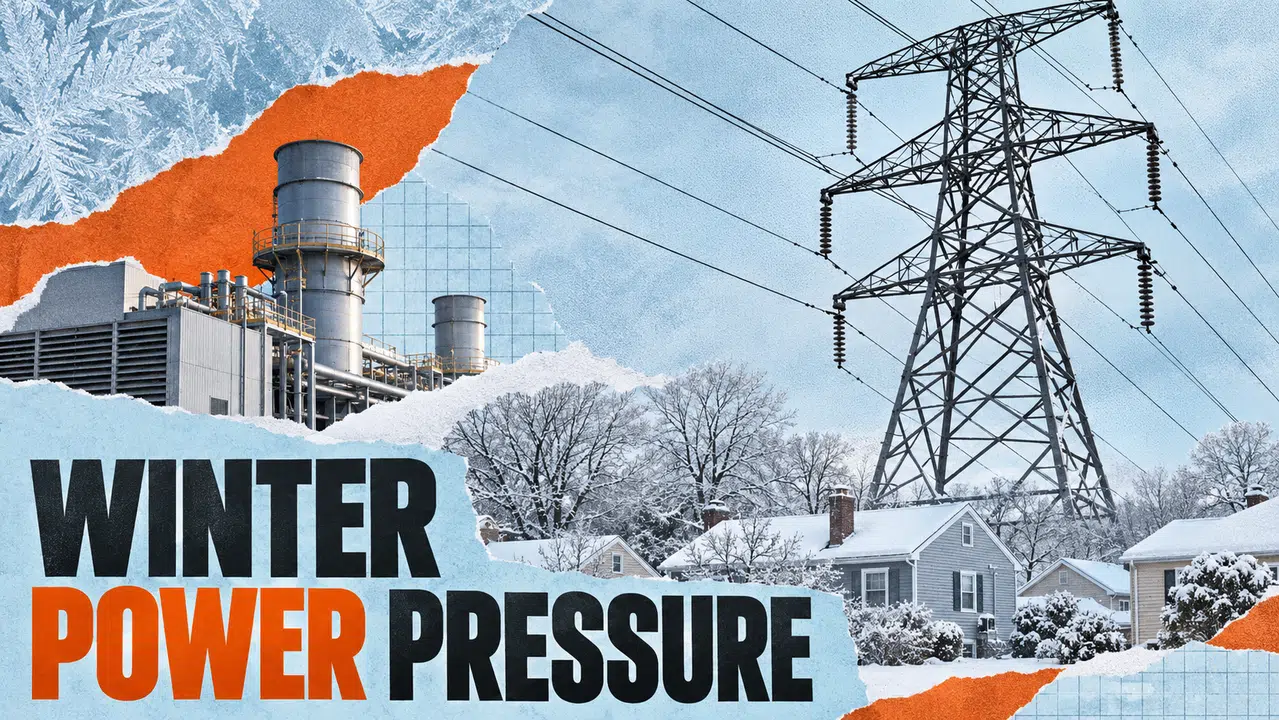
Upstate New York is expected to absorb much of the state’s new demand from manufacturing plants and data centers, placing the region at the center of an increasingly urgent effort to expand dependable electricity supply and strengthen the grid.
The New York Independent System Operator warns that demand growth, aging generators and constraints on winter fuel supplies are narrowing the system’s ability to handle extreme conditions.
Its draft 2026 Reliability Needs Assessment identifies specific Upstate transmission and power plant issues alongside a statewide supply deficiency beginning in 2033. Separate, transmission-constrained deficiencies would begin in New York City and the Lower Hudson Valley in 2032.
The statewide finding reaches beyond those downstate constraints. It means New York would lack sufficient dependable resources under the study’s assumptions, requiring investment that cannot be accomplished through transmission improvements alone.
For Upstate communities, the challenge involves accommodating economic development while ensuring enough power remains available during cold weather and other periods of system stress.
Winter reliability depends on fuel reaching generators
Cold weather creates competing demands on New York’s natural gas system.
Homes and businesses need more gas for heating at the same time power plants may need it to produce electricity. On the coldest days, pipeline capacity can be fully occupied serving customers with firm supply arrangements, limiting gas available to generators without those protections.
The draft reliability assessment models approximately 5,400 megawatts of generation as unavailable under specified winter peak conditions because of fuel limitations. Most of that capacity is in eastern New York.
That is a planning assumption about cold-weather availability, rather than a report that those plants are currently offline.
Generators that can switch from gas to oil provide another source of electricity, but that flexibility depends on fuel inventories and deliveries. NYISO’s October winter preparedness analysis identified below-normal East Coast distillate inventories and volatile oil markets as concerns.
The operator pointed to Winter Storm Fern in late January and early February 2026, when prolonged cold increased electricity and heating demand, constrained gas supplies and required extensive use of backup fuels, imports and other operating tools.
State regulators still expect adequate electricity and natural gas supplies this heating season. The Public Service Commission’s Oct. 15 assessment said gas utilities could meet firm customer demand under severe winter design conditions.
The longer-term warning concerns how that balance changes. NYISO projects winter will account for approximately 40% of statewide reliability risk by 2036 as electric heating demand grows and fuel constraints become more consequential.
New industrial demand is concentrated Upstate
The assessment says large new electricity users are primarily proposed and expected to be concentrated in Upstate New York.
They include semiconductor manufacturing, artificial intelligence infrastructure, cryptocurrency mining and cloud computing facilities.
As of September, NYISO had 53 projects seeking grid connections for more than 14,000 megawatts of combined demand. Those requests are proposals, not a forecast that every project will operate.
The assessment’s baseline includes approximately 2,700 megawatts of large-load demand by 2036: about 1,700 megawatts from computational facilities and roughly 1,000 megawatts from other industrial users.

That distinction matters in the Finger Lakes, where proposed data center development has prompted local restrictions and disputes over power, water and community impacts.
The way those facilities operate also matters. NYISO found that if all new planned data center loads could reduce consumption during peak periods, the modeled statewide supply need in 2036 would fall from approximately 1,850 megawatts to 850 megawatts.
Such flexibility would depend on appropriate connection requirements, contracts or market arrangements.
Upstate infrastructure has its own vulnerabilities
The report identifies specific Upstate concerns involving transmission equipment and the ability to maintain stable grid conditions.
In the Endicott area, NYISO describes potential overloads affecting an Oakdale transformer and the Oakdale–North Endicott transmission line. The problem worsens over the study period and appears during both summer and winter peaks by 2036.
NYSEG plans an Oakdale rebuild for service by summer 2031. Until then, the report identifies an interim operating procedure involving controlled load reduction if required to address overloads.
NYISO says the interim measures and planned construction address the identified need, while the operator continues tracking progress.
The assessment also identifies a potential stability problem involving the FitzPatrick nuclear generating unit in Oswego County.
Under a specific equipment-failure scenario at the Scriba substation during very light electricity demand, the unit could lose synchronization with the grid. The issue could emerge as early as spring 2027 and will receive further review through NYISO’s short-term reliability process.
The report identifies additional voltage support or other operating measures as potential remedies.
More broadly, NYISO says maintaining acceptable voltage across portions of the Upstate system required extensive adjustments in its modeling. Those adjustments kept conditions within applicable limits but left less operational flexibility.
These findings add to the work already underway to maintain the delivery network. NYSEG plans upgrades to approximately 800 miles of transmission lines through 2031, targeting aging poles, structures and other equipment.
Waiting leaves fewer options and greater financial risks
NYISO’s central concern is the time required to develop solutions.
The draft’s statewide deficiency begins at approximately 225 megawatts in 2033 and grows to more than 1,850 megawatts by 2036. New generation, major transmission facilities and upgrades to existing resources can require years of financing, permitting, construction and testing.
At an October Environmental Advisory Council meeting, summarized in a Nov. 11 NYISO account, industry representatives discussed barriers to attracting investment and delivering projects before the need becomes immediate.
NYISO Chief Operating Officer Emilie Nelson emphasized the need for multiple approaches. The discussion included new generation, upgrades to existing plants, storage, transmission, efficiency and flexible electricity demand.
Marguerite Wells, executive director of the Alliance for Clean Energy New York, said financing certainty alone cannot resolve development challenges because siting, permitting and construction also take years.
NYISO President and CEO Rich Dewey warned that investment arrangements must also protect customers from poorly allocated risks and potential rate shock.
The draft remains a planning assessment, with solutions to be evaluated through subsequent steps. But its implications for Upstate are already clear: major new electricity users, winter fuel constraints and infrastructure needs must be considered together before growth outpaces the resources required to support it.
Make FL1 part of your day.
Local reporting. Useful updates. More ways to stay close to your community.
Go ad-free
Support independent local reporting and enjoy FL1 without display ads.
$4.99 / month
Become a member →Cancel anytime. Third-party media players may contain ads.Get the daily briefing
Start your morning with the headlines that matter across the Finger Lakes.
Find more FL1 on Google
Choose FingerLakes1.com as a preferred source to see more of our reporting in your Google news results.
Add FL1 on Google ↗Choose FL1 and confirm your selection on Google.
FingerLakes1.com is the region’s leading all-digital news publication. The company was founded in 1998 and has been keeping residents informed for more than two decades. Have a lead? Send it to news@fingerlakes1.com.