

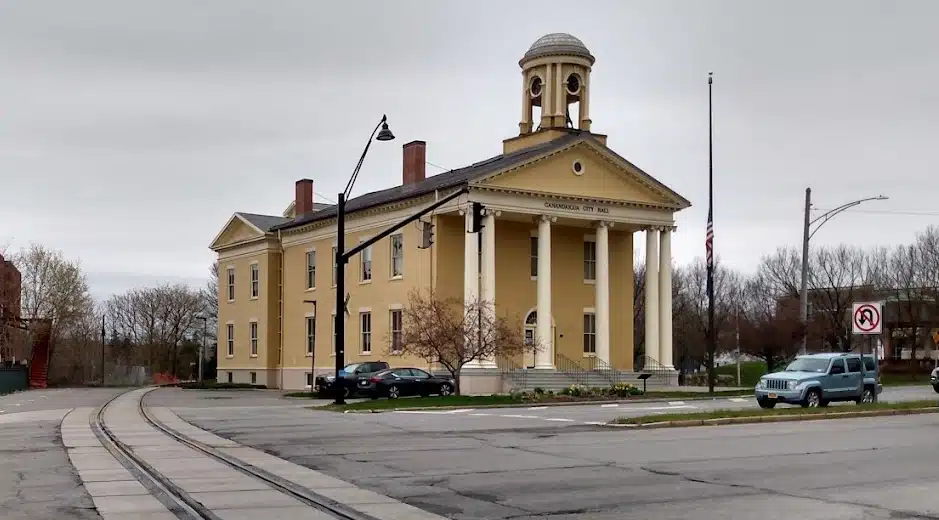
A Canandaigua household with a home assessed at $275,800 and minimum water and sewer bills would pay about $254 more annually under the proposed 2027 city budget — an increase of approximately 10%.
City Manager John Goodwin outlined the proposal during Monday night’s City Council budget workshop, pointing to employee benefits, wages and energy costs as the primary reasons residents would pay more to maintain existing services.
The spending plan holds firefighter staffing steady, eliminates two vacant positions and uses approximately $590,000 in accumulated savings. Council members questioned staffing, recreation programs, infrastructure costs and whether additional reserves could pay for projects outside the proposal.
Here are five major takeaways.
1. The tax proposal exceeds the state cap by about $500,000
The proposed general fund property tax levy would increase from $8.16 million in 2026 to $8.92 million in 2027, an increase of $761,803, or 9.34%.
The city’s calculated state tax cap would allow a 3.24% increase across the general fund levy and special assessments. The proposal exceeds that allowance by approximately $500,000.
Goodwin said reducing the proposal to the cap would require cuts affecting services and occupied positions.
“That means services are going to have to be impacted,” he said.
The city property tax rate would increase approximately 9.64%, from $6.994 to $7.668 per $1,000 of assessed value. The rate would rise faster than the levy because the city’s taxable assessment base is slightly smaller.
For a home assessed at $275,800, the annual city property tax increase would be approximately $186, assuming its taxable assessment remains unchanged. Individual bills would depend on assessments and exemptions. County and school taxes are separate.
The proposal follows a roughly 10% increase in the general fund levy in the adopted 2026 budget.
2. Employees and energy account for most additional spending
Proposed general fund spending totals $23.34 million, approximately $873,000, or 3.89%, above the adopted 2026 budget’s $22.46 million.
The comparison with expected spending is larger. The city projects it will spend approximately $22 million in 2026, making the 2027 proposal about 6.1% higher than that estimate. Current-year spending figures remain projections, rather than final expenses.
Employee benefits, salaries and wages, gasoline and diesel, and utilities account for approximately 96% of the proposed increase over the adopted budget.
Benefits, including payroll taxes, would increase approximately $320,000, while salaries and wages would rise about $312,000. Goodwin said health insurance premiums increased 12.5%. Contractual raises include 4% for firefighters and public works employees and 3% for employees covered by the city’s two police bargaining units.
The proposal eliminates vacant assessment clerk and account clerk positions without laying off current employees. Goodwin said the city would monitor workloads as remaining employees absorb those responsibilities.
The proposal also does not fund a day camp following an unsuccessful effort to arrange one through the Salvation Army. Goodwin said the sides could not resolve differences over restrictions on religious content.
Other youth activities would continue, along with free admission to Kershaw Beach and the Fourth of July parade.
3. Fire staffing would remain below the study’s longer-term goals
The proposal maintains 20 firefighters. Goodwin said that provides at least four on duty around the clock and five on duty approximately 40% of the time.
That maintains staffing below levels the Center for Public Safety Management study recommends reaching through phased increases, ultimately working toward seven to nine personnel on duty.
Goodwin said the fire chief requested additional firefighters, but the proposal does not fund them.

He estimated that providing five firefighters on duty around the clock would require three additional positions costing approximately $411,000 annually, including benefits. Without other budget changes or additional revenue, the city’s calculation would push the proposed levy increase from 9.34% to 14.38%.
Last year’s budget described pursuing a federal SAFER grant that could help add up to eight firefighters in 2027. The city ultimately did not apply because of concerns about sustaining the positions after grant assistance ended. Funding for a grant writer remains in the new proposal.
Goodwin said the renewed fire protection agreement with the Town of Canandaigua assumes staffing remains at 20. The town would contribute $1.5 million in 2027, while any future expansion would require further discussion about sharing costs.
4. Utility increases come as major infrastructure needs loom
Minimum quarterly water bills would increase from $71 to $77, while minimum sewer bills would rise from $82 to $93.
Together, minimum annual charges would increase from $612 to $680. Combined with the approximately $186 property tax increase, that produces the roughly $254 annual increase in the city’s household example.
Usage rates would rise approximately 8.5% for water and 13.4% for sewer. Bills would depend on consumption and applicable minimum charges.
Goodwin said operating the new system that removes disinfection byproducts from drinking water would require approximately $120,000 annually in electricity. He also outlined approximately $15.5 million in additional water treatment plant improvements, with a recently awarded $5.4 million state grant helping offset the cost.
The wastewater treatment facility faces a larger challenge. Goodwin said preliminary estimates identify approximately $77 million in improvements, with work expected to unfold over multiple years.
The scope, timing and financing remain under development. An updated capital plan is expected in early 2027. Ontario County shares in the facility’s operating and capital costs.
The proposed budget increases the sewer fund’s transfer toward capital needs by $118,000.
Water and sewer operate separately from the general fund and rely primarily on user charges.
5. Savings could fund projects, but an operating gap remains
Even with higher taxes, the proposal would use $590,372 in accumulated savings because budgeted revenues would not cover all planned spending.
Goodwin described the proposal as structurally imbalanced because it uses a one-time resource to help cover ongoing expenses.
The planned use of savings is smaller than the approximately $845,000 included in the adopted 2026 budget. Current projections suggest the city will need approximately $12,000 in savings for 2026, although the year is unfinished.
The proposed 2027 budget projects unassigned general fund savings of $6.73 million, or approximately 28.8% of expenditures, above the city’s 25% target.
Goodwin said approximately $897,000 could potentially go toward one-time capital needs while bringing that percentage down to the target. He identified a roughly $500,000 city pier bathroom project and approximately $250,000 in police facility electrical and generator work as possible uses.
He cautioned against using those reserves to eliminate the tax increase because the money would not provide a recurring source of revenue.
State aid remains another uncertainty. The proposal excludes $389,925 in temporary additional aid expected in 2026 because Goodwin said the city cannot count on receiving it again.
Council’s review continues Nov. 9 with departmental presentations. Goodwin said a public hearing is planned for Nov. 16, followed by a workshop where council members can propose additions and cuts.

FingerLakes1.com is the region’s leading all-digital news publication. The company was founded in 1998 and has been keeping residents informed for more than two decades. Have a lead? Send it to news@fingerlakes1.com.