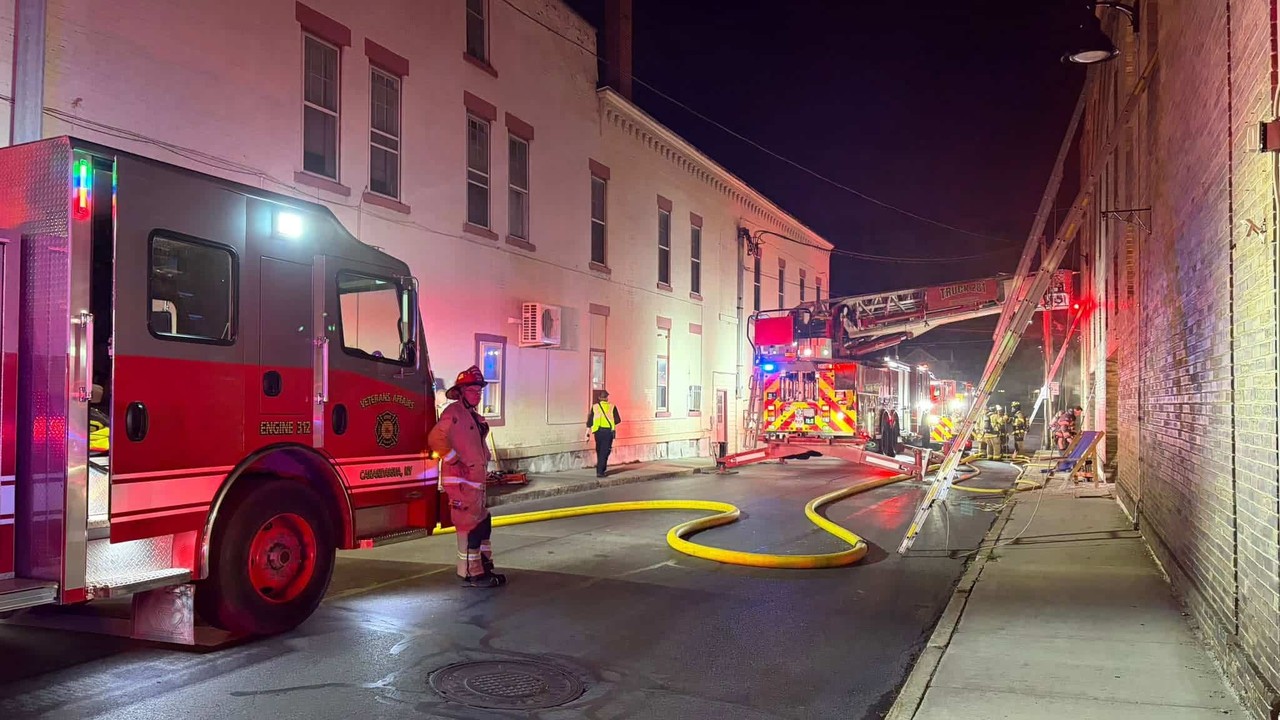
Canandaigua’s firefighters union president and former mayor urged City Council on Oct. 26 to address fire department staffing, arguing that the four-person initial response to the Beeman Street fire exposed safety gaps that additional personnel could have filled.
Union President Dan Conklin warned that relying on a future federal hiring grant could push trained reinforcements into 2029. Former Mayor Bob Palumbo said firefighters responding to the Oct. 11 blaze had to choose between searching occupied apartments, attacking the fire and covering critical safety positions outside.
“Two more on duty that night would have made a tremendous difference,” Palumbo said.
Mayor Thomas Lyon said staffing would be considered during the city’s upcoming budget discussions, which begin Nov. 2. The appeals followed a public disagreement between the city and firefighters union over whether the successful containment of the fire demonstrated adequate protection.
Council also approved new parking rules near Gleaners Community Kitchen, authorized a watershed land purchase and scheduled hearings on the proposed 2027 budget and sewer rates.
Former mayor questions unfilled safety roles
Palumbo opened by praising the firefighters, police and emergency medical personnel who responded to the fire at 5 Beeman St., then questioned whether the initial city crew had enough people to perform the necessary jobs safely.
He said the captain entered the building to search for residents instead of remaining outside to direct operations. Other firefighters stretched hose, forced entry and established a water supply.
That left equipment operation, ground ladder placement and outside command duties uncovered, Palumbo said. Veterans Affairs firefighters who would normally stand ready to rescue firefighters in trouble instead helped with interior operations, he said.
His account echoed the union’s earlier description of the Beeman Street response. The three-alarm fire displaced apartment residents but caused no reported injuries, according to the fire department.
Palumbo said he was not asking Canandaigua to independently staff every position required at a major fire. He argued that even a smaller increase would improve the initial response, particularly at buildings with apartments above businesses or multifamily homes.
“This is a council decision,” he said, urging members to make staffing a budget priority.
The city has defended mutual aid as an essential part of protecting a small municipality. In its Oct. 17 response, previously reported by FingerLakes1.com, the city said crews contained the fire in its area of origin and that escalating the response brought regional resources as intended.
The city also said staffing decisions must account for community risk, operational needs and taxpayers’ costs.
Union warns grant funding could take years
Conklin, president of Local 2098, urged council to distinguish between the goals in the city’s 2018 and 2025 staffing studies.
“The 2018 study listed a goal of having four firefighters minimum on duty,” he said. “We’re there now.”
He said the newer Center for Public Safety Management assessment establishes additional goals over three to five years and six to 10 years. Waiting for federal SAFER funding would consume much of that planning period, he argued.
Under the application, award, hiring and academy timeline Conklin outlined, firefighters funded through a future grant might not be ready until October 2029. He said the city did not apply during the previous grant window.

Lyon responded that the city had exceeded the newer study’s initial recommendation and was moving into its next staffing phase. Conklin reiterated that the minimum remains four on duty.
The 2025 assessment distinguishes between total department employment, maximum shift staffing and the minimum number guaranteed on duty. Its first midterm step would add one firefighter and reassign existing personnel while retaining a four-person minimum. Later steps would raise that minimum to five and then six.
The report recommends a long-term minimum of seven on duty, with nine preferred. It also supports stronger automatic and mutual aid arrangements, including dispatching the VA department simultaneously with city crews to reported structure fires.
City Manager John Goodwin said the budget presentation is scheduled for Nov. 2 at 6 p.m., followed the next Monday by presentations from the police and fire chiefs and public works director.
Council eases parking restrictions near Gleaners
Council unanimously approved removing the weekday prohibition on parking from 9 a.m. to 1 p.m. on St. John’s Court.
Gleaners Community Kitchen representatives said the restriction makes access difficult for people with mobility limitations and older volunteers. Their plan is to encourage volunteers to park on the street, leaving the church parking lot available for people who need closer access.
Resident Robin Alger raised concerns about drivers searching for spaces on the dead-end street, blocked driveways, delivery trucks and emergency access.
Councilmembers Gwen Van Laeken and Teale Fox questioned the fairness of restricting parking during the kitchen’s operating hours while allowing it at other times. The police chief said enforcement personnel and patrols could give the street additional attention as the rules change.
West-side parking remains prohibited. The ordinance also bars east-side parking within 50 feet of Howell Street and within 60 feet of the dead end to preserve visibility and turning space.
The change takes effect 30 days after enactment.
Land purchase approved, sewer hearing scheduled
Council unanimously authorized purchasing 20 acres from Neil and Margaret Atkins for no more than $134,000, then transferring the property to the town of Gorham for permanent protection.
The parcel includes forested buffers along Gage Gully and space for grass buffers serving three additional drainage systems. The purchase is funded through a state source-water protection grant administered by the Canandaigua Lake Watershed Council.
Council also scheduled public hearings on the proposed 2027 budget and sewer-rate legislation for 6 p.m. Nov. 16 at the Hurley Building, 205 Saltonstall St., with virtual participation available.
The sewer proposal would increase the usage charge from $7.322 to $8.3057 per 1,000 gallons and raise the minimum quarterly bill from $82 to $93. Customers billed at the minimum throughout the year would pay an additional $44 annually.
Council placed the proposed law on the table for further consideration. It calls for the rates to take effect Jan. 1, 2027.
West Gibson Street residents also renewed requests for protections against flooding, urging council to reconsider restrictions involving development and tree removal that they fear could worsen conditions near their homes.

FingerLakes1.com is the region’s leading all-digital news publication. The company was founded in 1998 and has been keeping residents informed for more than two decades. Have a lead? Send it to news@fingerlakes1.com.