Caledonia Joint Fire District adopted a five-year vehicle and equipment replacement schedule after a state audit, but its broader financial plan still lacked the projections needed to show how future spending would affect taxpayers, a follow-up review found.
The district fully implemented one of the original audit’s two recommendations and partially implemented the other, according to the state comptroller’s follow-up report, issued in May 2026.
Auditors met with district officials Nov. 17, 2025, to assess progress following a November 2024 audit of long-term financial and capital planning. Their review found a new equipment schedule and a fund balance policy, but an incomplete picture of future revenues, expenses and reserves.
Replacement schedule identifies funding sources
The board adopted multiyear financial and capital plans in July 2025. The capital plan included a five-year vehicle and equipment replacement schedule totaling about $1.7 million.
The identified funding sources were $465,000 from reserves and $1.25 million in borrowing. Commissioners also adopted a capital planning policy to guide maintenance and improvement of the plans over time.
Those steps addressed part of the original concern: major purchases had not been supported by a written schedule showing when replacements would occur and how they would be financed.
But auditors found the board’s financial plan did not contain projected revenues and expenditures, even though the district’s own financial planning policy required them. It also lacked projections showing changes in reserves and fund balance.
Those omissions mattered because the district needed the information to determine the effect of future decisions on property tax levies, auditors said.
The chairman told auditors commissioners did not clearly understand what a multiyear financial plan should contain. Auditors provided the comptroller’s financial planning guidance.
The report rated the recommendation on comprehensive long-term financial and capital planning partially implemented.
Fund balance policy adopted
The district fully implemented the second recommendation by adopting a written fund balance policy in December 2024.
That policy calls for unrestricted fund balance of between 5% and 10% of the current year’s property tax levy to address unforeseen financial circumstances. With board approval, amounts above 10% may be used to fund reserves or reduce the property tax levy.
The policy also describes the types of reserves the district may establish and their purposes.
At the end of 2024, unrestricted fund balance totaled $14,530, about 4% of that year’s levy, after commissioners approved moving $128,963 into reserves. The review reported that balance while crediting the district with adopting the recommended policy.
Original audit raised station and equipment concerns
The November 2024 audit found officials had not adequately planned for substantial future needs, including a proposed multimillion-dollar fire station and replacement vehicles and equipment.
At that time, the building reserve held $16,424. The equipment and apparatus reserve held $847,113, while the board chairman’s original estimate placed five-year vehicle and equipment replacement needs at $2.7 million.
Those were figures from the earlier audit. The follow-up described the subsequently adopted replacement schedule at about $1.7 million.
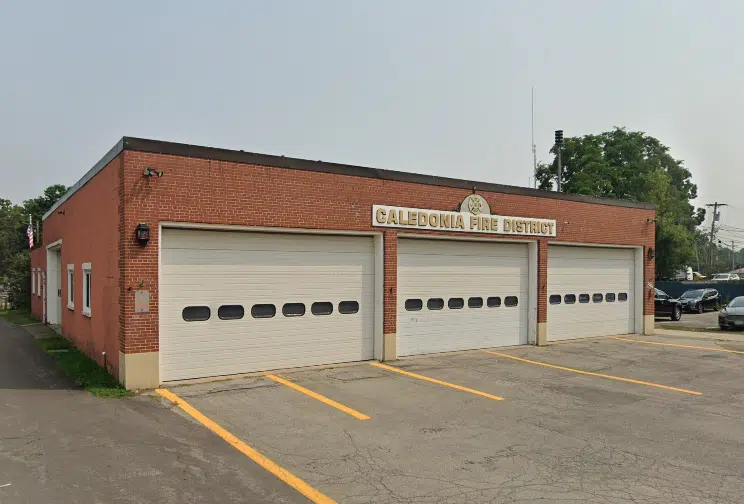
The district provides fire protection and emergency services within the town of Caledonia in Livingston County. During the original audit, it operated from a station leased from the village.
In a January 2025 corrective action plan, Chairman James Dutton said a capital planning policy was being developed and that the resulting plan would be used for the 2026 budget and periodically updated. Auditors credited the work completed but said comprehensive financial projections remained necessary for informed long-term decisions.
The follow-up was based on interviews, selected documents and the district’s corrective action plan. Its conclusion described progress as of the November 2025 visit, and the comptroller encouraged officials to finish implementing the recommended improvements.

FingerLakes1.com is the region’s leading all-digital news publication. The company was founded in 1998 and has been keeping residents informed for more than two decades. Have a lead? Send it to news@fingerlakes1.com.