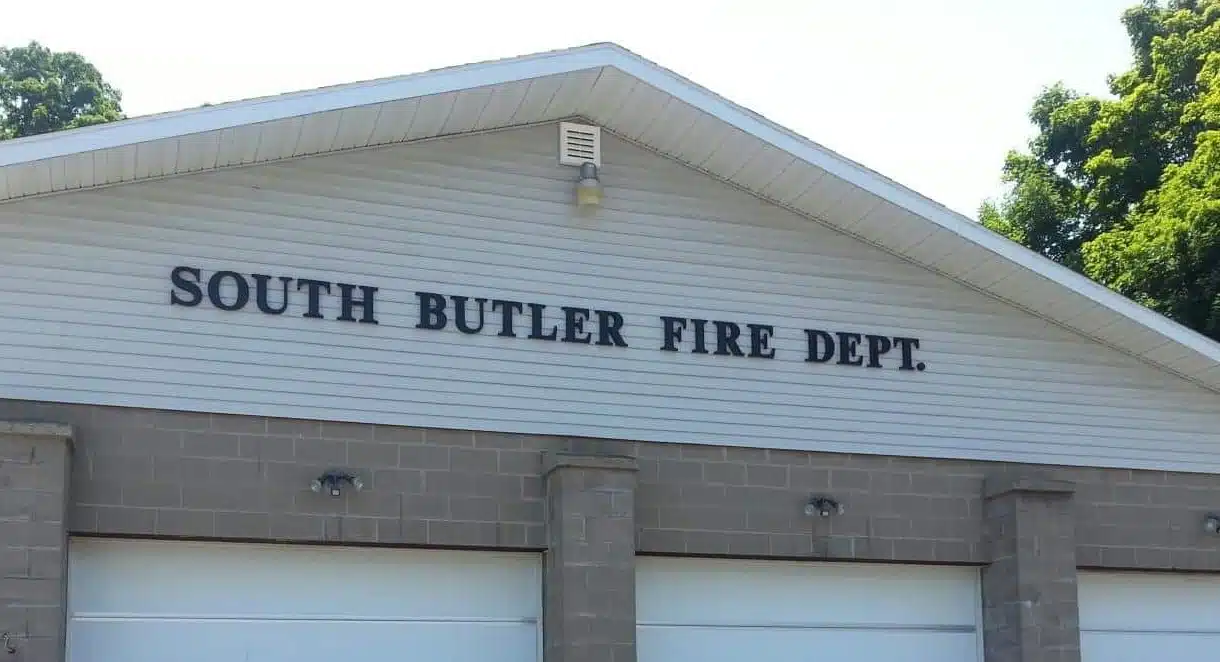
South Butler Fire District strengthened purchasing records and began documenting approval of bills, but left eight financial oversight recommendations unimplemented more than four years after a state audit, a follow-up review found.
The district fully implemented five of 14 recommendations and partially implemented one, according to the state comptroller’s May 2026 report.
Auditors returned Nov. 3, 2025, to evaluate changes following an April 2021 audit. They found progress in competitive purchasing and claims review, alongside unresolved problems with bank reconciliations, annual audits, check records, reserve planning and tax reporting.
The district serves portions of Butler and Savannah in Wayne County. We reported on the follow-up in May.
Purchasing and bill approval improved
The board revised its purchasing policy to cover professional services, sole-source providers and supporting records.
Auditors reviewed 19 purchases totaling $113,614 from April and September 2025. A $93,330 purchase required competitive bidding, while a $7,311 purchase required two written or emailed quotes. Both had adequate records demonstrating compliance.
A separate review of 24 claims totaling $18,865, paid from August through October 2025, found itemized vouchers, sufficient supporting documents and board approval before payment. Commissioners initialed the claims, and approval was recorded in meeting minutes.
Auditors also credited the district with keeping more detailed minutes covering purchases, quotes and reserve activity.
Those improvements accounted for the five completed recommendations: procurement policy, claims review, meeting minutes, payment timing and purchasing documentation.
Banking oversight remained incomplete
The district had not adopted policies dividing financial duties or establishing additional oversight of key functions such as deposits, payments, records, budgeting and online banking.
The chairperson and another commissioner attributed the delay to personnel turnover. Auditors noted that four of five commissioners had served continuously since the 2021 report and the former treasurer remained through December 2024, leaving time to act.
In the earlier corrective action plan, district officials argued that dividing duties was impractical for a small operation with relatively few transactions. They described safeguards they believed were sufficient, including a second check signer. Auditors nevertheless found the recommended policies and oversight measures had not been adopted.

The board also had not arranged to receive and retain canceled check images. Officials said they were unwilling to pay the bank’s fee and did not consider downloading and printing the images necessary.
The chairperson proposed showing check images online at meetings using a laptop. Auditors said that would not satisfy the state’s minimum six-year retention requirement and recommended preserving copies with monthly financial packets.
The treasurer supplied bank statements, balances and outstanding check lists but did not prepare formal bank reconciliations. She considered the information provided a sufficient substitute.
Auditors said a reconciliation needed to compare accounting balances with bank balances and explain differences. Without that and canceled check images, commissioners could not thoroughly review banking activity.
Budget and reserve planning still needed work
The board’s 2025 and 2026 budgets were structurally balanced and included anticipated revenue, including cellphone tower leases and hall rentals. Neither included estimated year-end fund balance, however, and the 2026 statutory spending limit was calculated incorrectly.
Auditors determined budgeted appropriations remained within the limit. Their concern was that faulty calculations could lead to exceeding the limit in the future without required voter approval.
The district also had not adopted plans or policies defining reasonable fund balance and reserve levels or documenting how reserves would be used.
Total fund balance rose from about $235,517 at the end of 2019 to $314,113 at the end of 2025. Auditors said the absence of a documented plan prevented the board from demonstrating that balances and taxes were appropriate for district needs.
Annual audits and tax forms were outstanding
Commissioners had not conducted annual audits of the treasurer’s records for 2021 through 2024. Officials said they knew audits were required but did not know how to perform them. Auditors explained the process and supplied guidance.
The district also failed to issue required tax forms for 2024 payments of $3,000 for lawn mowing and $2,800 for snow removal. The current treasurer said she did not know the forms were required; commissioners cited the previous treasurer’s abrupt December 2024 resignation.
The original 2021 audit called for stronger oversight across the district’s finances. The follow-up credited the specific purchasing improvements while concluding the remaining recommendations were needed to fully safeguard district assets.

FingerLakes1.com is the region’s leading all-digital news publication. The company was founded in 1998 and has been keeping residents informed for more than two decades. Have a lead? Send it to news@fingerlakes1.com.