Ithaca-based Quantera Analytical introduced a sample-preparation platform Thursday designed to speed trace-level testing of beverages, food and fragrances by preparing dozens of samples at once.
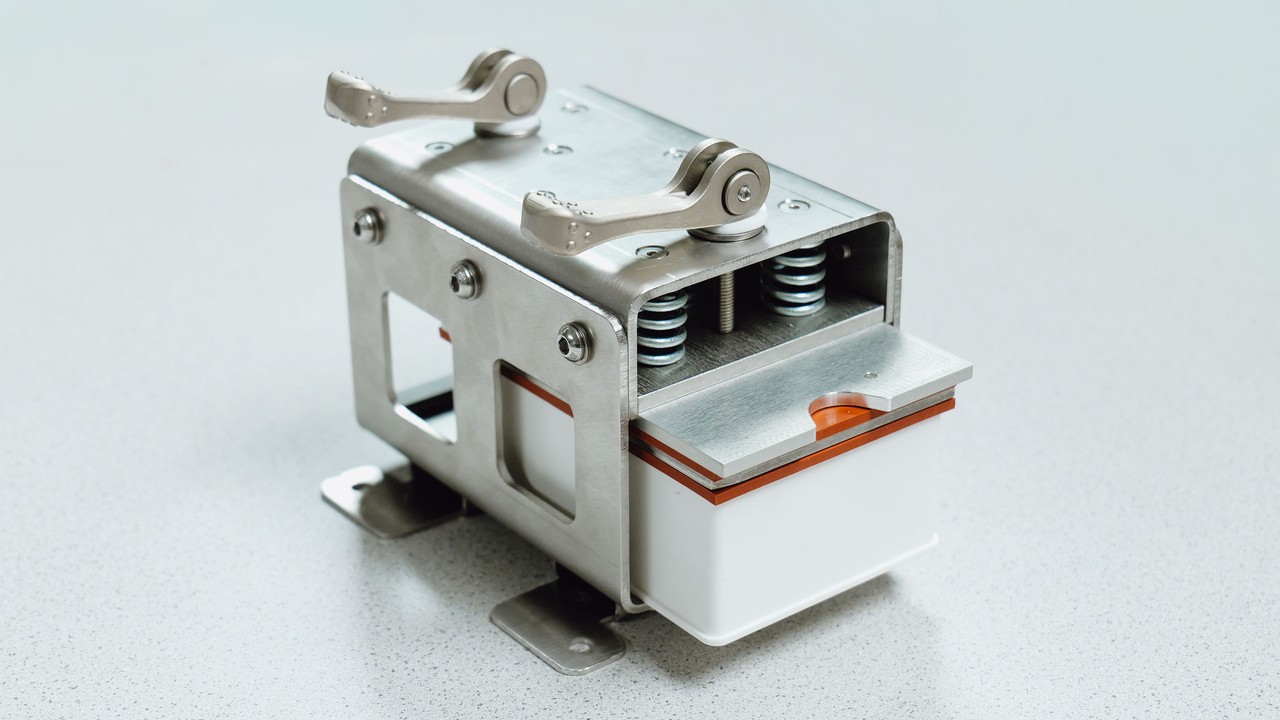
The Curio HS was developed from technology at Cornell University, according to a company news release. Quantera said it is preparing an on-site pilot with E. & J. Gallo Winery in Modesto, California, and opening an early-access program for producers and laboratories.

Headspace analysis measures volatile and semi-volatile compounds at concentrations as small as parts per billion or parts per trillion. Those compounds can include aromas that help a winemaker assess when fruit is ready to pick, off-flavors in beer or dairy products, and residual solvents in packaging film.
Traditional systems use coated fibers to extract one sample at a time, with a limited range of coating materials, before analysis by gas chromatography–mass spectrometry. Quantera says its cartridge-based design allows laboratories to process samples in parallel and choose from a wider range of materials that capture target compounds.
“The Curio HS eliminates the sample preparation bottleneck that has limited what you can test for and what tool you can measure it on,” said Terry Bates, Quantera’s founder and CEO.
Preparing samples in parallel
Liquid or solid samples go into a rugged multiwell plate with a standard laboratory footprint. An array of cartridges seals over the plate, with one cartridge above each well. The company says preparation takes less than two minutes per sample.
The material that captures compounds, known as a sorbent, sits in a cartridge rather than on a fiber. Laboratories can select conventional or advanced sorbents to suit the compounds they are measuring and their budgets while using the same device and workflow.
Cartridges can be loaded where samples are collected and sent to a laboratory, avoiding shipment of crates of perishable raw material, according to Quantera.
The Curio HS works with gas chromatography systems, including GC-MS and GC-FID, and can feed directly into DART-MS and other mass spectrometers that do not use chromatography. The launch release describes liquid chromatography workflows as still in development.
Quantera says pairing the platform with DART-MS can increase throughput by as much as 60 times compared with fiber-based extraction and reduce per-sample costs by as much as 80%. On GC-MS instruments laboratories already own, the company says per-sample costs fall by about half.
Established headspace extraction methods that use coated fibers can transfer to the Curio HS with minimal adjustments, the company said.
Cornell research and industry partnerships
The technology was developed in Cornell professor Gavin Sacks’ laboratory through research spanning 12 peer-reviewed publications, according to Quantera. The company holds an exclusive license to the Cornell patent portfolio covering the extraction geometry and workflow, and has filed its own patent applications for the platform and cartridge design.
“Curio is the product of nearly a decade of research partnership between Cornell University and E. & J. Gallo Winery,” said Bruce Pan, Gallo’s director of chemistry, research and applications. “That collaboration was instrumental in launching Quantera and continues to support the advancement and early application of Curio.”
A major contract laboratory for wines is working with Quantera on high-throughput workflow design. The company also said the USDA Agricultural Research Service is co-authoring a validation study based on a Quantera-USDA pilot program.
Bruker Corporation is collaborating with Quantera to provide instrumentation and expertise in Quantera’s laboratory. Quantera is a 2026 Grow-NY finalist and is implementing an ISO 9001 quality management system.
The Curio HS is available to early-access partners, who receive complimentary method development to transfer an existing headspace method to the system. Producers and laboratories can request access through Quantera’s website.

FingerLakes1.com is the region’s leading all-digital news publication. The company was founded in 1998 and has been keeping residents informed for more than two decades. Have a lead? Send it to news@fingerlakes1.com.