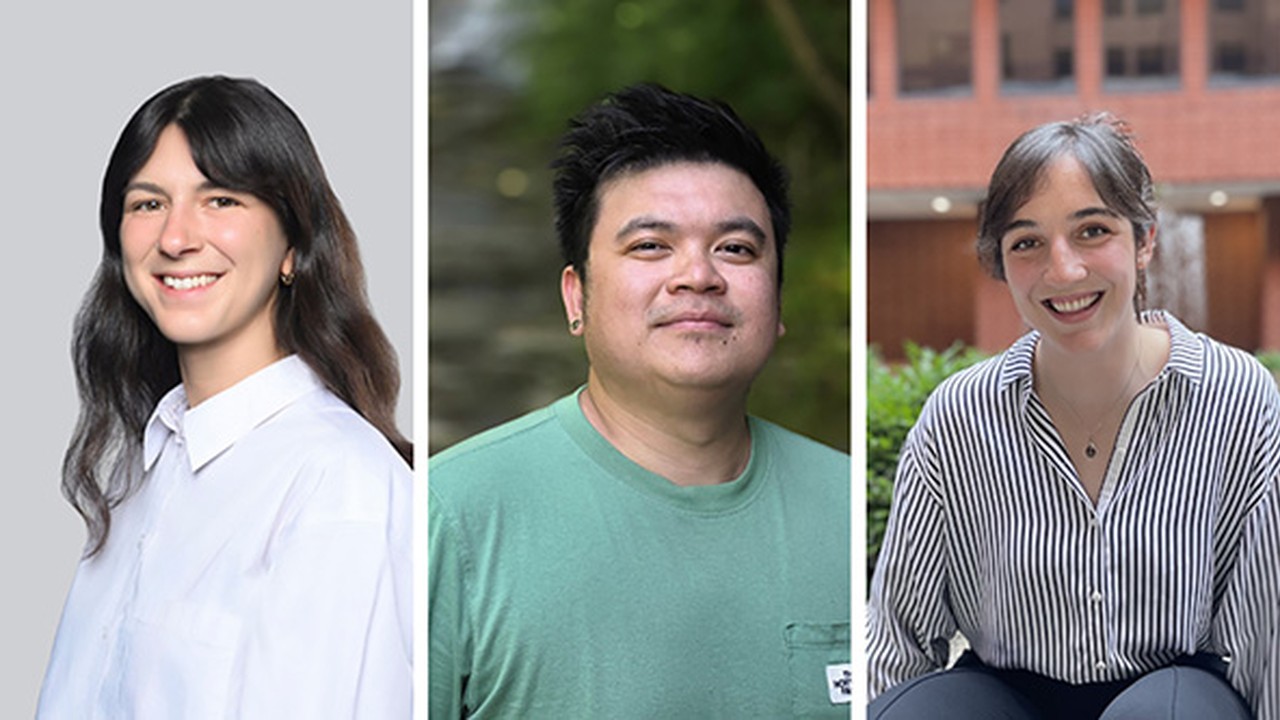
Three new Cornell Atkinson postdoctoral fellows will focus on antimicrobial compounds for agriculture, gaps in corporate emissions reporting and the effects of critical-mineral mining on Indigenous communities.
Albebson Lim, Giulia Crippa and Margaret O’Connell were appointed to the 2026 Cornell Atkinson Postdoctoral Fellowship Program. The three-year appointments pair each researcher with a Cornell faculty mentor and an adviser from an outside organization. The program is in its 12th year.

Compounds to fight resistant agricultural pathogens
Lim, a postdoctoral associate in microbiology, will search soil bacteria called Streptomyces for compounds that could combat agricultural pathogens resistant to existing products. The bacteria are an important source of antimicrobial agents, but their agricultural uses remain underdeveloped, according to Cornell.
Growing up in the Philippines, Lim saw tuberculosis as part of everyday life. His interest in antimicrobial resistance extends beyond human medicine to livestock, crops and food security.
“I don’t want to see a future where our antibiotics don’t work,” Lim said.
His project uses a One Health approach, which connects human, environmental and agricultural health. Kelley Gallagher, an assistant professor of microbiology in Cornell’s College of Agriculture and Life Sciences, is his faculty mentor. Barrie Wilkinson, co-founder of Isomerase Therapeutics, is his external adviser.
Accounting for companies that withhold emissions data
Crippa studies how selective corporate carbon disclosures affect the information available to investors and regulators. Cornell says her research identifies higher emissions among companies that do not report, creating a bias in estimates drawn from voluntary disclosures.
Her fellowship project will estimate hidden financed emissions and assess whether mandatory disclosure reforms improve the quality of information and environmental outcomes. The work is intended to help banks, pension funds and asset managers assess sustainable investments.
The project will combine global carbon-reporting data and institutional portfolio holdings with models of companies’ disclosure decisions and the pricing of investments, according to her Cornell project profile.
Crippa’s Cornell mentor is David Ng, a professor of finance in the Cornell SC Johnson College of Business. Her external adviser is Julien Mazzacurati, a senior economist with the European Securities and Markets Authority.
Connecting mining decisions with Indigenous communities
O’Connell will work with the Mille Lacs Band of Ojibwe to develop a framework connecting national climate and mining data with local effects on food, energy, water, health and the environment. The researchers aim to create a method useful to the Ojibwe community that other communities could adapt.
O’Connell studied chemical and biological engineering as an undergraduate and began working with Ojibwe communities during her doctoral program at Northwestern University. That work focused on proposed mining projects for minerals used in technologies such as solar panels and electric vehicles.
Her research examines how efforts to reduce greenhouse gas emissions can also respect Indigenous sovereignty, lands and human rights.
Michael Charles, an assistant professor of biological and environmental engineering in Cornell’s College of Agriculture and Life Sciences, is her faculty mentor. Kelly Applegate, natural resources commissioner for the Misi-zaaga’iganiing, or Mille Lacs Band of Ojibwe, is her external adviser.

FingerLakes1.com is the region’s leading all-digital news publication. The company was founded in 1998 and has been keeping residents informed for more than two decades. Have a lead? Send it to news@fingerlakes1.com.