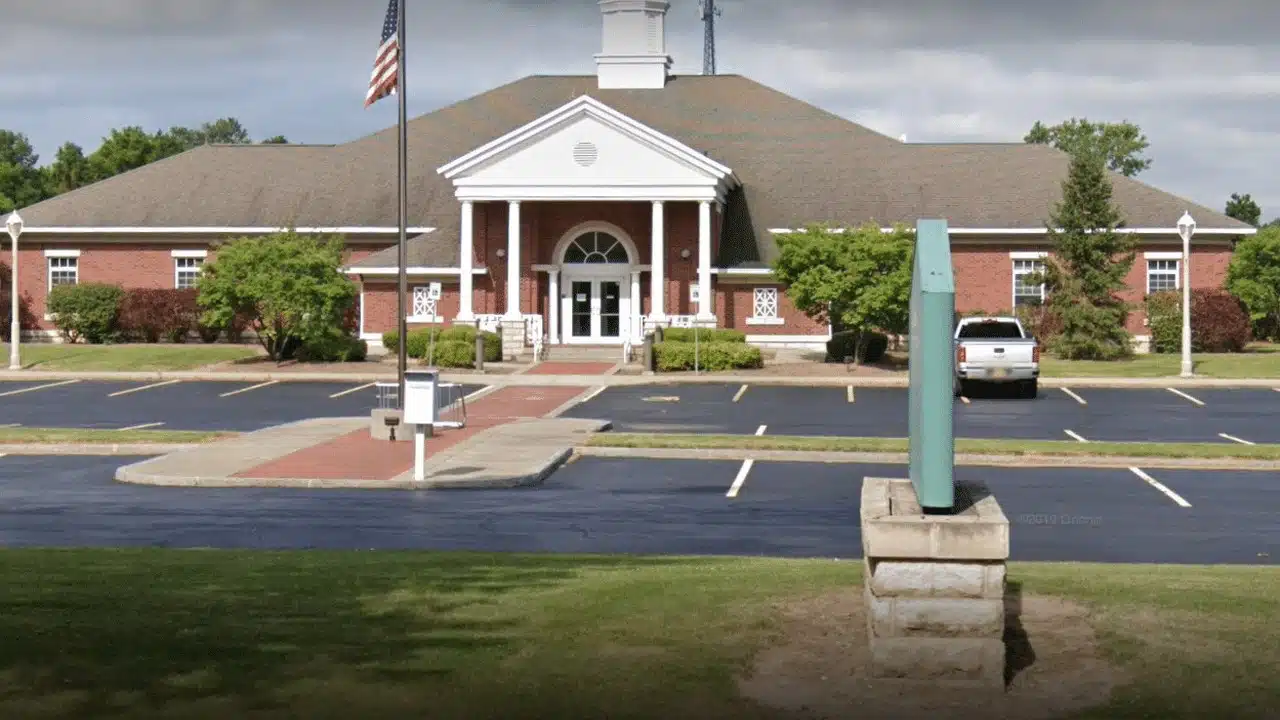
The Geneva Town Board will consider its 2027 budget, a proposed increase in sewer-system spending and new rules for battery storage and solar development Tuesday night.
According to the town's Oct. 13 meeting agenda and supporting packet, informal discussion with department heads and the public begins at 5:30 p.m., followed by a 6 p.m. budget hearing and the regular board meeting at Geneva Town Hall, 3750 County Road 6.

The public hearing covers the preliminary town budget, including fire protection and special districts. Residents can submit comments during the hearing before the board considers a resolution to adopt the spending plan.
The agenda also calls for discussion of after-hours access to the Recycling and Disposal Station, a municipal health insurance agreement amendment and updates on housing construction, sidewalks and a proposed roadside memorial. These are scheduled actions and discussions, not decisions already made.
Sewer proposal would add $206,250 in spending
One budget discussion concerns an anticipated increase in what the City of Geneva charges the town for wastewater treatment.
The proposed amendment would raise the sewer budget's contractual expense line from $825,000 to $1,031,250. That is an additional $206,250, or 25%, in the spending line—not a proposed 25% increase in each customer's bill.
To help cover the expense, the agenda proposes increasing budgeted sewer-rent revenue from $1.45 million to $1.55 million. It also proposes increasing the amount of sewer fund balance used in the budget from $109,303 to $215,553.
Together, those proposed revenue and fund-balance changes would cover the additional contractual expense. The agenda does not provide an individual customer rate schedule, so it does not establish how much a particular household's sewer bill would change.
The budget adoption resolution follows the public hearing. The packet describes a preliminary plan developed through the town's September budget process, including a Sept. 21 work session. Board members also are scheduled to approve October's list of bills for payment.
Battery-storage law would set siting and safety requirements
Another resolution would adopt Local Law 5, creating a battery energy storage chapter in the town code and making related zoning changes. The proposal follows a Sept. 8 public hearing.
The law would divide storage systems into two categories. Tier 1 would cover systems with an aggregate capacity of no more than 600 kilowatt-hours, provided an enclosed area contains only one battery technology. Tier 2 would cover larger systems or an enclosed area using more than one battery technology.
Tier 1 systems would be allowed in all zoning districts, subject to building permits and applicable safety requirements, without site-plan review. Tier 2 systems would require a special-use permit and site-plan review in eligible agricultural or general industrial locations.
For agricultural sites, the proposed battery law excludes the portion of the district both south of White Springs Lane and east of County Road 6. Elsewhere in the agricultural district, it restricts placement on prime agricultural soil classes 1 through 4, with an exception for such land that has not been actively farmed during the preceding five years.
Larger installations would need an emergency operations plan addressing shutdown procedures, fire and explosion response, damaged battery removal, and training and drills for first responders. The plan would be supplied to the local fire department and fire-code official and kept accessible at the site.
The proposal also calls for certified equipment, electrical inspection and compliance with state building and fire standards. Larger systems generally would need a six-foot fence with a self-locking gate unless housed in a dedicated-use building, along with screening and downward-directed lighting. The proposed one-hour average noise limit is 60 decibels at the receiving property's boundary.
Operators would have to prepare a decommissioning plan and maintain financial security to pay for removal and site restoration. A system that does not operate consistently for more than a year would be considered abandoned under the proposal, allowing the town to use the financial security if the operator fails to carry out required restoration.
The law would apply to new systems and certain modifications after it takes effect. Existing systems would not automatically become subject to all new requirements, but changes that increase their designed discharge duration or power rating would trigger the law. Consumer batteries and electric vehicles are excluded from the storage-system definition.
Solar revisions distinguish household use from larger projects
The board also is scheduled to consider Local Law 6, revising the town's solar energy and zoning rules after a Sept. 8 public hearing.
The proposed system uses four tiers. Tier 1 covers roof- or building-mounted accessory systems. Tier 2 covers ground-mounted systems serving only the property where they are installed, with output limited to 110% of that site's electricity consumption during the preceding 12 months.
Tier 3 covers systems producing electricity for off-site use that are no larger than 5 megawatts and occupy no more than 30 acres. A system exceeding either threshold would fall into Tier 4.
The larger two tiers would require Planning Board site-plan approval and other applicable approvals. The packet also calls for a utility proof-of-concept letter concerning connection to the electrical grid.
The proposed legal text includes agricultural soil restrictions and allows larger systems in general and light industrial districts subject to the solar chapter. Tier 3 agricultural parcels would have to contain less than 50% Honeoye soil, while Tier 4 projects would face restrictions on prime agricultural soils, with an exception for land not actively farmed during the preceding five years.
The packet's draft publication notice and proposed legal text describe agricultural geographic limits differently. Those descriptions should be clarified before the town's final siting rule is relied on; the agenda does not resolve the difference.
In the lake-view overlay district, the proposed text would prohibit Tier 3 and Tier 4 systems occupying more than one acre within 1,000 feet of Route 14 or within a viewshed between a public road and Seneca Lake.
Large-system applicants would need a removal and restoration plan with an engineer-certified cost estimate. Financial security would have to cover that cost plus 10% and remain in place until the installation is fully removed.
The proposal includes procedures for projects that do not become operational and systems that stop operating. For a system inactive for a year, the town could issue a notice giving the owner 180 days to restore operation to at least 80% of approved capacity or remove it. Both proposed energy laws would take effect upon filing with the state secretary of state's office if adopted.
Recycling access and health insurance are also on the agenda
The Recycling and Disposal Station's listed public hours are 8:30 a.m. to 4:30 p.m. Wednesdays and Saturdays. The agenda says its gate sometimes remains open outside those hours while employees work, and people have been dropping off brush and food waste when the station is otherwise closed.
Board members will discuss whether to allow that access or limit use to times when the station is open and staffed. The packet does not establish a new restriction or announce a change in public hours.
A separate resolution would approve a 2027 amendment to the municipal cooperation agreement for the Greater Tompkins County Municipal Health Insurance Consortium and authorize the town's chief elected official to sign it. The amendment would take effect Jan. 1. The agenda does not specify changes to premiums or insurance benefits.
Committee reports will cover economic development, sustainability, communications, parks and recreation, and comprehensive planning. The agenda credits Sustainability Committee Chair Jennifer Grant and other volunteers with helping keep hundreds of items in circulation during the Oct. 4 Free Stuff Day and Fix-It Clinic.
Housing, sidewalks and a memorial proposal
Supervisor Mark Venuti's report lists construction at the Rolling Hills housing development and work on the Carter Road sidewalk among the town's updates.
It also describes Gambee Road resident Ron Mann's interest in a plaque near the Gambee Road and Carter Road intersection honoring his stepsons, who were struck while walking to school Oct. 2, 1995. Noah Johnson died the next day; Vince Johnson recovered after a week at Strong Hospital, according to the agenda. A formal memorial approval is not listed among the scheduled resolutions.
The supervisor's report also notes that the state comptroller's 2025 fiscal and environmental stress assessments gave the town “No designation.” The environmental assessment in that context concerns demographic and economic conditions such as population, income, property values and unemployment, rather than pollution or environmental quality.
The board is scheduled to review departmental and financial reports, approve minutes from its September meetings and hear additional old and new business. Public comment opportunities are listed at the beginning and end of the regular meeting, in addition to the budget hearing.

FingerLakes1.com is the region’s leading all-digital news publication. The company was founded in 1998 and has been keeping residents informed for more than two decades. Have a lead? Send it to news@fingerlakes1.com.