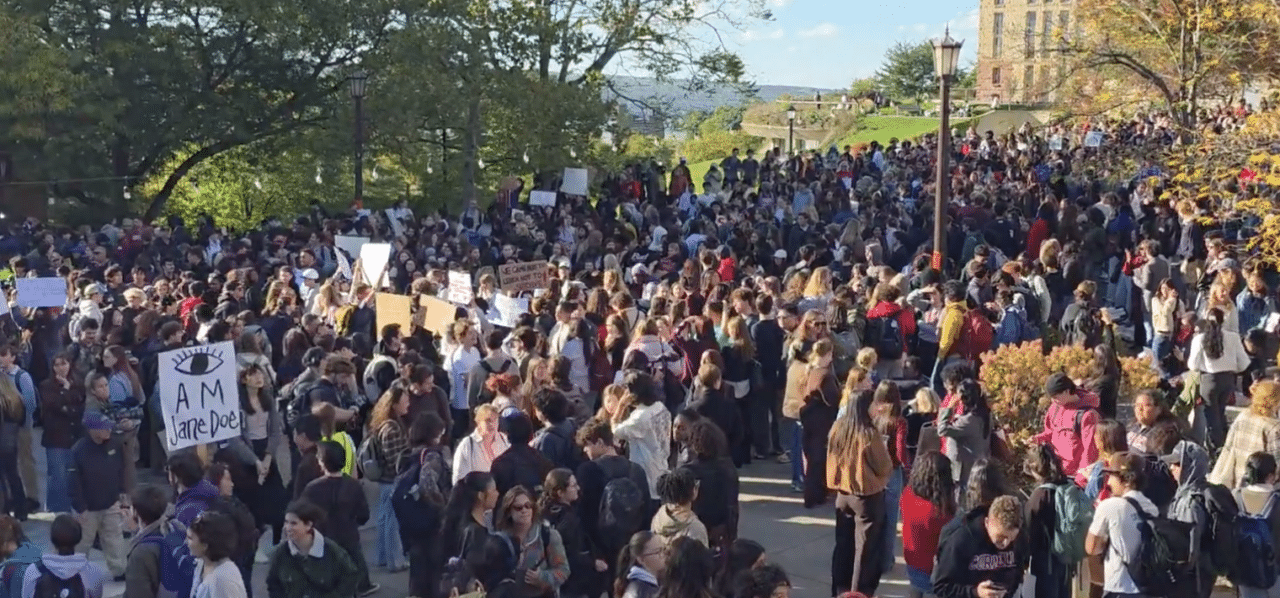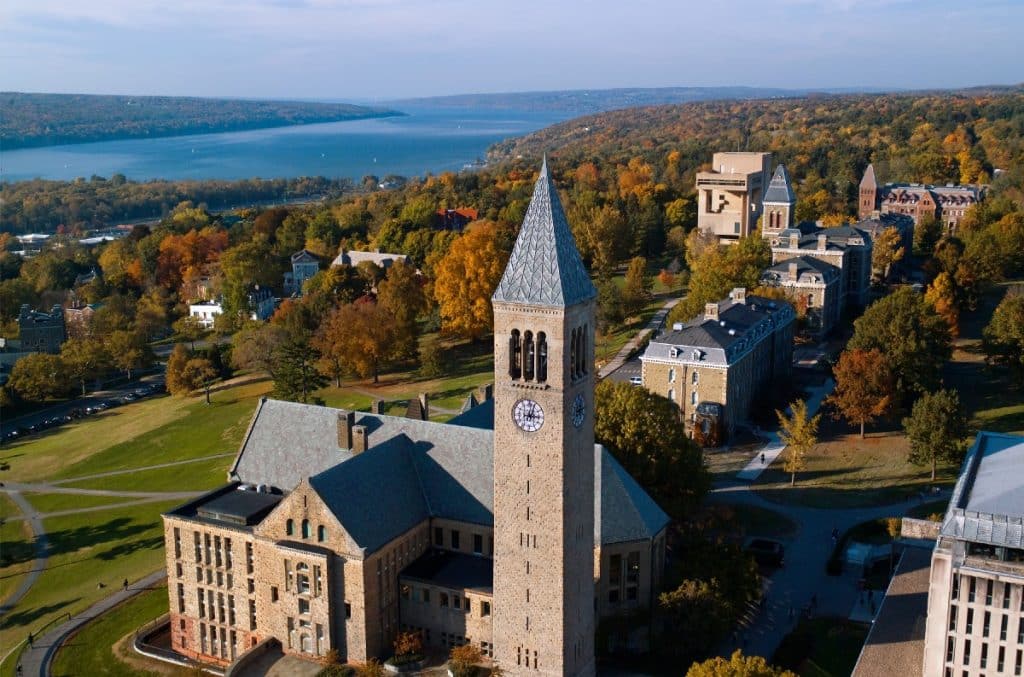
The Cornell Seven case enters Sunday with a privacy order in the civil lawsuit, a court date for a challenge to the criminal investigation's leadership and an outside review of Cornell's response still ahead.
A judge sealed the complaint and several other filings Friday after threats reached an uninvolved family whose address was mistakenly included, Spectrum News reported. Separately, a signed court order sets Oct. 29 arguments on whether the special prosecutor's appointment should be overturned.

Those developments concern access to court records and who conducts the investigation. Neither order decides the allegations at the center of the case.
The lawsuit concerns a former student identified as Jane Doe, who alleges she was drugged and sexually assaulted by multiple men at the Chi Phi fraternity house in Ithaca in October 2024. Cornell, seven men and other defendants face civil claims. No criminal charges have been filed against the accused men, The Washington Post reported Sunday.
Civil filings sealed after threats
State Supreme Court Justice Phaedra Perry-Bond ordered the filings sealed Friday because they contained addresses, according to Spectrum's report. One incorrectly identified the home of an uninvolved former Marine who shares a name with a defendant.
His family received threats. The judge condemned the harassment as dangerous vigilantism and directed Doe's lawyers to submit redacted versions without addresses.
Doe's lawyer also described a swatting incident at her home: police responded to a false call and drew weapons on her father, brother and a friend. Nobody was hurt, Spectrum reported.
The sealing order addresses the disclosure of identifying information. It is not a dismissal of the lawsuit or a finding about whether an assault occurred.
Challenge to special prosecutor has an Oct. 29 court date
The Times Union reported Thursday that Gillio Lopes, one of the men named in the lawsuit, is seeking to remove Attorney General Letitia James and her office from the criminal investigation. His attorney, Andrew Miltenberg, argues that her public comments showed bias before she received the appointment. Lopes denies the sexual-assault allegations.
The petition filed Oct. 7 points to James' Sept. 28 social media statement supporting Doe. It argues that the statement could influence decisions about evidence, witness credibility and possible charges. Those are the petitioner's claims, not findings by a judge.
On Friday, Acting Supreme Court Justice James Farrell signed an order to show cause, directing Gov. Kathy Hochul and James to explain why the requested relief should not be granted. The order sets oral argument for Oct. 29 and provides deadlines for answering and reply papers.
That order does not grant Lopes' request, remove James or direct a replacement. It contains no provision stopping the criminal investigation.
We reported that Hochul appointed the attorney general's office Oct. 1 after losing confidence in Tompkins County District Attorney Matthew Van Houten's handling of the matter. The appointment authorizes investigation and, if warranted, prosecution and presentation of evidence to a grand jury; it does not guarantee charges.
The attorney general's office told Bloomberg Law that it remains committed to an independent investigation guided by facts and law. The pending challenge leaves the appointment's validity for the court to decide.
Cornell's review is separate from prosecution
Cornell trustees retained former U.S. Deputy Attorney General Sally Yates of King & Spalding on Tuesday to examine the university's response to sexual misconduct, including the Jane Doe matter.
According to Cornell's announcement, the review covers prevention, student support, investigations, disciplinary hearings and appeals, campus police, coordination with prosecutors and oversight of fraternities and sororities. It will also examine the trustees' oversight.
Yates' team will report findings and recommendations to the board's special committee. Cornell says it will provide access to relevant records and personnel subject to law and privacy requirements, and intends to share the results with the university community. The announcement sets no completion date.
That institutional review is not the criminal investigation. We reported that a separate ruling on one student's disciplinary challenge concerned Cornell's procedures, not a determination of what happened during the alleged assault.
Campus and city decisions remain ahead
We reported that Ithaca's Common Council voted 9-1 Wednesday to pause certain new event and noise permits for Cornell and affiliated student organizations through Nov. 5. The resolution preserves permits for constitutionally protected activities and does not revoke permits already issued.
Our reporting also detailed plans to introduce a faculty no-confidence resolution Oct. 14, with a weeklong vote scheduled to begin Oct. 28. Those are upcoming steps, not an adopted Faculty Senate position.
The next decisions involve different questions: redacting civil filings, resolving the prosecutor challenge, determining whether criminal charges are warranted and examining Cornell's handling of reports. The Oct. 29 argument is a scheduled court milestone; it is not a trial of the underlying assault allegations.

FingerLakes1.com is the region’s leading all-digital news publication. The company was founded in 1998 and has been keeping residents informed for more than two decades. Have a lead? Send it to news@fingerlakes1.com.